
Someone shooting their first paid weekend weddings alongside a day job does not need the same software stack as an established full-time studio, but a lot of starter advice recommends exactly that: the same subscriptions, the same tools, the same monthly spend, before there is revenue to justify any of it. A leaner stack, built around one-time costs where possible, is both cheaper and a better fit for how a side hustle actually grows.
What Actually Needs to Be in the Stack
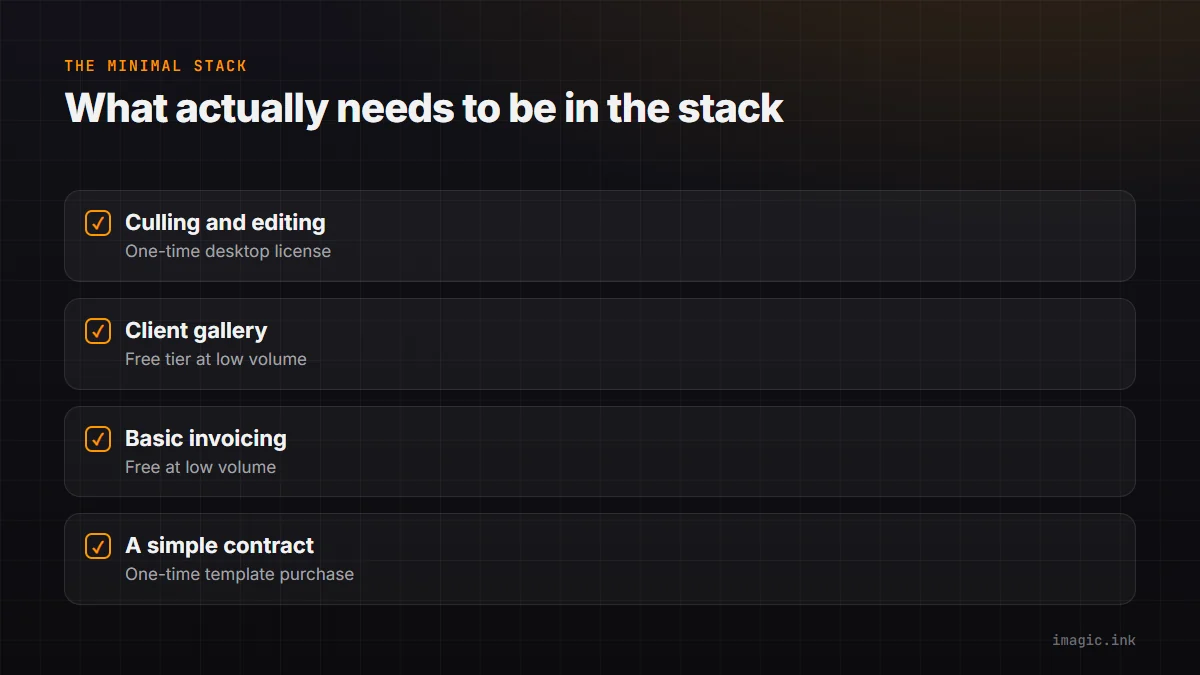
Four categories cover the real requirements for delivering paid photography work: culling and editing (turning shot RAW files into finished images), a client gallery for delivery, basic invoicing, and a simple contract. Everything beyond that, elaborate CRM systems, marketing automation, advanced analytics, is solving a problem a side hustle usually does not have yet, high volume, multiple team members, complex sales pipelines, and paying for it early is money spent ahead of the actual need.
A Stack Under 100 Euros One-Time
Culling and editing can be covered by a one-time desktop license rather than a monthly subscription; imagic Lite starts at 19 euros one-time, with Plus at 49 and Max at 99, covering RAW processing across nine formats, AI culling, and batch editing depending on tier, with no recurring fee at all. A client gallery can often start on a genuinely free tier from several delivery platforms at low volume, upgrading only once booking volume justifies the cost. Basic invoicing is frequently free or near-free for low transaction volume through general-purpose invoicing tools, and a solid photography contract template, purchased once from a legal template marketplace or adapted from a professional association's free resource, is a one-time cost rather than a subscription. Add it up and a genuinely functional stack for a side hustle can sit comfortably under 100 to 150 euros total, one-time, not per month. Free photo management tools for photographers covers additional no-cost options worth knowing about at this stage.
What to Skip Until Revenue Justifies It
Premium gallery platforms with advanced e-commerce and print fulfillment built in, full CRM and lead-tracking software, and multi-user studio management tools all solve real problems, just not ones a side hustle typically has in the first year or two. The pattern worth watching for is subscribing to solve a problem you do not have yet, based on what a full-time studio's stack looks like, rather than what your current booking volume actually requires. It is easy to accumulate five or six small subscriptions this way, each individually cheap, collectively a meaningful monthly cost against side-hustle revenue that is still modest. The full breakdown of photography business software costs covers what this looks like once a studio scales past the side-hustle stage.
When to Reassess the Stack
The natural checkpoint for revisiting software choices is when booking volume or revenue crosses a threshold that makes the side hustle feel more like the main business, more than a handful of shoots a month, or revenue that could sustain a subscription's ongoing cost comfortably rather than straining it. At that point, tools that were premature at the start (advanced CRM, premium gallery tiers, a bookkeeping subscription) start earning their keep, and reassessing the stack against actual current volume, rather than sticking with either the original minimal setup or an early over-subscription out of habit, is worth doing at least once a year.
Frequently asked questions
Is a subscription photo editor ever the right call for a side hustle?
It can be, particularly for very short-term or seasonal use where a one-time purchase would not get used long enough to pay off. For ongoing, regular editing work, a one-time license usually costs less within the first year or two.
Do I need a paid gallery platform to start?
Not usually. Most gallery platforms offer a free tier sufficient for low booking volume, and upgrading only makes sense once volume or feature needs (storefronts, larger storage) actually require it.
What is the biggest software cost mistake side-hustle photographers make?
Subscribing to tools sized for a full-time studio's needs before reaching that volume. Several small monthly subscriptions, each individually cheap, add up to a real fixed cost against revenue that is still inconsistent early on.