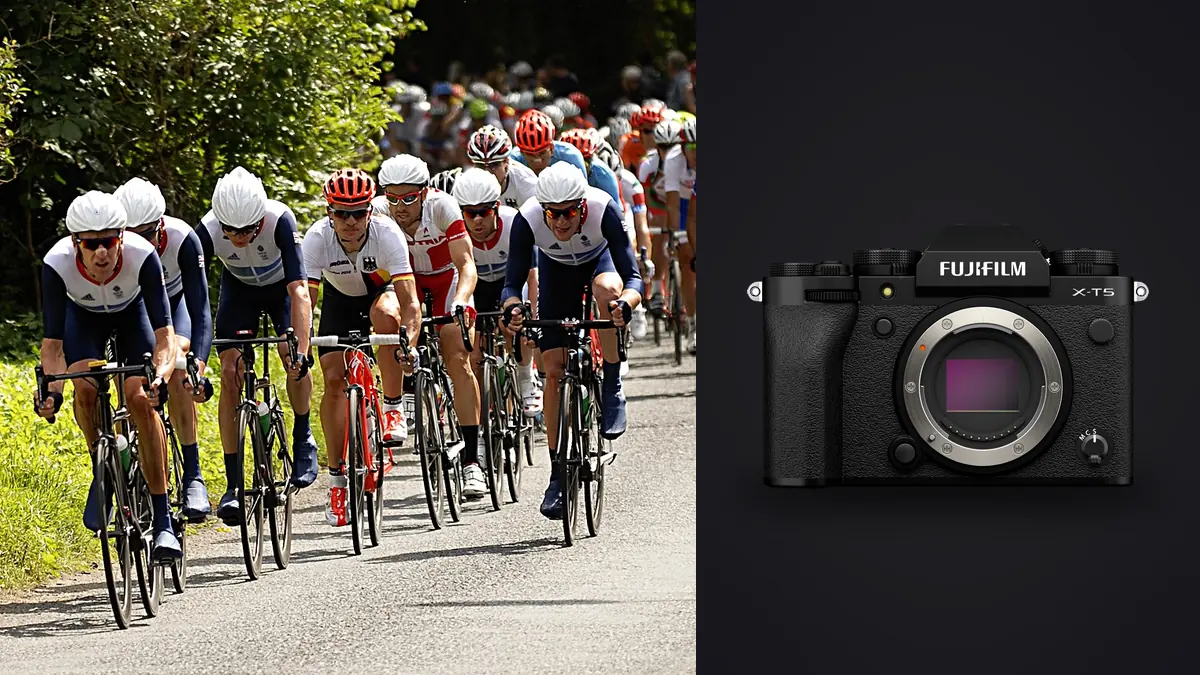
Sports photographs are shaped by access before they are shaped by autofocus. The Fujifilm X-T5 places a 40.2 megapixel APS-C sensor in a comparatively compact body, but its useful reach and detail do not grant a safe angle or permission to enter a field. The event layout decides which lens can follow action without blocking officials, athletes, spectators, or other media.
This Lens and Location Guide is for field, court, track, and trail coverage where the X-T5 must move between defined positions. It maps lens roles to distance, background, sun, artificial light, and safety boundaries, then carries the plan through RAF selection without treating maximum burst rate as a substitute for anticipation.
Obtain the venue map and operating rules first
Ask the organizer for credential zones, team areas, emergency lanes, spectator boundaries, sponsor restrictions, flash policy, remote-camera rules, and the time photographers may enter. Youth events may impose additional consent and safeguarding requirements. A general ticket does not necessarily authorize commercial coverage, sideline access, or publication of identifiable minors.
Walk the venue with an official where possible. Mark positions that remain outside the field of play and never require crossing an athlete's path. Identify places where officials stop, substitutes warm up, medical staff enter, and television or timing equipment needs a clear line. A low angle is not worthwhile if a sprinting athlete cannot see the photographer.
Learn the sport's direction and decisive zones. A track finish, basketball baseline, football goal line, tennis end, and mountain-bike corner each create different approach speeds and sight lines. Ask where collisions and out-of-bounds movement are likely, then add a safety margin beyond the painted line or barrier.
Make two fallback positions. Weather, broadcast equipment, crowd size, or an official decision can close the preferred zone. The alternative should still tell the event story rather than merely offer an unobstructed patch of ground.
Assign XF lens roles by distance and movement
| Lens class | Typical position | Planning issue |
|---|---|---|
| Wide zoom or prime | Start area, celebration, environmental action | Requires approved proximity and edge awareness |
| Standard zoom | Courtside, warm-up, team and feature coverage | May be short for action across a full field |
| Fast telephoto zoom | Sideline, baseline, indoor sport | Weight, monopod space, and changing subject distance |
| Long telephoto zoom | Field, track, water, or restricted sidelines | Narrow acquisition angle and atmospheric effects |
| Fast prime | Known distance under low light | Limited framing when the play changes zone |
The APS-C format narrows the angle of view compared with the same focal length on full frame. That can help fill the frame from an authorized distant position, but it also makes a fast-moving subject harder to find. Practice acquiring the subject at the wide end of a zoom, then tightening framing only after movement becomes predictable.
Choose one primary action lens and one secondary storytelling lens. For example, a telephoto zoom may cover play while a small standard lens handles preparation, coaches, crowd context, and awards. Carrying overlapping lenses adds weight without adding a new position or visual task.
Check collar and monopod compatibility before the event. A long lens supported at its collar balances differently from the camera body, and the X-T5 should not bear unnecessary torque. Confirm that the support can rotate between horizontal and vertical without entering the neighboring photographer's space.
Turn the field layout into a shot map
List the mandatory photographs, then attach each to a place and time. A complete assignment might require venue context, team arrival, individual action, contested play, coaching, crowd response, scoreboard, result, and celebration. One corner rarely covers all of them. Schedule moves during breaks rather than while play is live.
Draw expected subject paths from each position. Head-on movement emphasizes faces and compression but stresses autofocus distance changes. Lateral movement shows form and works well for panning. Diagonal movement combines both and needs more empty space in front of the subject. Select a position for the intended rendering instead of reacting after the athlete enters the frame.
For a lap sport, use early passes to verify framing and background, but do not assume every lap is identical. Fatigue, tactics, lane use, and other competitors change the line. Keep the camera out of the course and never encourage an athlete to repeat a hazardous move for the photograph.
At a finish line, respect timing sensors, judges, and broadcast sight lines. Stand beyond the likely deceleration and collision area. Leave room in the frame for the finish structure and lane identity if the picture must establish the result.
Choose backgrounds before the decisive action begins
A telephoto lens can simplify a crowded venue, but signs, parked vehicles, bright clothing, empty seats, and fencing still affect separation. Examine the background at athlete height from the exact position. Move laterally to place a clean wall, shaded stand, distant trees, or open sky behind the key zone.
Do not remove required sponsor boards or crop away result context when the brief needs them. The cleanest background is not always the most informative. For editorial coverage, a banner, lane number, team bench, or recognizable obstacle can establish what happened and where.
Watch the horizon and vertical posts during pans. A tilted track line can make a runner appear to climb, and a goalpost through a head becomes obvious only after the peak moment. Establish a repeatable pan arc with enough clearance at both ends, then keep feet planted while rotating from the torso.
Map sun direction and exposure transitions
Visit at the event hour. A stand can cast half the field into shade, and the boundary may move during a race. From one sideline, players may alternate between front light and backlight every few seconds. Decide whether manual exposure can hold within a zone or whether an automatic mode with controlled limits is needed for transitions.
Backlight can separate rain, dust, breath, and hair, but faces under helmets may become very dark. A position that keeps the background shaded while the athlete crosses light can create strong separation. Check the highlights on white uniforms and reflective equipment before the event reaches its fastest phase.
Lens hoods help with oblique sun but do not cure flare from a bright source inside the frame. Inspect for contrast loss and colored artifacts at the actual angle. Keep the front element clean; one water spot can repeat across hundreds of backlit frames.
Test indoor lights with both shutter types
Gym, arena, rink, and pool lighting may pulse or vary across the building. Make test frames of a plain wall and a moving subject at the intended shutter speed. Electronic shutter can introduce bands or shape distortion under some conditions, while mechanical shutter has its own timing and frame-rate constraints. Select the mode that gives reliable color and geometry in that venue.
Use the X-T5's flicker-related options only after checking how they affect timing and drive behavior. Different fixtures can occupy adjacent courts, and electronic advertising boards can refresh independently. Repeat the test after warm-up if lights or displays change for competition.
Flash is usually restricted near live play and can distract participants. Obtain explicit approval before using it, position equipment behind protected boundaries, and secure every stand. On-camera flash from a spectator area is not an acceptable workaround for a venue ban.
Configure focus for the chosen camera position
Continuous autofocus and subject detection can help, but the active area should match the route. A broad area may jump to a closer official or spectator; a narrow zone may lose a subject moving erratically. Test with warm-up movement from the real position and keep a conventional zone option available when detection selects the wrong target.
Pre-focus can be effective at hurdles, finish lines, jumps, corners, or fixed goals. Place the area where the athlete's face or body will be, not on the foreground barrier. Depth of field should cover small route variation without turning the background unnecessarily sharp.
The 40.2 megapixel files reward accurate focus but also reveal technique errors. Stabilization helps with camera shake, not subject movement. Choose shutter speed from the fastest important motion, then adjust aperture and ISO within the quality needs of the delivery.
Control burst length and card risk
Use short bursts around a predicted peak: foot strike, ball contact, apex, finish, or expression. Starting too early fills the buffer and increases review load before the decisive action. Continuous firing can also make it harder to see the play and respond safely.
The X-T5 has two SD card slots. Use cards with performance suitable for the selected file type and drive mode, then test the intended backup or separation arrangement. Label cards, keep full media physically separate, and never format between events until two copies are verified.
RAW files preserve adjustment latitude, while JPEG or HEIF delivery may be useful under a deadline. If recording multiple formats, confirm how the camera distributes them and whether the write load changes burst duration. Do not discover a card-setting mismatch at the final.
Move only during safe breaks
Lower the camera and look with unaided vision before stepping. Long lenses narrow awareness, and straps or monopod feet can catch barriers. Follow the route assigned by media staff, cross only at designated points, and wait for an official signal. Never walk backward while tracking action.
Use rain protection that leaves controls accessible and does not create loose material near competitors. In heat, protect cards and batteries from direct sun and plan water without leaving gear unattended. At trail events, carry out every item and avoid widening paths around mud.
Respect other photographers' sight lines. Do not raise a camera above the agreed line, move into a pre-focused lane, or occupy more ground with bags than the credential allows. A usable position depends on cooperative spacing.
Edit RAF files by play, not score alone
Copy both cards and verify a second copy before any formatting. Keep event time, team, heat, lap, or period information attached. Sequence context distinguishes a decisive frame from a visually similar warm-up or disallowed play.
imagic desktop can scan supported RAF folders before local analysis, group related action, and assign reversible culling statuses without deleting files. Automated sharpness and composition signals cannot verify whether a goal counted, identify the correct athlete, or apply publication consent. Those decisions need the assignment record.
Reselecting re-ranks stored scores and does not run analysis again. Check freshness and reanalyze stale scores when necessary. Style application requires a learned profile, while export renders stored edits to new JPEG or TIFF copies. Build color and crop consistency after the result and required sequence are confirmed. More selection methods appear in Workflow and Editing.
The X-T5 can cover serious sport when lens reach is matched to a legal position and movement is anticipated from the venue map. Safe access, clean backgrounds, tested light, and disciplined bursts matter more than carrying every lens or holding the shutter through the entire play.
Frequently Asked Questions
Is the Fujifilm X-T5 suitable for fast sports?
It can be, provided the autofocus area, shutter mode, lens, and camera position suit the movement. Test the actual venue and prioritize safe anticipation over maximum burst volume.
Which XF lens should be used from a sports sideline?
A telephoto zoom is flexible when action crosses a broad distance, while a fast prime can suit a fixed low-light zone. Credential boundaries and the required framing should decide.
Should sports be photographed with electronic shutter on the X-T5?
Use it only after checking moving-subject geometry and artificial-light banding at the venue. Mechanical shutter may be the more reliable choice under some lights and motions.