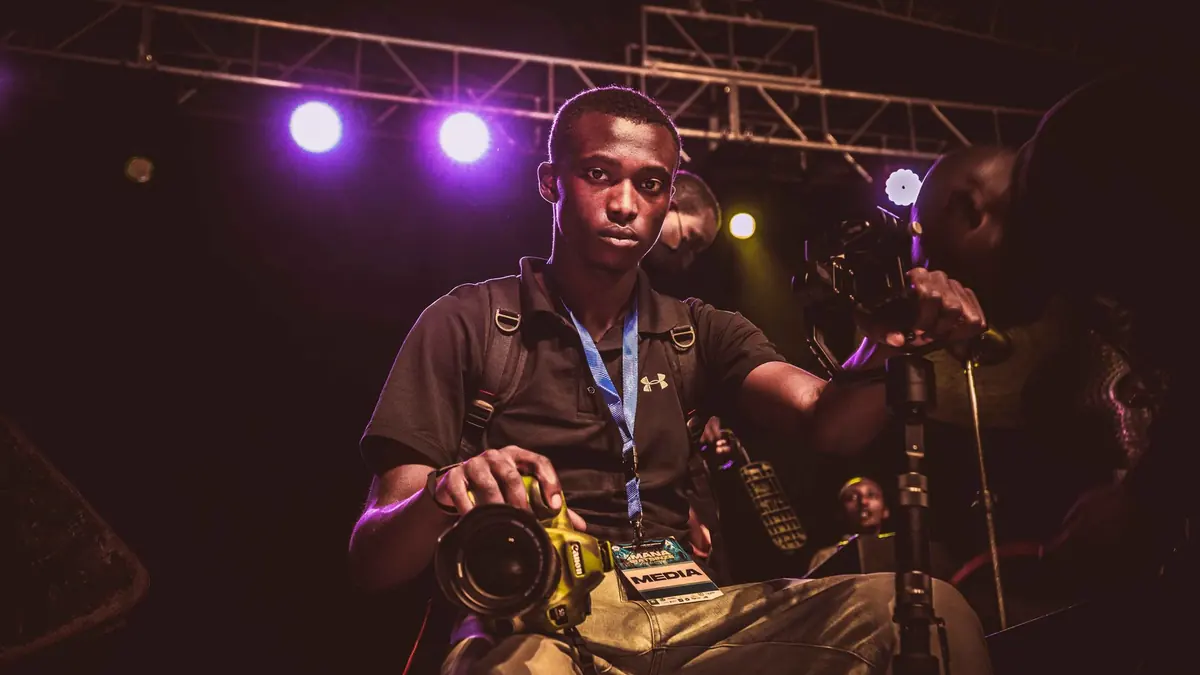
Most concert photographers work under the industry-standard "three songs, no flash" rule: three songs of shooting time from the photo pit, no flash allowed, under stage lighting that swings from near-darkness to blinding strobes within seconds. It is one of the most technically hostile shooting environments in photography, and it produces a shoot where a large majority of frames are simply not usable. That is not a technique failure, it is the format.
Why Concert Keeper Rates Run So Low
Stage lighting changes constantly and unpredictably: a performer lit warm and bright one second can be backlit and nearly silhouetted the next, with colored gels shifting hue faster than autofocus and exposure can fully react. Add high ISO noise from shooting in near-darkness without flash, and motion blur from performers who rarely hold still, and it is normal for 70 to 85% of a concert shoot to be unusable on delivery, blown highlights, crushed shadows, missed focus, or motion blur that does not read as intentional. Photographers new to the genre often assume this reflects their own skill gap rather than the format's inherent difficulty.
Exposure Scoring Under Stage Lighting
Because lighting swings so fast and so widely within a single song, exposure is the first and highest-value filter to apply during culling, ahead of composition or expression. AI exposure scoring flags blown highlights and crushed shadows quickly across a full set, which matters because a photo pit shoot with only three songs of access, sometimes 200 to 500 frames total, still needs a fast triage given the extreme variability in what each frame's lighting actually looked like. Sorting by exposure score first, rather than scanning every frame chronologically, surfaces the technically viable frames from the noisiest, hardest-to-use portion of the set immediately.
Noise Triage, Not Universal Noise Reduction
High ISO is unavoidable in this format, so some grain is expected and often stylistically appropriate, concert photography has its own visual tradition of grittier, higher-contrast images that would look sanitized with heavy noise reduction applied uniformly. The better approach is triage: identify frames where noise is genuinely destructive to detail (an out-of-focus, high-ISO frame with no other redeeming qualities) versus frames where noise is present but the image still reads as strong, and apply targeted noise reduction only where it is actually needed rather than a blanket pass across the whole set. See noise reduction in modern photo editing for more on this distinction.
Same-Night Social Delivery for Bands
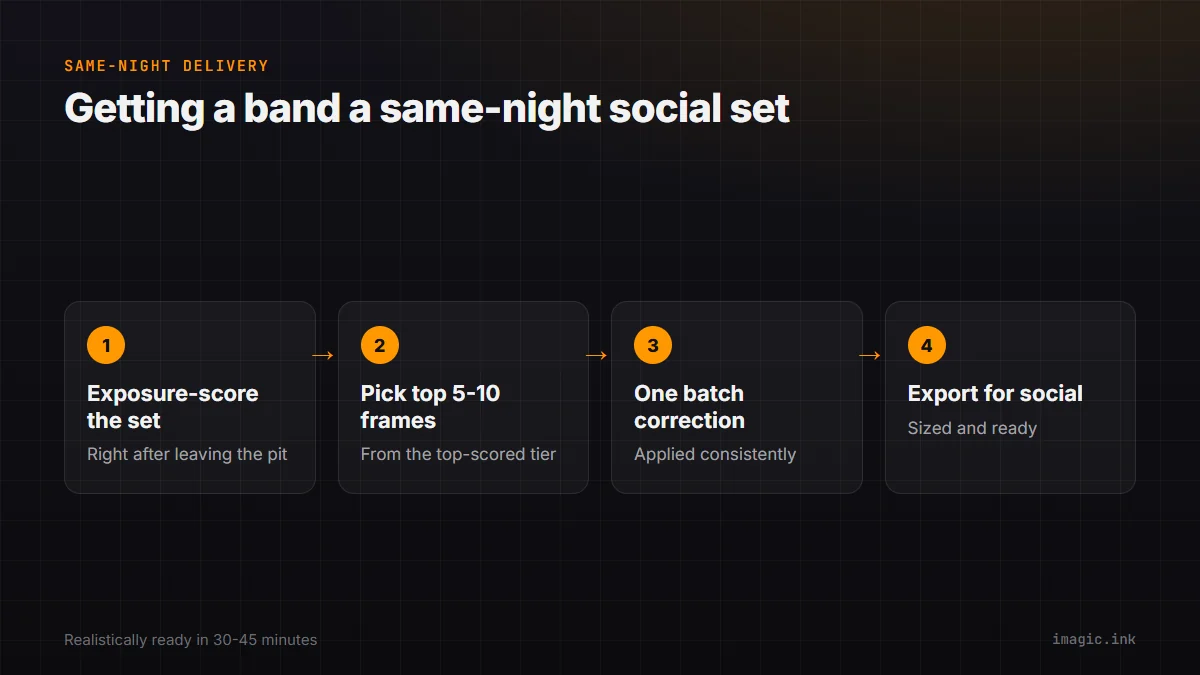
Bands and venues often want a handful of images the same night, for social media momentum while the show is still fresh in fans' minds, which puts concert photography on a similarly tight clock to a wedding sneak peek. The workable version of this: exposure-score the shoot immediately after leaving the pit, pick 5 to 10 frames from the top-scored tier, apply one consistent batch correction across them, and export sized for social. See exposure scoring for AI photo quality for the mechanics behind this kind of fast triage, which applies directly to the extreme conditions concert photography creates, and the tips and workflow archive for more low-light guides.
Setting Expectations With Clients and Bands
Part of working this genre well is communicating the honest keeper rate up front, so a band expecting 50 final images from a three-song set is not surprised when the number lands lower given the actual usable frame count from such a short, technically difficult shooting window. Being upfront about this before the shoot, not after, keeps the relationship on solid footing regardless of how the lighting behaved that night.
Frequently asked questions
Is an 80% reject rate normal for concert photography?
Yes, given extreme lighting swings, high ISO noise, and constant subject motion under a no-flash restriction, a large majority of frames from a typical photo pit shoot are commonly unusable.
Should I apply noise reduction to every concert photo?
No, apply it selectively where noise is genuinely hurting detail; some grain is expected and often fits the genre's visual style, so a blanket pass can flatten images that were fine as shot.
How fast can a same-night social set realistically go out?
With exposure-scored triage and a batch correction pass, a small 5 to 10 image set can typically be ready within 30 to 45 minutes of leaving the venue.