
Copyright protection for photographers is mostly a set of unglamorous, low-effort habits, not a single legal action that solves the problem once. It is worth being realistic about what each layer actually does, because expecting any one of them to fully prevent theft leads to disappointment and, worse, to skipping the layers that do help.
IPTC Copyright Fields: The First Layer
Every RAW and JPEG file can carry IPTC metadata fields for copyright notice, creator name, and contact information, embedded directly in the file rather than added as a visible watermark. This does not stop anyone from copying the image, but it does mean that if the file itself changes hands, gets reused, or ends up somewhere unexpected, an unambiguous ownership claim travels with it, which matters for any later dispute or takedown request. Filling these fields in once, as part of a standard export preset, costs nothing ongoing and is worth doing on every delivered file as a baseline.
What Metadata Survives Social Platforms (Not Much)
This is where expectations need adjusting: most major social and sharing platforms strip the majority of metadata, including IPTC copyright fields, on upload as part of their own image processing. A photo posted to a typical social platform and later screenshotted or re-downloaded by someone else usually carries none of your embedded copyright information anymore. This does not make embedding metadata pointless, it protects the original delivered file and anything shared directly from it, but it does mean metadata alone is not a defense against theft that happens through social platforms specifically.
Practical Protection Layers
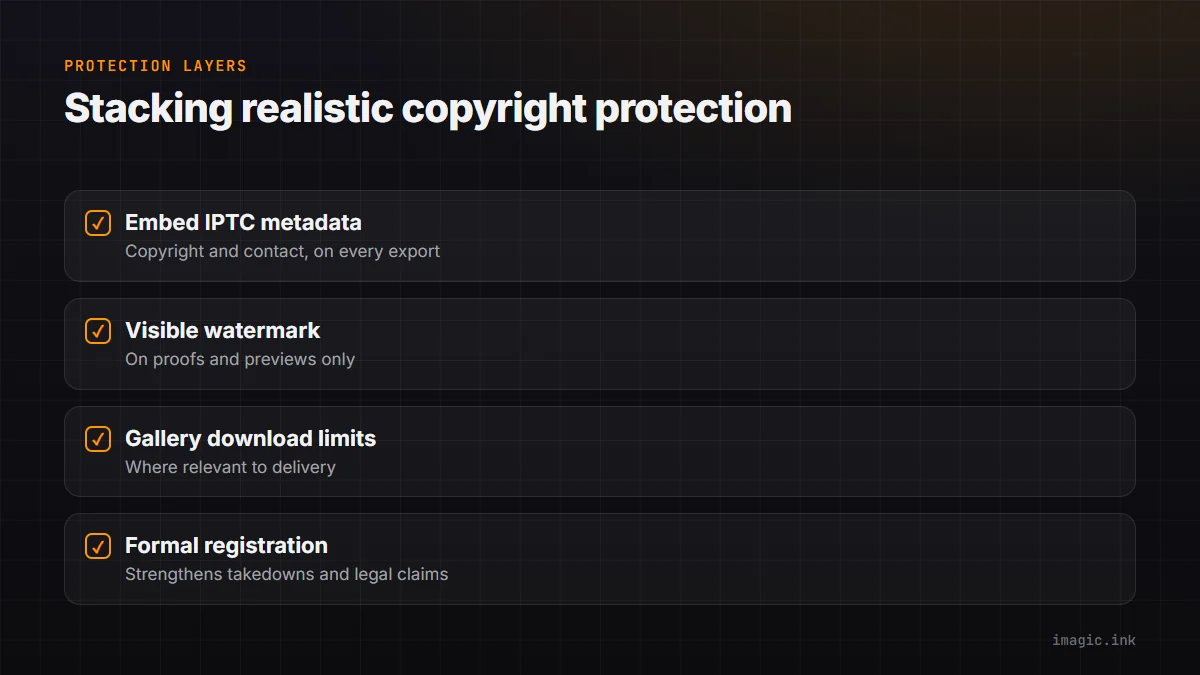
Because no single layer is sufficient, realistic protection is a stack: embedded IPTC metadata on every export, a visible watermark on proofs and previews (batch-applied at export rather than added image by image), gallery-level download restrictions where relevant, and, for meaningful commercial work, formal copyright registration with your country's copyright office, which is generally inexpensive and strengthens your legal position significantly if you ever need to pursue infringement seriously. None of these individually stops theft; together they make theft more visible, harder, and more legally costly for the person doing it.
Takedown Basics
When infringement does happen, the practical first step for most photographers is a direct takedown request to the platform hosting the stolen image, most of which have a formal process for copyright complaints, generally faster and cheaper than legal action. Registration matters most here: a registered copyright typically strengthens a takedown claim and is close to essential if the situation escalates toward legal remedies. Screenshotting the infringement with a timestamp before filing anything is worth doing immediately, since the offending post can disappear once the person is aware they have been flagged.
Frequently asked questions
Do I own copyright automatically, or do I need to register it?
In most jurisdictions you hold copyright automatically the moment you create the image, but formal registration typically strengthens your legal position and is often required before pursuing certain legal remedies, so it is worth doing for significant commercial work.
Does adding copyright metadata actually stop image theft?
Not by itself. It travels with the original file and strengthens ownership claims, but most social platforms strip it on upload, so it is one layer of a broader protection strategy rather than a complete solution.
What should I do first if I find a stolen photo online?
Document it with a timestamped screenshot, then file a takedown request through the hosting platform's copyright complaint process, which is usually faster and less costly than pursuing legal action directly.
See also photo metadata management tips. Relevant for portrait photographers delivering client work broadly. More in Industry Insights.