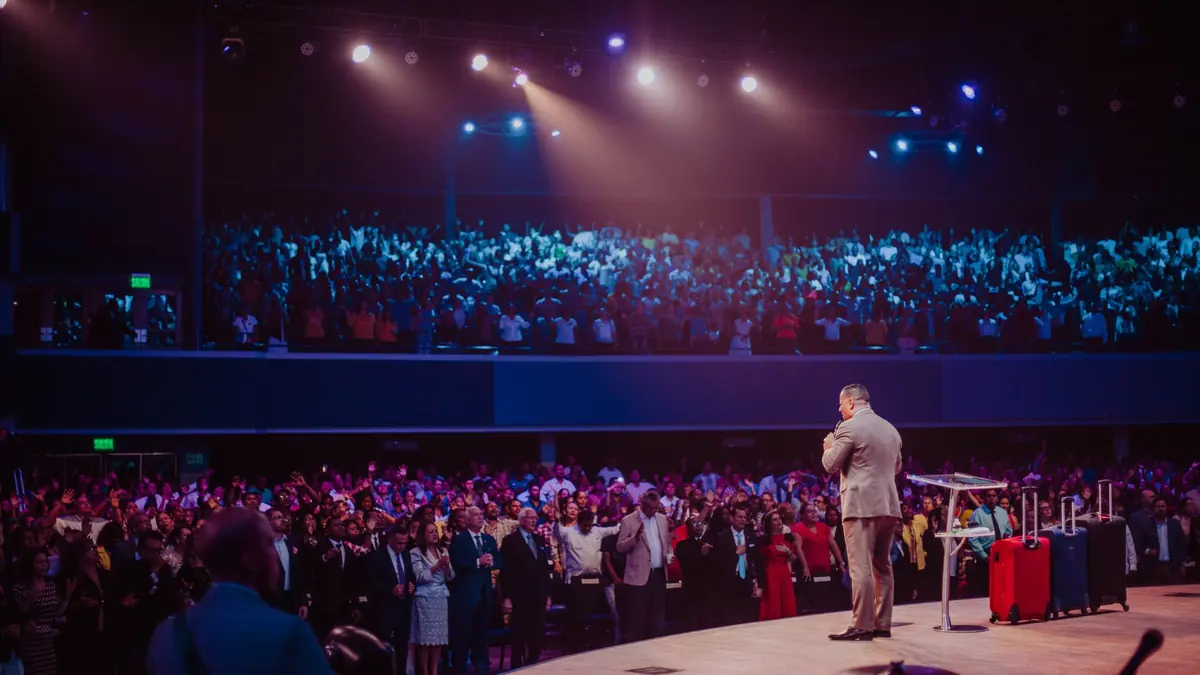
A three or four-day conference is not one shoot, it is a new shoot every day, stacked on top of yesterday's unfinished editing if you let it get away from you. The photographers who come out the other side of a multi-day event well are the ones who treat each night as a hard deadline, not a buffer.
The Nightly Cadence That Actually Holds
The workable pattern is cull, edit, and deliver each day's shoot the same night, before sleeping, rather than letting shoots stack up across the event. This sounds obvious and is still the thing most photographers fail to do under conference fatigue, because after a 10-hour shooting day, editing feels like the last thing you want to do. The alternative, saving everything for after the event, means facing 3 or 4 days of unedited work at once, with the earliest days already fading from memory in terms of which shots mattered most.
Speaker and Sponsor Shot Lists, Checked Nightly
Conferences almost always come with a list of required shots: specific speakers on stage, sponsor booth coverage, keynote moments, networking shots for the recap deck. Checking this list against the day's actual take every night, not at the end of the event, is the only reliable way to catch a missed speaker or an under-covered sponsor while there is still time to fix it the next day. Discovering a gap on the last day of a four-day conference leaves no room to correct it.
A Consistent Look Across Changing Stage Lighting
Conference stage lighting changes constantly, different rooms, different times of day, different production teams running different color temperatures for keynotes versus panel sessions. Without a deliberate correction step, a recap gallery pulled from all four days can look like it came from four different events. Batch color correction, applied per session or per room rather than assuming yesterday's settings carry over, keeps the delivered gallery visually coherent even though the raw footage varied considerably. imagic's batch editing supports applying and adjusting a consistent base look across each day's session groups without rebuilding the correction from scratch each night.
Living Out of a Laptop
Multi-day conference work usually means editing from a hotel room or a corner of the venue on a laptop, not a full desktop setup, which changes what is realistic for a nightly session. The workflow needs to fit inside battery life and a smaller screen: cull first to cut the working set down fast, batch edit rather than fine-tuning every frame, and export only what that night's deliverable actually needs, holding deeper editing for a lighter-touch final pass after the event if the contract calls for one. See same-day delivery for event photography and color grading vs color correction for more on keeping a look consistent across changing light. imagic's culling and batch tools apply well to event and corporate photography work like this, and more nightly and deadline workflows live in the tips and workflow archive.
What a Realistic Night Looks Like
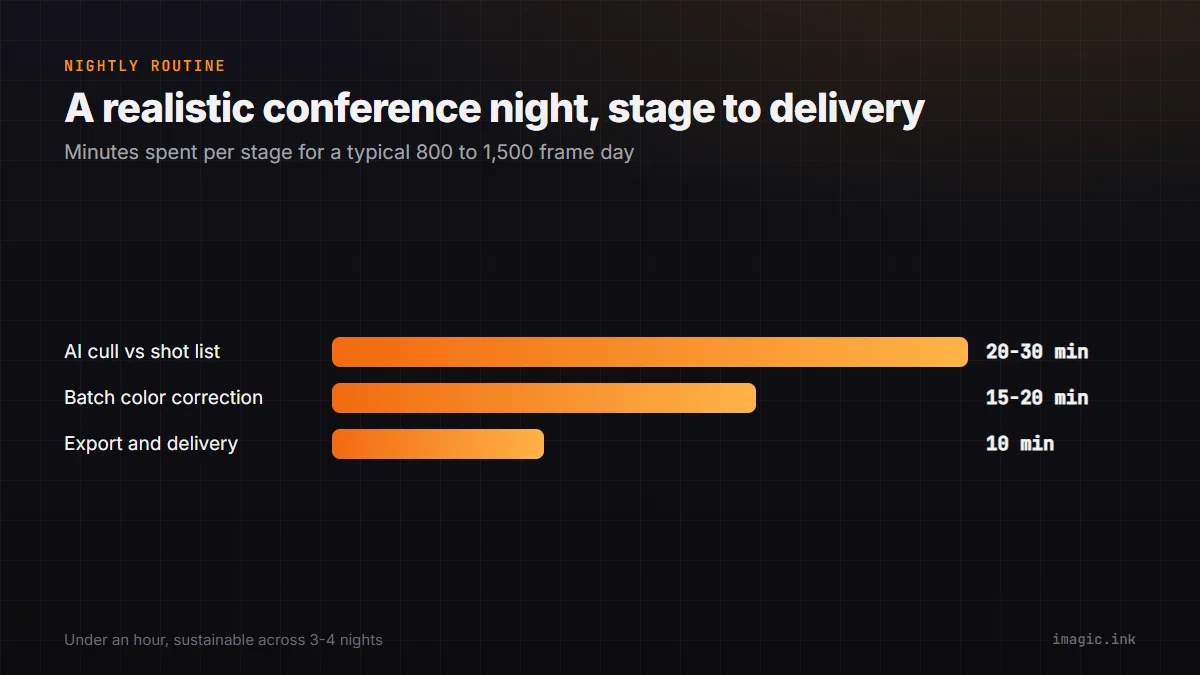
For a typical conference day producing 800 to 1,500 frames: AI-assisted culling against the shot list, 20 to 30 minutes; batch color correction for the day's sessions, 15 to 20 minutes; export and delivery of the day's set, 10 minutes. That is under an hour, tight but sustainable across three or four consecutive nights, which is the entire point.
Frequently asked questions
Is nightly delivery really necessary, or just nightly editing?
Nightly editing is the non-negotiable part; whether you deliver each night or hold everything for one final delivery depends on the client's contract, but the editing itself should not stack up unfinished.
How do I keep energy for editing after a full shooting day?
Keeping the nightly session short by design (batch editing, not per-photo perfection) is what makes it sustainable; treat it as a fixed one-hour task, not an open-ended session.
What if stage lighting changes mid-session, not just day to day?
Group your batch correction by the actual lighting change, not strictly by day; a keynote-to-panel transition with a different color temperature usually needs its own batch pass.