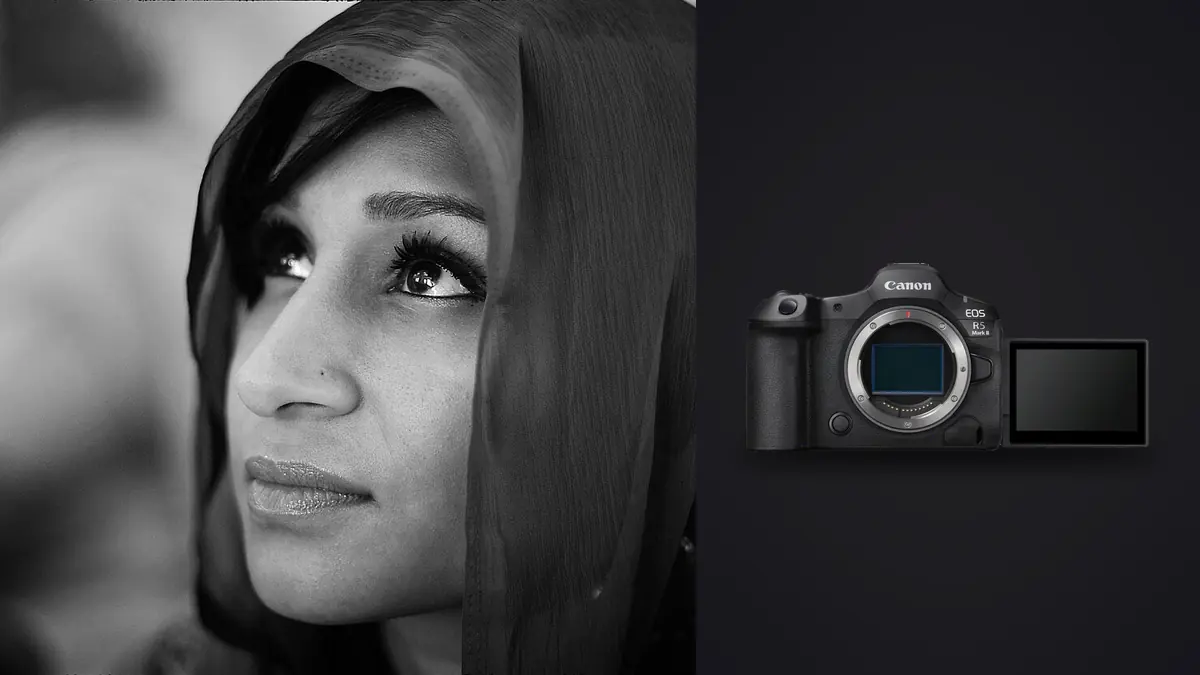
Boudoir and intimate portraiture put different demands on a camera than most other genres. The subject is usually a client who has never modeled before, the room is often small (a bedroom, a hotel suite, a rented studio with one window), and the photographer needs to keep talking, directing, and building trust while still nailing focus on an eye that might be three inches from a dark pillow. I have been shooting this genre with a Canon EOS R5 Mark II since it replaced my original R5 body, and the upgrade changed more about how I work than the spec sheet suggested it would.
This isn't a review pulled from a press release. It's what actually happens across a real session: the settings to dial in before the subject arrives, where the camera helps and where it doesn't, and what to do with the four hundred to eight hundred RAW files that come out the other side.
Why This Body Suits the Genre
Three things about the R5 Mark II matter more here than they would for, say, landscape or sports work.
First, the stacked sensor. My old R5 had a sensor readout that could show skew when a subject moved quickly under electronic shutter, which came up more than you'd think when someone shifts a robe off their shoulder or turns their head on a count of three. The Mark II's stacked design reads out fast enough that I no longer think about rolling shutter distortion during those transitional moments, and I can leave the camera in fully silent electronic shutter mode for the entire session without worrying about warped edges on fast movement.
Second, silence. A mechanical shutter clack in a quiet bedroom setting breaks the mood every single time, and clients who are already nervous about being photographed in this context notice it immediately. Full silent shooting on the R5 Mark II is genuinely silent, not "quiet mode" silent, and that lets me keep shooting through the small movements and adjustments that happen between poses without the subject flinching at every frame.
Third, eye control autofocus. I was skeptical of this when Canon first shipped it on the R3, but on the R5 Mark II it means I can keep eye contact with the subject while the camera tracks focus to wherever I'm actually looking in the viewfinder. For a genre built on making someone comfortable, not having to bury my face in the back of a camera and fiddle with a joystick between poses is a bigger deal than any resolution number.
Lenses I Actually Reach For
Room size dictates lens choice more than creative preference in this genre. Most sessions happen in spaces where I can't back up more than eight or ten feet from the subject.
The RF 50mm f/1.2L is my default for anything shot in a normal bedroom. At f/1.2 to f/2, it renders skin with a softness that flattens minor texture without looking artificial, and the working distance at that focal length still lets me fit a full-length pose in a cramped room. The RF 85mm f/1.2L comes out for tighter, close-up work (hands, collarbones, partial face) where I want maximum separation from the background, but it needs more room to work with than most bedrooms actually offer, so it's more of a studio lens on this body.
For wider environmental frames, the window-lit shot that shows the whole scene, I've been using the RF 35mm f/1.4L. Distortion at that focal length is manageable enough that it doesn't widen limbs or faces unpleasantly, provided I stay mindful of where I place the subject in the frame relative to the edges.
Settings by Light Source
Most of my boudoir work falls into one of four lighting setups, and I've settled into a fairly consistent starting point for each on this body. These are my actual working numbers, not textbook recommendations, and they assume ISO auto-range capped based on what I'm willing to clean up later.
| Light source | Aperture | Shutter speed | ISO range | AF mode |
|---|---|---|---|---|
| North-facing window, midday | f/1.8 - f/2.5 | 1/160 - 1/250 | 100 - 400 | Eye Detect + Eye Control, Servo |
| Single continuous LED panel, dim room | f/1.4 - f/2 | 1/125 | 800 - 3200 | Eye Detect, Servo, expanded zone |
| Off-camera flash, low-key backdrop | f/2.8 - f/4 | 1/200 (sync) | 100 - 200 | Eye Detect, One Shot |
| Ambient only, evening hotel room | f/1.2 - f/1.8 | 1/100 - 1/125 | 1600 - 6400 | Eye Detect, Servo, whole-area AF |
The evening ambient row is where the R5 Mark II earns its keep over the original. Files at ISO 6400 on this sensor still hold enough shadow detail in dark linens and dark hair that I can pull them back in post without the blocked-up, muddy look I used to get on the first-generation body past ISO 3200. That headroom means I stop worrying about ISO and start worrying about the pose, which is the correct order of priorities in a session where the subject is watching my face for reassurance, not my exposure meter.
The Part Nobody Puts in the Camera Review
A boudoir session shot on silent electronic shutter at 20 to 30 frames per second produces an absurd number of files. I regularly walk away from a ninety-minute session with six hundred to nine hundred RAW frames, most of them near-duplicates: three or four frames of the same pose with only a fraction-of-a-second difference in expression or hand position. Culling that volume by eye, at full resolution, on a laptop screen, used to eat two to three hours before I even opened an editor.
This is where I stopped doing that manually. I run the full take through imagic before I touch anything else. It groups the burst sequences and near-duplicate frames automatically, which on a genre this repetitive in its shooting pattern cuts what would be a folder of six hundred images down to a much smaller set of genuinely distinct moments to review. It also scores sharpness locally, frame by frame, which matters more than usual here because eye control AF is good but not infallible in dim, low-contrast rooms, and I'd rather have software flag the three frames per burst where focus actually landed on the eye than trust my tired eyes at 11pm to catch the miss.
The privacy angle matters as much as the speed here. This is intimate material, and it stays on my machine through the entire culling and review process because imagic processes everything locally with no cloud upload step. For a genre where trust is everything, not having to think about whether a folder of images is passing through a third-party server during culling is worth more to me than any single feature on the camera body.
Once I've got a shortlist, I lean on the apply_my_style preset in imagic, trained on my own past edits rather than a generic filter. My boudoir color grade is fairly specific: warm midtones, slightly lifted shadows, skin that reads warm without tipping orange. Having that trained on my own edit history means new sessions land close to my finished look before I open the RAW files properly, instead of starting from a flat baseline and rebuilding the same curve every single time.
If you're new to this kind of volume-heavy workflow, the mechanics of how automated culling actually separates the keepers from the near-duplicates are worth understanding before you trust it with a real client shoot; I go into more detail on how AI photo culling works elsewhere on this site, and there's a broader look at speeding up the whole RAW-to-delivery workflow if culling is only one part of your bottleneck.
Card and File Management Through a Session
The R5 Mark II's dual slots (CFexpress Type B and UHS-II SD) matter more in this genre than the raw write speed numbers suggest, mostly because of how I use the second slot. I shoot RAW to the CFexpress card and a JPEG backup to the SD card, and the JPEG backup becomes my in-session preview: I can hand the camera to a nervous first-time subject and let them scroll through a handful of frames on the rear screen without them seeing the full-resolution RAW files or slowing down the CFexpress buffer.
Buffer depth is the other practical number. Shooting RAW (not C-RAW) at the higher continuous rates, I can get a burst of roughly forty to fifty frames before the buffer meaningfully slows write-out, which is plenty for a single pose sequence but means I do actually pause between poses rather than holding the shutter down for the entire ninety-minute session. Switching to C-RAW extends that runway noticeably, at the cost of a bit more compression artifacting in the deep shadow areas I sometimes need to lift.
Client Comfort and On-Camera Habits
A few habits I've built specifically around this body and this genre:
I keep the articulating screen flipped out and angled toward myself for low-angle and elevated shots, which happens constantly in boudoir work where the best angle is rarely eye level. Being able to check focus and framing without contorting into an awkward crouch in front of the subject keeps the session moving and keeps me looking like I know what I'm doing, which matters for the subject's confidence.
I disable the AF assist beam entirely. A bright red or white light hitting someone's face in a dim, intimate setting is jarring and immediately unprofessional-feeling, and the R5 Mark II's low-light AF performance is strong enough in most of my setups that I don't need it anyway.
I also shoot almost everything in electronic first-curtain silent mode rather than fully mechanical, reserving the mechanical shutter only for flash-sync heavy setups where I want to rule out any electronic shutter banding under certain continuous light sources.
Where the Camera Still Has Limits
It's not flawless for this work. Eye control AF calibration drifts if you switch who's behind the camera mid-session (a second shooter, an assistant), and recalibrating mid-shoot costs a couple of minutes you don't always have. In very low, single-source continuous light, autofocus hunting still happens occasionally on subjects wearing dark fabric against a dark background, and I've learned to switch to a single AF point and confirm focus manually in that specific situation rather than trusting the wider zone tracking. And at 45 megapixels, file sizes add up fast across a shoot this volume-heavy, which is part of why sorting the take efficiently before editing matters as much as any setting on the camera itself.
Battery life is the other thing I underestimated going in. Full silent electronic shutter, IBIS running continuously for handheld low-shutter work, and the rear screen flipped out for most of a session pulls more from the battery than my old R5 ever did on a comparable job. I now carry two spares for anything past a ninety-minute session, where one spare used to be plenty. It's a minor logistics change, but it's the kind of thing that only shows up after a few real sessions rather than in a spec comparison.
Frequently Asked Questions
Is the Canon EOS R5 Mark II worth upgrading to from the original R5 specifically for boudoir work?
If you're shooting mostly in dim, mixed-light bedrooms and rely on silent shutter through most of a session, yes. The sensor readout improvement and the extra stop or so of usable high-ISO detail solve two problems that come up constantly in this genre. If you mostly shoot boudoir in a controlled studio with strobes and plenty of light, the jump matters less and the original R5 will still serve you fine.
What ISO can you realistically push to before skin detail starts breaking down?
In my experience, files stay clean and workable through about ISO 6400, with grain that reads as texture rather than noise once you're editing at normal viewing sizes. Past ISO 10000 I start seeing chroma noise creep into shadow areas of skin, which is manageable with local noise reduction but changes how much I'm willing to push the shadows afterward.
Does eye control autofocus actually work reliably for a moving, posing subject?
Mostly yes, provided you recalibrate it for the current shooter and lighting at the start of a session. It struggles more in very low, flat continuous light where there isn't much contrast for the eye-tracking camera inside the viewfinder to lock onto, and I fall back to a manually selected AF point in those specific low-light setups.
How do you handle the sheer number of near-identical frames from a single session?
I don't sort them by hand anymore. Running the full take through imagic before opening an editor groups the burst sequences and duplicate-heavy stretches automatically and flags which frame in each burst actually has the sharpest focus on the eye, which turns what used to be a two-to-three-hour manual sort into a shortlist I can review in a fraction of that time, all processed locally on my own machine.