
Ask a photographer with a backlog how many shoots are waiting to be edited and the number often comes with a wince before it comes with an answer. An editing backlog is one of the most common quiet stresses in photography as a business, rarely discussed openly, and it costs more than the obvious delayed deliveries suggest.
The Psychology of a Growing Backlog
A backlog does not feel like a fixed, manageable amount of work; it feels like a debt that grows heavier the longer it sits, partly because each unedited shoot represents a client waiting, a promise unmet, and partly because the backlog itself becomes something to actively avoid thinking about, which paradoxically makes it harder to start chipping away at. This avoidance pattern is well documented in general productivity research on task aversion: the larger and more emotionally loaded a pending task becomes, the more effort it takes just to begin, independent of how long the task would actually take once started.
The Booking Ceiling Nobody Talks About
A backlog imposes a real, if invisible, ceiling on how much new work a photographer can take on, even when the calendar has open shoot dates. Every unedited shoot in the queue represents committed future hours that already exist on the books whether or not new bookings get added, and photographers who keep booking while their backlog grows are effectively borrowing against future capacity they do not yet have a plan to deliver. This is a quieter version of overbooking than an obviously double-booked calendar date, but it produces the same outcome: promised delivery timelines that the actual available hours cannot support.
The Burnout Pattern
Backlogs and burnout feed each other in a fairly predictable cycle: a growing backlog increases the pressure and guilt around every editing session, which makes those sessions less pleasant and more likely to be avoided, which grows the backlog further, tightening the cycle. Photographers who describe losing enthusiasm for editing, a part of the job many genuinely enjoyed early in their careers, often trace it back to a backlog that grew large enough to turn editing from a creative task into a debt-repayment task. Breaking this cycle usually requires addressing the backlog's size directly rather than just trying to feel differently about the same pile of unedited work.
A Practical Backlog Triage Plan
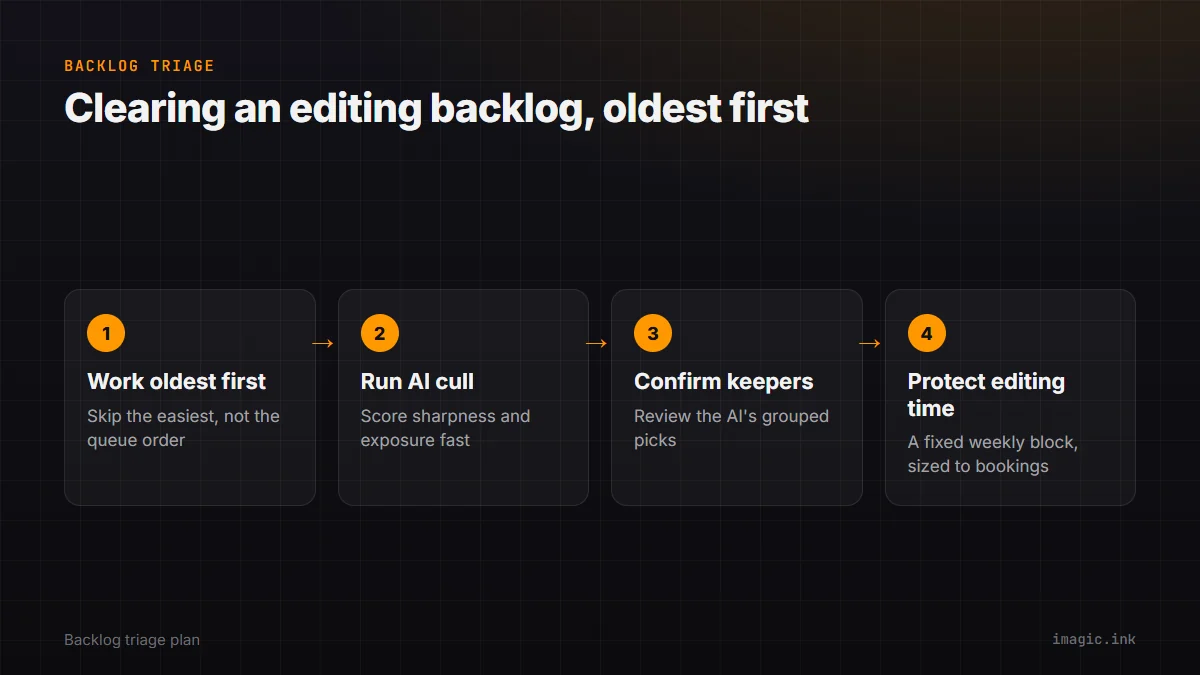
The most effective triage approach for an existing backlog is oldest-first batch culling: rather than picking whichever shoot feels easiest or most urgent, work through the queue in order, running a fast AI-assisted cull on each shoot to get to a manageable keeper set before doing any actual editing. This matters because culling, not editing, is usually the larger time sink in an unaddressed backlog, and getting every backlogged shoot down to its keeper set first creates visible progress and a clear, shrinking to-do list rather than one giant undifferentiated pile. imagic's batch culling can process a shoot's worth of images in the background while you work on something else, which turns "start chipping away at the backlog" into a much smaller first step than opening every image by hand. How to cull 1,000 photos in under 30 minutes covers the mechanics of that first triage pass in detail.
Preventing the Next Backlog
Once a backlog is cleared, the habit that prevents it from rebuilding is usually a fixed, protected block of editing time per week, sized to actually match booking volume rather than optimistically assuming spare time will appear. The industry insights section covers more of the business-side patterns, like true hourly rate and pricing by total hours, that connect directly to why backlogs form in the first place.
Frequently asked questions
How large does a backlog need to be before it is a real problem?
There is no fixed number; it becomes a problem when it starts affecting delivery promises to clients or when the size of it is causing active avoidance and stress rather than just sitting as a normal queue of upcoming work.
Is culling or editing usually the bigger part of a backlog?
Culling is frequently the larger time cost in an unaddressed backlog, since it has to happen before any real editing can begin and scales directly with shot count, which tends to be high in exactly the shoots most likely to get backlogged.
Does clearing a backlog quickly risk lower-quality editing?
Not if the speed comes from faster culling and batch correction rather than skipping review. The goal of triage is removing the queue's psychological weight and the repetitive early steps, not rushing the actual creative decisions.