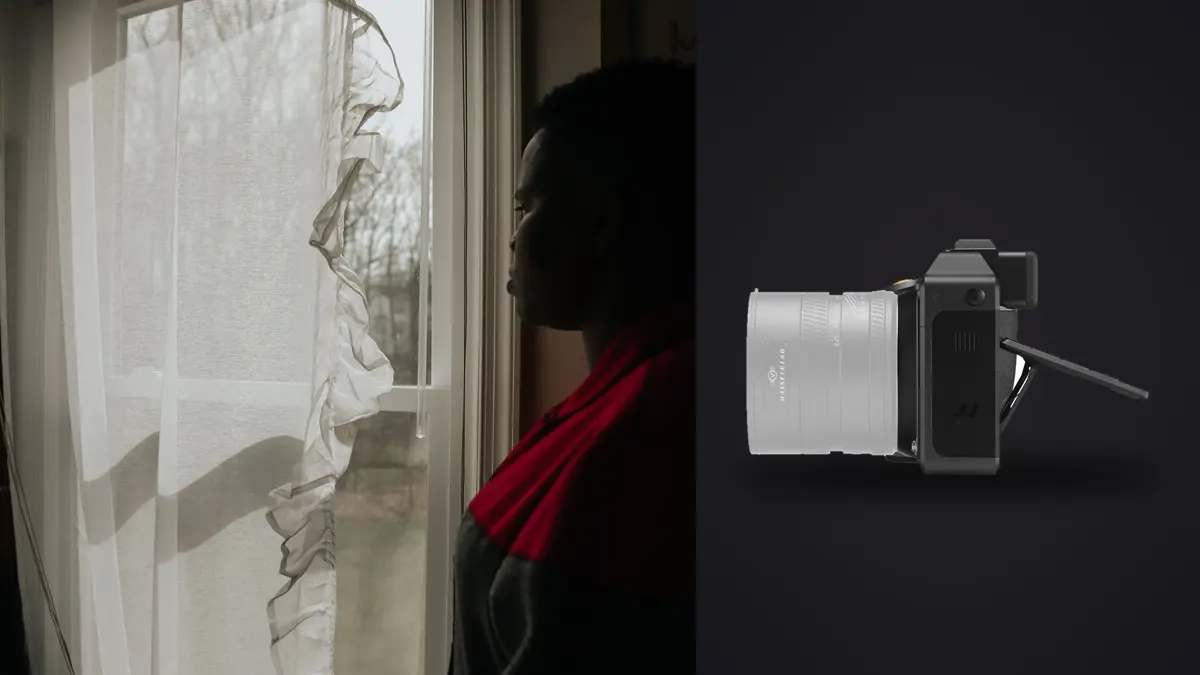
Why I Keep Reaching for the X2D 100C on Boudoir Days
I bought the Hasselblad X2D 100C for landscape work, if I'm honest. It sat in the bag for two months before I took it along to a boudoir session in a hotel suite in Lisbon, and I grabbed it almost as an afterthought because my usual body was in for a sensor clean. That session changed which camera I reach for with this kind of work now. Not because medium format is magic, and not because a 100 megapixel sensor makes anyone a better photographer, but because a handful of specific things about this camera line up unusually well with what boudoir and intimate portraiture actually demand: controlled, patient sessions where skin rendering and quiet operation matter more than autofocus speed or burst rate.
This isn't a spec sheet regurgitation. I've shot maybe thirty boudoir and intimate sessions on this body over the past year and a half, in hotel rooms, home bedrooms, and a couple of makeshift setups with continuous LED panels. Some of what follows is praise. Some of it is a list of things I've had to work around, because the X2D 100C is not a camera built with this genre as its primary use case, and it shows in a few places.
The Sensor Story: Base ISO 64 and What It Actually Does for Skin
The 43.8mm x 32.9mm sensor in the X2D 100C outputs 100 megapixel files at 16-bit color depth, and the base ISO sits at 64. That last number matters more than the megapixel count for this kind of work. A low native ISO paired with a genuinely large sensor gives you a wider usable dynamic range at the low end, which means you can pull shadow detail out of a dim hotel room without the image falling apart into noise and banding the way a lot of full-frame files do once you push them.
Hasselblad's Natural Colour Solution, their proprietary color science baked into how the RAW files get processed in Phocus, has a reputation for skin tones that isn't just marketing. Where I notice it most is in the transition zones, the parts of skin near a shadow line where a lot of cameras start to shift color or lose the subtle warmth-to-cool gradient that real skin has. On the X2D files, those transitions stay smooth even before I've touched a slider. For boudoir work specifically, where a huge portion of the frame is often skin under directional window light, that's not a small thing. It saves real time in post, and it means less color correction fighting against the file rather than working with it.
The tradeoff is that 16-bit, 100 megapixel files are enormous. A single uncompressed 3FR RAW file out of this camera runs somewhere in the 200MB range. A two-hour session with a couple of outfit changes and multiple lighting setups can easily produce 40 to 60GB of RAW data before you've deleted a single frame. I'll come back to what that does to the culling side of the workflow, because it's a real problem and it's the part nobody mentions in the marketing copy.
Autofocus, Honestly: Where It Works and Where It Doesn't
The X2D 100C uses contrast-detection autofocus. There's no phase-detection system and no eye-tracking AF in the way you'd get from a modern mirrorless body built for events or sports. Hasselblad improved the algorithm significantly over the older X1D II, and in good light with a subject holding a pose, it locks accurately and confidently. I've had very few missed-focus frames on posed shots with strong window light.
Where it struggles is exactly the situation a lot of intimate portraiture drifts into: low, warm continuous light (a lot of subjects want candlelight or a single warm LED panel rather than flat studio light), and small, natural movements, a shift of the shoulders, a hand moving through hair, a laugh that isn't fully still. In dim light the contrast AF hunts, sometimes for a full second or more, and by the time it locks the moment has usually shifted. My workaround has been to shoot more deliberately, communicating with the subject about holding a pose for a beat longer than feels natural, and leaning on manual focus with the focus peaking overlay for close, wide-aperture shots where even a slight AF miss ruins the frame.
None of this makes the camera unusable for the genre. It makes it a camera for photographers who are comfortable directing a session at a slower pace, which, honestly, is how I'd recommend shooting boudoir anyway. If your workflow depends on tracking a moving subject through continuous bursts, this isn't that camera.
Choosing XCD Glass for This Kind of Session
Lens choice matters more here than with most genres, because the depth of field at medium format apertures behaves differently than the full-frame equivalents photographers are used to reasoning about, and because closest focusing distance determines how tight you can get on details without switching bodies.
| Lens | Max Aperture | Full-Frame Equivalent | Closest Focus | Where I Use It in a Session |
|---|---|---|---|---|
| XCD 55V | f/2.5 | ~44mm | 0.5m | General coverage, the lens that stays on the body for most of a session |
| XCD 80mm | f/1.9 | ~63mm | 0.61m | Wide-open portraits, isolating a pose against a soft background |
| XCD 90V | f/2.5 | ~71mm | 0.7m | Tighter framing across a room without crowding the client |
| XCD 38V | f/2.5 | ~30mm | 0.35m | Environmental frames, showing the room, the light, the bed or window |
The 80mm at f/1.9 is the one I'd point to if you can only justify one extra lens. Wide open, the falloff is genuinely different from what a full-frame 50mm or 85mm gives you, softer and more three-dimensional, and it's forgiving of slightly imperfect skin texture in a way that flatters rather than smooths artificially. The 38V earns its keep on the wider environmental shots that a lot of boudoir clients want alongside the tighter work, the ones that show the whole room and the light source rather than just the subject.
Working the Room Quietly
XCD lenses use leaf shutters built into the lens rather than a focal plane shutter in the body. Two things fall out of that which matter specifically for intimate work. First, flash sync goes up to 1/4000s, which means you can balance a strobe against bright window light without resorting to high-speed sync workarounds, genuinely useful when a client wants that mix of soft ambient light and a filled-in shadow side. Second, and less talked about, the shutter is quiet. Not silent, but noticeably softer than a focal-plane shutter slapping open and closed. In a genre where a lot of clients are nervous, some for the first time in front of a camera in this context, the mechanical sound of the shutter is part of how comfortable the room feels. A loud, clattery shutter draws attention to the fact that a photo was just taken. A quiet one lets the session keep its rhythm.
Battery life sits around 420 shots per charge under CIPA testing, which in practice, given how deliberately I shoot with this body, usually gets me through a full session without a swap, though I keep a spare in the bag regardless. The rear touchscreen tilts, which is more useful than it sounds when you're shooting low angles from a chair or the floor and don't want to be flat on your stomach checking framing.
The File Size Problem Nobody Warns You About
Here's the part of owning this camera that surprised me most, and it has nothing to do with image quality. A session that produces 40 to 60GB of RAW files across a couple hundred frames is not a trivial thing to sort through, especially when the images are, by the nature of the genre, sensitive and personal. Client trust in boudoir photography is built on discretion, and a workflow that involves uploading a client's most private images to a cloud culling service to get through the sorting faster is a real liability, not a convenience.
This is where I ended up leaning on imagic for the culling pass, mostly because it processes everything locally on my laptop rather than sending files anywhere. For this genre specifically, that's not a minor feature, it's close to a requirement once you think through what's actually in the files. The sharpness scoring has also caught things I'd have missed scrolling through 200-plus thumbnails at midnight after a session, particularly on the wide-open 80mm frames where the plane of focus is thin enough that a frame can look sharp on a small preview and turn out slightly soft around the eyes at full resolution. And because a lot of boudoir sessions produce genuine bursts, three or four near-identical poses in a row while I chase the exact right hand position or expression, the duplicate and burst clustering saves a real chunk of the sorting time, grouping those near-identical frames so I'm comparing five similar shots against each other instead of scrolling past them individually in a folder of two hundred. If you're curious how that kind of automated culling actually evaluates focus and duplicates under the hood, I wrote a longer breakdown at how AI photo culling works.
Getting a Consistent Look Across a Session
One thing medium format files reward is a consistent edit, because the color and tonal depth in the RAW data holds up under fairly aggressive grading without falling apart. Once I'd settled on how I wanted a set of boudoir edits to look, warm but not orange, contrast held in the shadows rather than crushed, I trained imagic's apply_my_style feature on a batch of my own finished edits from past sessions. It's built to learn from your own prior editing rather than push a generic filter, so the presets it generates actually match how I already grade rather than nudging me toward someone else's look. It doesn't replace doing the fine work on hero images, but it gets the bulk of a 150-frame session to a consistent starting point fast, which matters when you want a gallery finished quickly and don't want to hand-edit every single frame at full attention. Anyone building out a grading approach from scratch might also find the workflow notes in this color grading guide useful as a starting reference.
Settings I Actually Use
For window-lit sessions I sit around f/2.8 to f/4 on the 55V or 90V when I want more of the body in focus across a reclined pose, and open up to f/1.9 to f/2.2 on the 80mm for tighter, more intimate framing where I want the background to disappear. ISO rarely goes past 800 even in dim hotel rooms, because the 5-axis in-body stabilization (rated up to 7 stops) lets me hold shutter speeds down around 1/30s to 1/60s for static poses without introducing shake, and I'd rather drop shutter speed than push ISO on a camera whose whole appeal is a clean base file. Focus stacking, something the X2D 100C supports natively for product and landscape work, essentially never comes into play here since a single, correctly placed plane of focus is what the genre wants, not maximum depth of field.
The internal 1TB SSD plus a CFexpress Type B card in the second slot means I'm not juggling card changes mid-session, which matters when momentum and trust with a subject are fragile things you don't want to interrupt for a memory card swap. I do back up to the CFexpress card as the primary and treat the internal SSD as the redundant copy, then pull everything onto an encrypted external drive the same night. Given what's on these cards, I'm not comfortable with anything less.
Who This Camera Is Actually For
At roughly $8,199 for the body alone, this isn't a camera you buy to test out a genre. It makes sense if you're already shooting boudoir or intimate portraiture regularly, care enormously about skin rendering and file quality, and are willing to slow your shooting pace down to match a contrast-detection AF system that rewards patience over speed. If your business depends on shooting fast, high-volume sessions with a lot of movement, or if you're working solo without an assistant and need a body that tracks focus aggressively while you're also managing lighting and directing a client, a modern full-frame mirrorless body will serve you better day to day. The X2D 100C is a specialist's tool for a genre that, done well, is already about specialization and unhurried attention.
Frequently Asked Questions
Is the Hasselblad X2D 100C too slow for boudoir photography?
It depends entirely on how you shoot. For directed, posed sessions where the client holds a position while you compose and the AF locks, it's not a problem in practice. For candid movement or fast-changing poses, the contrast-detection autofocus will frustrate you, and a faster-focusing full-frame body is the better tool.
How big are the RAW files, and what does that mean for storage?
Individual 3FR files run around 200MB. A typical two-hour session with outfit changes can produce 40 to 60GB before culling. Plan for fast external storage, a solid backup routine, and a culling tool that can chew through several hundred large files without choking, since dragging that volume of imagery around in a standard folder browser gets slow fast.
Do I need to shoot medium format to get good skin tones in intimate portraiture?
No. Plenty of excellent boudoir work is shot on full-frame and even APS-C bodies with the right light and a skilled editor. What the X2D 100C offers is a head start, cleaner tonal transitions straight out of the file, which saves time in post and gives you more room to grade aggressively before things fall apart. It's an advantage, not a prerequisite.
What's the biggest workflow change moving from a full-frame body to this camera?
Culling and storage, more than anything about shooting itself. The jump from roughly 40-50MB full-frame RAWs to 200MB medium format files changes how you sort a session, how long backups take, and how much you need to lean on software that can score sharpness and cluster duplicates automatically rather than eyeballing every frame at full resolution.