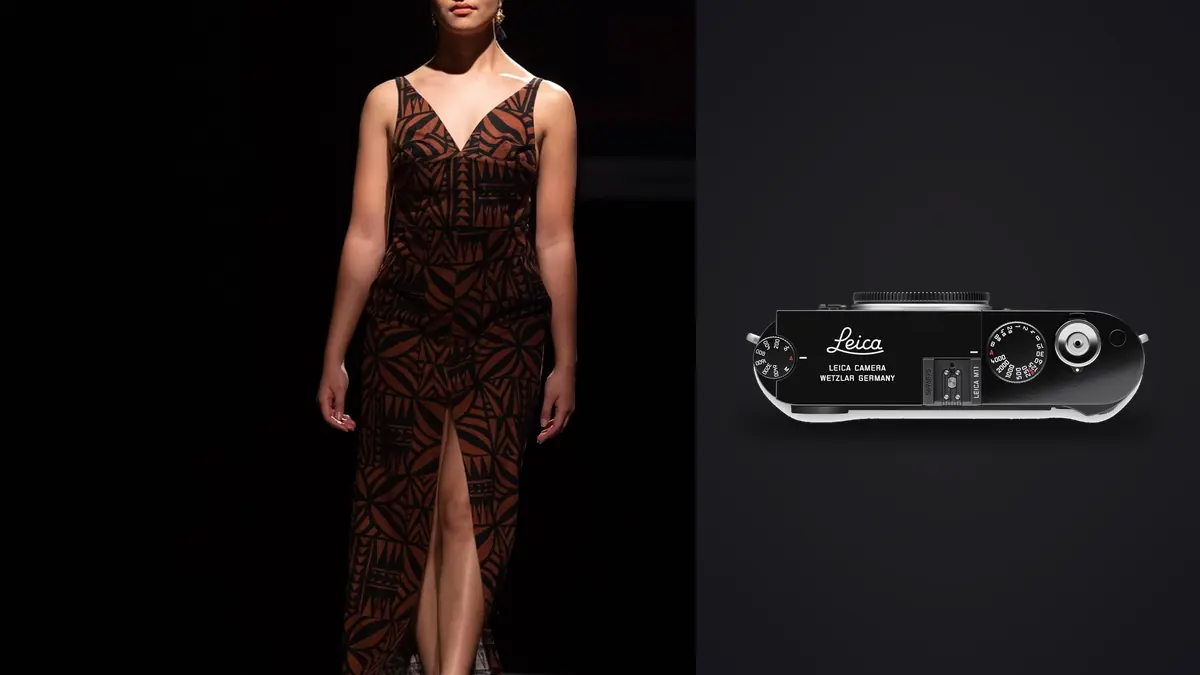
Picture putting a Leica M11 on a paid lookbook job, where the client's producer asks, only half joking, whether you've forgotten your "real camera" at home. Fair question. A rangefinder with no autofocus, no continuous eye tracking, and a viewfinder that doesn't show you exactly what the lens sees is a strange tool to bring to a set where a brand is paying by the hour and expects thirty finished looks by the end of the day. Bring it anyway, mixed in alongside a mirrorless body you trust for the fast stuff, and by the third look it is clear what the M11 is good for on this kind of work and exactly where it will slow you down if you let it.
Why a rangefinder shows up on a lookbook set at all
Lookbooks are not editorial spreads. Nobody is chasing a decisive moment across a runway. Most of the day is a model standing in three-quarter and full-length poses against a seamless or a clean wall, holding still for a beat while you nail focus, exposure, and garment detail. That stillness is exactly the situation a rangefinder handles well. You're not tracking a moving subject through a crowd, you're framing a static or slow-moving person and taking your time on the patch. The M11's 60 megapixel sensor also earns its keep here in a way it wouldn't on a wedding or a sports assignment: lookbook deliverables get cropped hard, into square crops for a product grid, tight verticals for a mobile product page, sometimes a full-bleed hero for the homepage carousel. Having 60 megapixels of clean, low pass filter free detail to crop into is genuinely useful when the client asks for four different aspect ratios from the same frame.
None of that means the M11 is the right choice for the whole day. I use it selectively, and figuring out when to reach for it versus when to pick up something with autofocus is most of what this piece is actually about.
The manual focus tax, honestly stated
Focusing a rangefinder is a skill, and it's a skill that degrades under pressure. On a calm test shoot with a friend standing still, I can nail the patch on a model's near eye almost every time. On a real set with a stylist tugging a hem, a client standing behind you narrating notes, and a producer checking the clock, the hit rate drops. It's not dramatic, maybe one frame in eight misses critical focus instead of one in twenty, but at 60 megapixels a soft eye is obvious the moment you zoom past 50%, and "close enough" doesn't survive a client review on a large monitor.
The M11 gives you two ways to fight this. The built-in optical rangefinder patch is fast once you're used to it and works without any accessory, but it's a small, precise target and it rewards patience more than speed. The Visoflex 2 electronic viewfinder, which clips onto the hot shoe, adds focus peaking and a magnified live view, and on this job I lean on it more than I expected to. Peaking on garment texture, like the weave of a linen jacket or the stitching on a denim cuff, is a genuinely reliable way to confirm focus before you commit, and it's faster than second-guessing the patch when the light is uneven. The tradeoff is that the Visoflex adds bulk and another battery to manage, and it does slow down your first few looks while you retrain your eye to trust an EVF instead of the optical finder you bought the camera for.
Where this really bites is volume. A single look with three or four poses and a couple of exposure brackets can produce fifteen to twenty-five frames once you count the misses, the blinks, and the safety shots. Multiply that by twenty-five looks in a day and you're not looking at a small edit anymore, you're looking at five hundred to eight hundred raw files where a meaningful chunk are near duplicates with subtle, easy to miss focus differences between them.
What the files actually give you
The M11 writes DNG in three resolution options, full 60 megapixels, a 36 megapixel crop, and an 18 megapixel option for when you genuinely don't need the full file. For a lookbook, shoot full resolution almost without exception, because the whole value proposition of bringing this camera is the crop flexibility for e-commerce grids and vertical product pages. Where that decision costs you is storage and transfer time: a day of full-resolution DNGs plus the JPEG previews kept for quick client reference easily clears 150 to 200 gigabytes, and cards can fill faster than you expect mid-afternoon. Bring more storage than feels reasonable.
The sensor's dynamic range is genuinely strong for garment work, recovering shadow detail in dark denim or navy suiting without the color shift you sometimes get pulling shadows on other systems. That matters more on lookbook work than people expect, because clients care intensely about color accuracy on the product itself. A jacket that reads slightly warm compared to the actual swatch is a note you'll get back, guaranteed.
Running the actual day
A few practical notes for doing this repeatedly rather than once. The M11's electronic shutter option, silent and capable of very high speeds, is worth using in a showroom or boutique setting where a client or brand team is standing a few feet away watching you work. A loud mechanical shutter clacking away all day gets tiring for everyone in the room, and people in the room tend to notice how much quieter the set feels compared to a shoot with a DSLR-style body. That's a small thing that makes the client experience better even if it never shows up in the final images.
Battery life is fine for a controlled indoor day, less fine if you're also running the Visoflex and shooting full resolution DNG plus JPEG all day. I carry three batteries and haven't run dry, but I've come close on longer days with a lot of chimping between looks. USB-C charging means you can top up during a lunch break off a power bank, which has saved me more than once.
Tethering is the honest weak point. If the client wants live tethered review on set, which happens on a meaningful share of commercial lookbook jobs, the M11's tethering support is not as smooth or as universally compatible with tethering software as what you get from Canon or Sony bodies built around that use case. On jobs where tethering is a hard requirement from the client, either use a second camera for the tethered portion or set expectations up front that review happens in batches rather than live.
Lens choices that actually earn their spot in the bag
For most of a lookbook day I'd stay on a 50mm, specifically the APO-Summicron-M 50mm f/2, because it renders garment texture with a level of micro-contrast that makes fabric look genuinely tactile in the final image, and f/2 gives you enough separation from a seamless background without going so shallow that focus errors become unforgivable. For tighter product detail shots, a stitched cuff or a logo placement, I'd switch to a 90mm, usually the APO-Summicron-M 90mm f/2, which compresses the background nicely for a half-body crop. A 35mm stays in the bag for wider environmental shots when a look is being presented against a location backdrop rather than seamless, and it's also the lens to reach for if the day includes any loose behind-the-scenes or process shots the brand wants for social alongside the formal lookbook set.
I've tried an 28mm for full-length looks and found the perspective distortion at close working distance unflattering for garment proportions unless I step back and lose some of the intimacy the M system is good at in the first place. If full-length is the majority of the shot list, a 50mm from a bit further back does the job with less distortion risk.
How it stacks up against what most lookbook photographers actually bring
This isn't a spec sheet comparison so much as a working comparison against the three cameras I most often see other photographers running on similar jobs. Prices below are rough street prices for body only, and they move, so treat them as ballpark rather than gospel.
| Camera | Focus for rapid look changes | Realistic keeper rate per look | Shutter sound on set | Crop room for mixed 4:5 / 1:1 / vertical delivery | Body-only street price |
|---|---|---|---|---|---|
| Leica M11 | Manual, rangefinder patch or Visoflex peaking | Lower, 6-10 frames per look kept | Very quiet (electronic shutter option) | Excellent (60MP, no low pass filter) | ~$8,995 |
| Sony A7R V | Fast AI subject tracking, near-instant reacquire | High, 12-16 frames per look kept | Quiet, but mechanical option is audible | Excellent (61MP) | ~$3,900 |
| Fujifilm GFX100S | Slower hybrid AF, needs deliberate reframing | Moderate, 8-11 frames per look kept | Moderate | Outstanding for print (102MP) | ~$5,999 |
| Canon EOS R5 | Fast, reliable eye/body tracking | High, 12-15 frames per look kept | Quiet electronic option | Very good (45MP) | ~$3,899 |
Read that table honestly and the case for the M11 on a lookbook job is narrower than marketing copy would suggest. It wins on file quality per pixel and on being unobtrusive in a room with a client present. It loses on raw keeper rate and on speed through a big shot list. A sensible split is using it for maybe a third of a typical lookbook day, the hero looks and any garment detail shots where the extra care pays off, and leaning on a faster autofocus body for the volume looks where the client mainly needs consistent, correctly focused coverage across twenty-five outfits in six hours.
The culling workflow that makes this survivable
Manual focus at 60 megapixels across hundreds of near-duplicate frames is where the real cost of this camera shows up, and it's not on set, it's at the desk afterward. I stopped trying to judge focus on the back of the camera or even on a laptop screen at full brightness in a noisy studio years ago, because I was making bad calls under bad viewing conditions and then finding the mistake three days later during retouching.
What I actually do now is dump the cards straight into imagic during the lunch break or at the end of the day, run its local sharpness and focus scoring across the full take, and let it flag which frames in each burst of rangefinder attempts actually landed critical focus on the garment or the model's eye rather than trusting my gut from a quick glance. Because everything runs locally on the laptop, there is no need for unreleased collection images to touch a cloud service before the brand has approved anything, which matters more on lookbook work than most other genres since these are frequently pre-launch products under embargo. The duplicate and burst clustering groups the six to ten near-identical frames from each look together automatically, so instead of scrubbing through five hundred individual thumbnails I'm reviewing maybe forty clusters and picking the sharpest survivor from each. Once the culling pass is done, run the flat DNGs through an apply_my_style preset trained inside imagic on finished frames from earlier lookbook-style work, which gets skin tone, contrast, and overall color in the right neighborhood before the files ever open in Capture One for the garment-specific retouching a client would actually pay for. It doesn't replace that finishing work, it just means I'm not starting every single frame from a flat, uncorrected baseline. If you're curious how the scoring itself works under the hood, we've written more on how AI photo culling actually evaluates sharpness, and if the volume problem on shoot days like this sounds familiar, the workflow tips in our faster photo workflow guide cover more of the same ground from a broader angle.
Frequently Asked Questions
Can the M11 actually keep pace with a multi-look, multi-outfit lookbook day?
It can, but not as the only camera in the bag on a job with a tight schedule and twenty-plus looks. Use it for a portion of the day where the extra care on focus pays off in the final crop quality, and keep a faster autofocus body available for the looks where the client mainly needs reliable, consistent coverage fast. Trying to shoot the entire day solely on the M11 under time pressure is where photographers get burned by missed focus they don't catch until the edit.
Do brand teams or agencies push back on manual-focus rangefinder work for e-commerce deliverables?
Almost never, because the final image is what gets judged, not the camera that made it. Nobody reviewing a product page crop can tell it came off a rangefinder versus an autofocus body. The pushback tends to be about pace on set, a producer worried about falling behind schedule, not about the technical result once delivered files are in hand.
Is a 60 megapixel file overkill for an image that ends up as a small product thumbnail?
For the final thumbnail, yes, resolution is wasted. But lookbook deliverables rarely stop at one crop. The same frame usually needs to serve a full-bleed hero banner, a square social crop, and a vertical mobile crop, sometimes from a photographer who only got one clean take of that particular pose. Having the extra resolution to crop into without visible softness or noise is what actually earns its keep, not the thumbnail itself.
What changes most when you move from an autofocus body to the M11 for this kind of paid work?
The bottleneck moves from the shutter button to the edit. You'll take fewer usable frames per look on set, which sounds like a downside, but it also means a tighter, more deliberate take with less garbage to sort through afterward, provided you have a reliable way to catch the focus misses before they reach a client. That's the part of the workflow worth solving before your first paid job with this camera, not after.