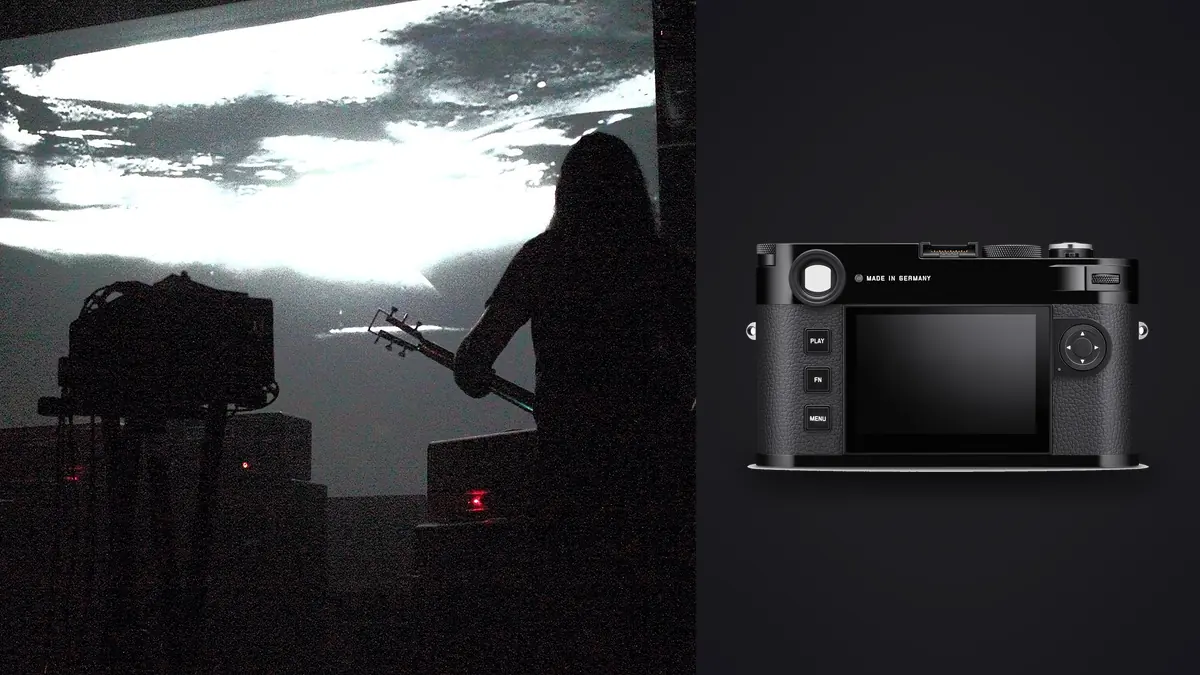
The first time I brought a Leica M11 into a photo pit, a security guard asked if it was even a real camera. No grip to speak of, no autofocus motor whining as I raised it, no red badge screaming "professional gear." Three songs later I had maybe eleven usable frames out of forty, which is a brutal hit rate compared to what I'd get with an autofocus body, but the eleven that landed had a rendering and a quietness to them that made the miss rate worth discussing. This is not a spec-sheet review. It's what actually happens when you take a manual-focus rangefinder into a loud, dark, unpredictable room full of moving humans.
Why bring a rangefinder to a gig at all
Concert photography is usually an autofocus arms race. Eye-tracking, subject detection, twenty frames a second, buffers deep enough to spray through an entire chorus. The M11 offers none of that. It has no autofocus system whatsoever, a top continuous rate of about 4.5 frames per second, and a buffer that starts to choke after roughly fifteen full-resolution DNGs if you're shooting uncompressed. On paper it's a strange tool for a genre defined by unpredictable, fast motion.
What it does have is a shutter that, in electronic mode, makes essentially no sound down to 1/16000s, and a body that at 530 grams (steel top plate) or so disappears against your chest between songs in a way a flagship DSLR with a 70-200 never will. For acoustic sets, spoken-word interludes, or any show where a photo pit shooter standing three feet from the stage with a mechanical shutter clack would actually be audible to the front rows, that silence is not a gimmick. I've had front-of-house engineers specifically ask touring photographers to switch to silent shutter during quiet passages, and the M11 is one of the few full-frame bodies that can do it without an add-on.
Manual focus under moving stage light
Here is the part nobody sugarcoats enough: focusing a rangefinder on a singer who is pacing, headbanging, or backlit by a moving spot is genuinely hard, and it stays hard no matter how many months you've owned the camera. The coincident-image rangefinder patch is precise when the subject holds still and there's enough contrast to see the double image split. Under a strobing wash or a single hard backlight, that patch can go nearly invisible.
The technique that actually works, and the one most pit photographers I know eventually converge on, is zone focusing rather than patch focusing. Pre-set the lens to a distance that matches roughly where the singer works the stage (front monitor line is usually a fixed spot), stop down enough that depth of field covers a meter or so either side, and wait for the moment instead of chasing focus in real time. A 35mm lens at f/5.6 focused to 3 meters gives you a working zone from roughly 2.3 to 4.3 meters, which covers most of a stage-front performance. It means you're not shooting wide open very often at gigs, which runs counter to the usual "fast glass, wide aperture" instinct, but it's the difference between a night of confirmed-sharp frames and a night of near misses.
Lens choices that actually earn their keep
I've rotated through most of the usual M-mount suspects for live work and they are not interchangeable in how they behave in a pit. The table below is based on actual nights out, not brochure numbers.
| Lens | Best use in the pit | Focus throw feel | Where it struggles |
|---|---|---|---|
| Summilux-M 35mm f/1.4 ASPH | Wide stage shots, guitarist-and-crowd context frames | Short, fast to zone-set | Singer gets small if you're stuck at barrier distance |
| Summilux-M 50mm f/1.4 ASPH | Standard vocalist portraits, three-quarter frames | Medium, needs practice to zone confidently | Depth of field gets thin below f/2.8, punishing any zone-focus error |
| Noctilux-M 50mm f/0.95 | Near-black rooms, single-source lighting, dramatic rim light | Long throw, genuinely difficult on moving subjects | Heavy (700g+), and wide open the keeper rate drops hard on anyone not standing still |
| APO-Summicron-M 75mm f/2 | Isolated headshots from barrier distance, drummer through a gap in the crowd | Long throw, tight zone at close range | Framing is unforgiving when a subject moves toward or away from you |
If I had to keep exactly one combination for a full tour of small-to-mid venues, it's the 35mm Summilux. It's forgiving of zone-focus error, wide enough to reframe with your feet, and fast enough for anything short of a completely dark room. The Noctilux is glorious for the two or three frames a night where the light does something special, but it is not a lens you can rely on for coverage.
ISO, noise, and what stage light actually does to a sensor
The M11's native range runs from ISO 64 up to 50000, and the extended top end is there mostly for emergencies rather than daily use. In practice I stay at ISO 3200 as a working ceiling for anything I intend to deliver at full size, and I'll push to 6400 when a venue is genuinely dim and I need the shutter speed to freeze a moving hand on a guitar neck. Past that, luminance noise starts eating into the kind of fine skin and fabric detail the 60-megapixel sensor is supposed to be good for, which defeats the point of shooting a high-resolution body in the first place.
The bigger challenge at most shows isn't average light level, it's the dynamic range spread. A single hard spotlight on a singer's face next to a nearly black background is a five-or-six-stop gap, sometimes more. The M11's sensor holds highlights well enough that I regularly pull back a blown-looking forehead in post, but you still have to expose for the light, not the scene, or you lose the singer's face entirely to clipping. Spot metering off skin under the hot light, then letting the rest of the frame go dark, is the move. A muddy, evenly-lit average exposure looks worse in a live music context than a moody frame with real shadow.
The 60-megapixel file problem
Sixty megapixels sounds great until you've shot four sets in one night and you're staring at four thousand DNGs at 1:30am with a deadline for the venue's socials by 9am. The M11's triple-resolution DNG option (60, 36, or 18 megapixels, chosen per shot or per session) is one of the more underrated features on the spec sheet for anyone shooting live events on a deadline. I drop to 36MP for most club shows now. It's still plenty of resolution for a two-page magazine spread or a large print, the files are noticeably faster to write, review, and cull, and the buffer clears quicker between bursts.
Even at 36MP, though, culling a night's shoot by eye is the actual bottleneck, not the camera. This is where I've leaned on imagic rather than scrubbing through Lightroom's grid view at 1am. Because rangefinder focus errors are subtle (a face that's 90% sharp instead of tack sharp doesn't always announce itself at thumbnail size), I want something checking focus more rigorously than my tired eyes at the end of a four-band night. imagic's local sharpness scoring flags the frames where focus actually landed versus the ones that only look sharp until you zoom to 100%, and because it runs entirely on my laptop rather than uploading a few hundred RAW files somewhere, I'm not waiting on a cloud queue while a venue is asking for photos before doors open the next night. For anyone curious about how that kind of automated focus check actually works under the hood, we've gone into more detail in how AI photo culling works.
A realistic pit-to-published workflow
Most photo pits give you three songs, no flash. That's maybe twelve minutes of actual shooting time producing anywhere from 150 to 400 frames depending on how trigger-happy you are and how many lens swaps you manage. Because the M11 doesn't burst the way a modern mirrorless sports body does, you're not drowning in near-duplicate frames from a 20fps spray, but you still end up with clusters: three or four frames of the same pose taken half a second apart as you waited for the rangefinder patch to line up.
My actual routine after a show: import everything, let culling software separate the technically sound frames from the ones with visible focus drift or motion blur, then hand-pick from what's left for expression and composition, since no software judges "is this the frame where the singer's face reads as the shot" as well as a human who was standing there. Once I've got a select, I lean on a saved edit preset built from my own past concert edits (imagic calls this apply_my_style, and it's trained on my prior edits rather than someone else's idea of a "concert look") to get a fast first pass on color and contrast across the whole set before I go in and hand-finish the handful that are actually going out. If you're rebuilding your own after-show routine from scratch, our piece on speeding up a photo workflow covers a lot of the same ground for non-Leica setups too.
What the M11 quietly can't do
In fairness to anyone weighing whether to bring this camera to a gig at all: it shoots no video, full stop, which rules it out if a venue or artist wants behind-the-scenes motion clips alongside stills. There's no image stabilization, so anything under a 1/60s shutter on a longer lens is a genuine gamble handheld. And the battery, while improved over the M10 generation with USB-C charging, is not built for an all-night festival stage-hop across four bands without a spare or two in your bag. None of these are dealbreakers for a working music photographer who already carries a second body for video and Q&A coverage, but they're worth knowing before a client assumes one Leica does everything.
Frequently Asked Questions
Can you realistically shoot a fast-paced rock show on manual focus?
Yes, but you have to change how you shoot rather than expect the same coverage rate as an autofocus body. Zone focusing at a moderate aperture, rather than chasing focus with the rangefinder patch on every frame, is what makes it workable. Expect a lower keeper rate on close, wide-open shots and a higher one on anything you pre-planned the distance for.
Is the M11's high ISO good enough for dark clubs?
It's usable up to about ISO 6400 for delivery-quality files, and the sensor's dynamic range does a lot of the heavy lifting by protecting highlights under hot stage spots. Past ISO 6400 the file starts losing the fine detail that's the whole reason to shoot a 60-megapixel sensor, so it becomes a last-resort setting rather than a default.
Which M-mount lens should a first-time concert shooter buy?
The 35mm f/1.4 Summilux is the most forgiving choice for someone new to zone focusing at shows. It's wide enough to reframe on the fly and its shorter focus throw makes pre-setting distance less finicky than on a 50mm or 75mm.
Do I need to cull differently with 60-megapixel rangefinder files?
Yes, mainly because focus errors on a rangefinder are easy to miss at a glance but obvious once you're editing at full resolution. Running files through local sharpness analysis before you commit to hand-picking selects saves catching a soft-focus miss after you've already color-graded it.