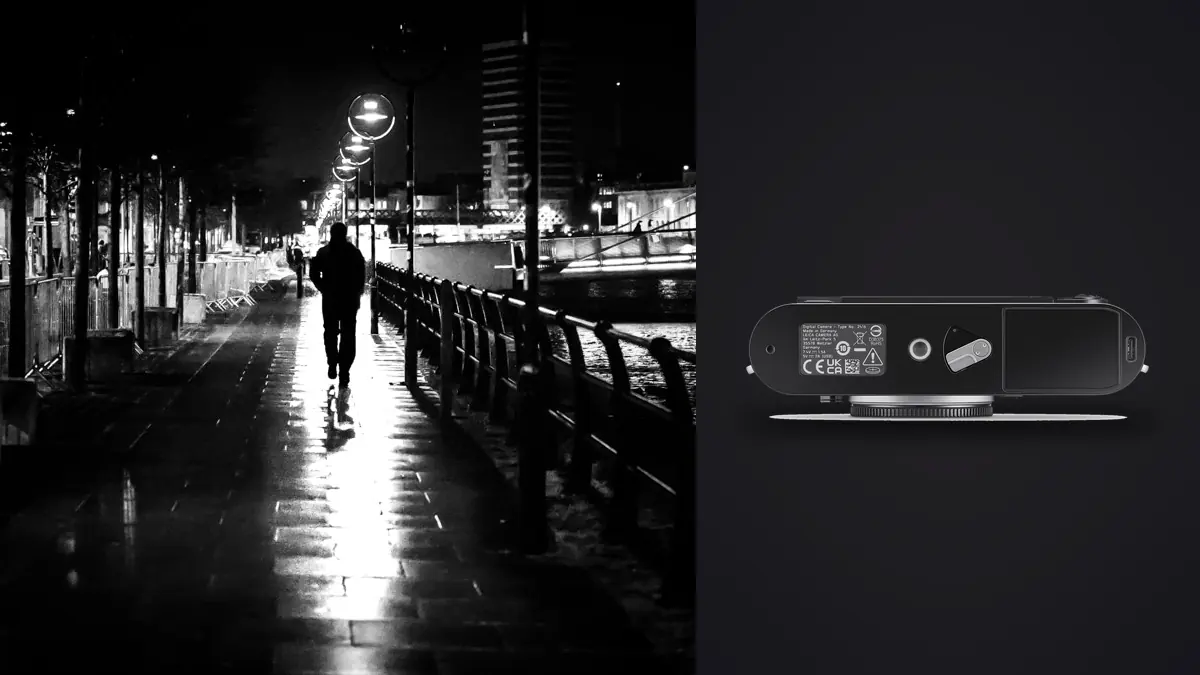
The first thing that changes when you swap an autofocus mirrorless body for a Leica M11 on a street documentary job isn't the pictures. It's your pace. There's no continuous AF hunting between frames, no eye-detect box chasing a face through a crowd. You either had the rangefinder patch aligned before you lifted the camera or you didn't, and that single fact reorganizes how you work a scene from the first hour.
I've now put the M11 through three separate multi-day documentary assignments, a couple of markets, a protest, and a lot of ordinary weekday street work in between, and it's earned a permanent spot in the bag rather than a rotation slot. That doesn't mean it's the easy choice. It's slower to learn, it punishes sloppy focus discipline in a way autofocus cameras simply don't let you notice, and the file sizes at full resolution will wreck an unprepared workflow. This is what actually happens when you take one out to document real, moving, non-cooperative subjects for a living.
Why a manual rangefinder still wins some documentary jobs
Autofocus has gotten absurdly good, so the case for a manual-focus rangefinder in 2026 has to be made on something other than "the AF might miss." It rarely misses on a Sony or Canon body anymore. The case for the M11 is about presence and prediction, not accuracy.
A rangefinder body doesn't black out the viewfinder on exposure the way an SLR does, and even against a modern mirrorless EVF, the optical finder keeps you looking at the actual scene rather than a processed feed of it. You see the moment arriving outside the frame lines before your subject enters them, which matters enormously in documentary work where the decisive gesture often happens a half-second before you'd normally react to it. You're not focusing on a face and hoping the composition around it holds together; you're pre-focusing a distance and waiting for the right thing to walk into that plane.
That's the real skill the M11 forces you to build: zone focusing by habit, not as a fallback technique. Set the lens to f/8, distance to roughly 3 meters, and everything from about 2 to 5 meters is usable without touching the focus ring again. For crowded markets, transit platforms, and protest lines, this is often faster than autofocus because there's no lag between "subject in the zone" and "shutter fires." The camera isn't deciding anything. You already decided.
What a full documentary day with the M11 actually feels like
The body itself is lighter than people expect once you've handled the removable bottom plate version without the optional grip, around 530 grams body-only, which matters after eight hours of carrying it on a strap across a chest rig rather than a shoulder. No mirror box means no mirror slap, and the shutter is genuinely quiet in mechanical mode, quieter still if you drop into the electronic shutter for moments where even a soft click is too loud, a subway car at 2am, a courtroom hallway, a quiet apartment during an interview.
Battery life is the one place the M11 disappoints against DSLR habits and matches mirrorless ones: figure 700 frames if you're disciplined about not chimping the rear screen, closer to 400 if you're a habitual review-checker. I now carry two spare batteries on any job over four hours, and I charge via USB-C directly in the body overnight, which means one cable does the M11, a phone, and a laptop dongle. Small thing, but on multi-day travel documentary work it adds up.
The ISO range goes further than I actually use it. Native sensitivity handles 1600 to 3200 cleanly for evening street work, and I'll push to 6400 without much complaint, but past that the files start losing the tonal separation that makes black and white street work look considered rather than merely underexposed. I treat 6400 as the practical ceiling for anything I intend to print or publish, regardless of what the camera is technically capable of producing.
The triple-resolution DNG option nobody explains well
The M11 lets you shoot DNG at three resolutions from the same 60-megapixel sensor rather than binning pixels in software after the fact, and on a documentary job this is a genuinely useful decision to make deliberately rather than defaulting to maximum resolution every time. Here's how the three modes actually behaved for me across a week of mixed street and interview-based documentary shooting:
| Mode | Approx. resolution | DNG file size | Frames per 128GB card | Where I actually use it |
|---|---|---|---|---|
| L-DNG | 60MP (9528 x 6328) | ~80MB | ~1,500 | Portraits, gallery or print work, key establishing shots |
| M-DNG | 36MP (7416 x 4928) | ~55MB | ~2,300 | General documentary coverage, most of a working day |
| S-DNG | 18MP (5248 x 3472) | ~30MB | ~4,000 | Fast street bursts, protest coverage, web-only delivery |
On the protest coverage day I shot almost entirely in S-DNG. Eighteen megapixels is still plenty for a news wire crop or a social post, the buffer clears faster between frames, and I came home with roughly 2,800 frames on one card instead of maxing it out at full resolution by mid-afternoon. For the same assignment's quieter portrait sessions the next morning, I switched back to L-DNG without changing lenses or workflow, just a menu tap. That flexibility, choosing resolution per situation rather than per camera body, is something DSLR and mirrorless systems rarely offer this cleanly.
Lens choices that hold up on the street
The M11 body is only half the story; the lens you pair with it decides whether zone focusing actually works for you.
A 35mm at f/2 is still the default I reach for on unfamiliar streets. It's wide enough to include context, the depth of field at f/5.6-f/8 gives a forgiving zone-focus range, and it's small enough that people genuinely don't clock it as a "serious camera" the way they do a 70-200mm on a DSLR body. A 28mm gets you closer to the environmental documentary look, more useful indoors and in tight market alleys, but it demands you physically get nearer to your subject, which is either the whole point or a dealbreaker depending on the story.
I've largely stopped carrying a 50mm for pure street work. It's a beautiful focal length for portraits and for isolating a subject from a crowd, but on a rangefinder the framelines get noticeably tighter and less forgiving at close range, and the shallower zone at wider apertures means you're back to critical focus rather than the loose predictive zone that makes street shooting fast. I keep one in the bag for interview setups where the subject is stationary and I have time to actually focus properly through the patch.
Sorting the take without losing the week
Here's the part nobody mentions in gear reviews: a five-day documentary trip on the M11, mixing resolution modes the way I described above, easily produces 4,000 to 6,000 DNG files. At 55-80MB apiece for anything shot at M or L resolution, that's a genuinely heavy pull on a laptop, and it's where a lot of the M11's on-the-street speed advantage gets eaten right back up if your editing setup can't keep pace. I moved my culling pass for these trips onto imagic specifically because it processes everything on the machine, no upload queue eating hotel wifi at 11pm trying to sync 300GB of DNGs to a cloud service. It scores sharpness and focus locally, which matters a lot on rangefinder files where a slightly missed zone-focus call can look fine on a rear LCD and fall apart at full size, and it clusters the burst sequences from fast-moving scenes so I'm not scrolling through eleven nearly identical frames of the same gesture trying to spot the one where the hand actually connects with the gesture. On the protest day specifically, where I'd fired off long bursts in S-DNG chasing a moving crowd, the duplicate and burst clustering cut what would have been a three-hour first pass down to something closer to forty minutes.
The other piece that's turned out to matter more than I expected is the apply_my_style preset feature. I shoot documentary work with a fairly consistent flat, slightly warm black-and-white conversion, and rather than rebuilding that look preset by preset across a five-day take, I trained it once on a batch of edits I was happy with and it carries that same grading logic across the rest of the files. It's not doing anything mystical, it's matching the adjustments I already make by hand, but it means a week of street documentary work reads as one coherent body of images by the time it reaches an editor, instead of drifting in tone from the first afternoon to the last.
If you're new to the idea of software actually judging focus rather than just letting you zoom in on every frame by hand, it's worth reading through how AI photo culling actually works before you commit a whole workflow to it. And if the resolution-mode juggling above sounds like it'll blow up your existing edit routine, the broader habits in this workflow speed guide apply directly to a high-volume rangefinder take, most of it comes down to deciding what to throw out before you ever open a full editor.
Where the M11 genuinely struggles
It's not a fast-action camera and I wouldn't pretend otherwise. Anything requiring continuous tracking, a kid running directly at the lens, a cyclist weaving through traffic, is a coin flip even with a well-practiced zone-focus habit. The camera also has no image stabilization, so handheld work below about 1/60s at longer focal lengths needs either a steadier hand than mine or a higher ISO than I'd otherwise choose. And the touchscreen menu system, while much improved over older M bodies, still isn't something you want to be fumbling with mid-scene; every setting you might need has to be a habit dialed in before you start shooting, not something you figure out in the moment.
Price is the other honest struggle. This isn't a camera you buy to try street documentary work; it's one you buy once you already know the discipline suits you, because the cost of the body alone buys a very capable autofocus kit with lenses to spare. For someone still deciding whether zone-focus, optical-viewfinder shooting is their thing, renting one for a weekend market or a single assignment tells you more than any review will.
Frequently Asked Questions
Can you realistically zone focus fast-moving street scenes with the M11's rangefinder?
Yes, but it depends on aperture more than skill. At f/5.6 to f/8 with a 28mm or 35mm lens, the depth of field is forgiving enough that pre-setting a distance and waiting for a subject to enter it works reliably, even for moving crowds. At f/1.4 to f/2, you're back to critical rangefinder focus through the patch, which is far less forgiving of a moving subject and better suited to posed or stationary documentary moments.
Is the multi-function handgrip worth adding for a documentary shoot?
For long days, yes. The bare body's small grip is fine for an hour of casual shooting but gets tiring across a full documentary day, and the grip version adds a genuinely useful thumb rest without meaningfully hurting the camera's low profile. The tradeoff is size and weight, which matters if part of the appeal for you is staying unobtrusive in tight spaces.
Does the 60-megapixel sensor actually help documentary work, or is it just bigger files?
It helps in one specific way: cropping. Street documentary work often means you can't move closer to a subject without changing the moment you're photographing, so having enough resolution to crop a 35mm frame down to something closer to a 50mm or 75mm result in post, without falling apart at publication size, is a real practical advantage. Outside of that, most documentary delivery sizes don't need anywhere near 60 megapixels, which is exactly why the triple-resolution DNG modes exist.
Is an optical rangefinder too conspicuous for candid documentary photography?
Less than you'd think, and often less than a modern mirrorless body with a long zoom attached. The M11's compact, boxy shape reads as an older or "hobbyist" camera to most bystanders, and the mechanical shutter sound is genuinely quiet. It won't make you invisible, no camera does, but it draws noticeably less attention on a crowded street than an SLR-shaped body with a grip and a big lens hood.
Was it worth switching workflows for
I wouldn't recommend the M11 as a first camera for someone starting out in documentary work, the learning curve on zone focusing alone will cost you keeper frames in the first few months. But for someone who already understands exposure and composition and wants a tool that gets out of the way of watching a scene develop, rather than one that's constantly making decisions on your behalf, it's earned its place in a genuinely demanding rotation of assignments. The resolution flexibility solved a real problem I had with card space on long trips, and pairing it with a culling workflow that can actually keep pace with 60MP bursts made the difference between dreading the edit and getting through it in an evening.