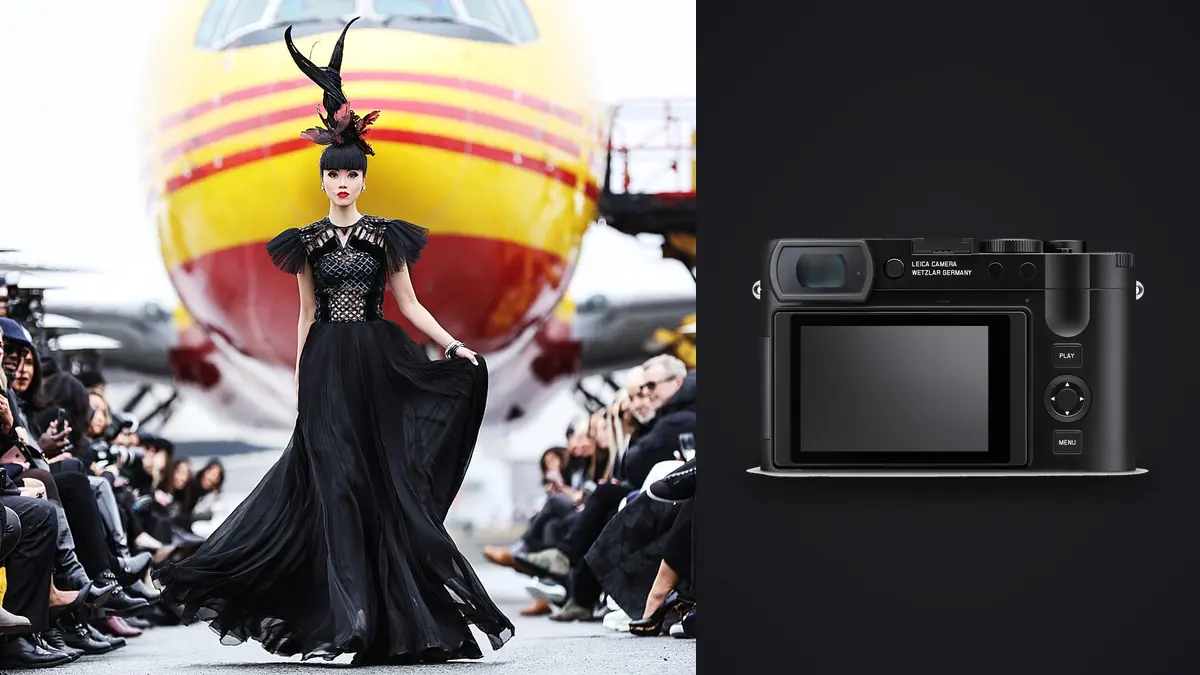
A lookbook day for a small fashion label rarely looks like the shoots you see credited in magazines. There's no lens tech handing you a second body, no assistant swapping glass between setups. Most of the time it's you, a stylist steaming the last look in a doorway, a model who has forty minutes before the next client, and a client standing behind you refreshing the back of your camera every third frame. I've shot four seasonal lookbooks on a Leica Q3 over the past year and a half, for two small apparel brands, and the fixed 28mm body changed how I plan those days more than any lens I own for my mirrorless kit.
Why a fixed 28mm rangefinder-style body even makes sense for fashion work
On paper this is a strange tool for lookbook photography. Fashion editorial usually leans on an 85mm or 105mm for the hero portraits and something like a 35mm or 50mm for the full-length looks, and a lot of photographers wouldn't consider a fixed 28mm at all. But a lookbook isn't editorial. It's a catalog of garments shot cleanly and consistently, usually against a plain backdrop or a simple location, and the priority is speed and repeatability over dramatic lens compression. The 28mm Summilux at f/1.7 gives you enough separation from the background to keep the garment the subject without turning every frame into a shallow-depth-of-field portrait, and because it's a leaf shutter lens built into the body, there's no mirror slap and almost no shutter noise. On a shoot with a nervous first-time model, that quiet matters more than people expect.
The bigger reason it works, though, is that a fixed lens forces a workflow. You're not stopping to think about which lens suits this look. You move your feet, you use the crop modes when you need a tighter frame, and you shoot. For a one-day lookbook with twelve to eighteen looks, that discipline is worth more than optical versatility.
The crop modes are really a lighting strategy in disguise
Leica markets the Q3's 35mm, 50mm and 75mm crop modes as a way to get "extra lenses" out of one body, and technically that's true since the sensor is 60 megapixels and there's plenty of resolution to spare. But on a lookbook set the more useful way to think about the crop modes is as a way to change composition without moving your lights. If you've set a beauty dish and a rim light for a full-length shot at 28mm and the client suddenly wants a waist-up crop of the same look under the same lighting, you don't have to re-meter or reposition anything. You punch into 50mm crop, recompose in the same spot, and the exposure and light quality stay identical. That consistency across a look's coverage (full body, three-quarter, detail) is exactly what a lookbook needs, and it's genuinely faster than physically changing lenses or repositioning a light stand between every variation.
| Crop setting | Approx. resolution | Field of view | Where it earns its keep on a lookbook day |
|---|---|---|---|
| 28mm (native) | ~60 MP | Full width | Full-length hero shots, environmental context, group looks with two models |
| 35mm crop | ~37 MP | Slightly tighter | Three-quarter looks, walking shots where you want less foreground clutter |
| 50mm crop | ~19 MP | Waist-up | Client-requested tighter coverage without moving lights or stands |
| 75mm crop | ~8 MP | Detail/portrait | Fabric texture, hardware, buttons, embroidery close-ups for the lookbook PDF |
The 8-megapixel file at the 75mm setting sounds thin next to the native 60, but for a detail shot destined for a half-page lookbook spread or an Instagram carousel, it's still more resolution than you need. I use it constantly for stitching, zipper hardware and jewelry pairing shots where a longer actual lens would mean walking back across the set and losing the light angle I already dialed in.
Leaf shutter sync is the feature nobody mentions until they need it
This is the part of the Q3 that actually changes how you can light a lookbook shoot outdoors. Because the lens has a leaf shutter built in rather than relying on the body's focal-plane shutter, you get flash sync all the way up to 1/2000s instead of the usual 1/200s to 1/250s ceiling most mirrorless bodies are stuck with. For an outdoor lookbook shot at noon, that's the difference between needing a big battery strobe with a lot of power just to overpower the sun, or running a small speedlight or compact flash at a fraction of its power to add a clean catchlight and fill shadow under a cap brim. You can shoot look-book pages at f/2 in bright midday sun with a single small flash on a light stand, something that would need serious power and an ND filter on a normal DSLR-style shutter. That alone can save you from renting bigger lighting gear for outdoor shoot days.
Tethering matters more on a lookbook set than on most shoots
A lot of the Q3's appeal for lookbook work has nothing to do with the lens and everything to do with the USB-C port on the side of the body. Lookbook shoots almost always have someone on set whose job is to approve the shot, whether that's the brand founder, a merchandiser, or a stylist checking that a garment's fit reads correctly on camera. Chimping on a 3-inch rear screen doesn't cut it when the person making the call needs to see fabric drape or a logo placement at real size. I tether the Q3 to a laptop running Capture One over USB-C and the files land on the drive within a second or two of the shutter firing, full 60-megapixel DNGs, not a small JPEG preview. That single cable does more for on-set confidence on a lookbook day than any piece of lighting gear, because it turns "trust me, that looked good" into the person approving actually seeing the frame blown up before you move to the next look. It also means wardrobe adjustments happen in real time instead of getting discovered during the edit two days later when it's too late to reshoot.
What a full lookbook day actually produces
Here's the part nobody talks about when they review the Q3 for stills. A twelve-look lookbook shoot, with a handful of angles and a burst or two per look to catch the right hand position or the fabric mid-movement, easily produces eight hundred to twelve hundred RAW files by the end of the day. At 60 megapixels that's not a small card, and it's not a small amount of screen time that evening either.
This is where I stopped trying to cull manually in Lightroom the night of the shoot. I run the day's card through imagic before I touch anything else. Because it processes everything locally on the laptop rather than uploading to a cloud service, I don't have to think twice about unreleased wardrobe photos sitting on someone else's server before the collection has even been announced, which matters more than people assume when you're shooting for a brand ahead of a launch date. The sharpness scoring catches the frames where a model's hand moved half a step out of focus range during a walking shot, which is genuinely hard to spot on a laptop screen at 1:1 when you're tired at 9pm after a full shoot day. And because a lookbook burst is exactly the kind of "same pose, five frames, pick one" situation, the duplicate and burst clustering groups those variations together instead of making me scroll past four near-identical frames per look on my own. If you haven't looked at how that kind of automated triage actually works under the hood, this piece on AI photo culling goes through the mechanics in more detail than I will here.
Keeping twelve looks visually consistent
A lookbook lives or dies on consistency. If look four has warmer skin tones than look nine because the light shifted or a cloud rolled through, it reads as sloppy even if each individual photo is technically fine. You can build an edit preset from a lookbook set you were happy with using imagic's apply_my_style feature, which trains on your own past edits rather than a generic filter, and run every new lookbook set through it as a starting point before doing any per-look adjustment. It gets you to something close to your established look in one pass, and then you only need to hand-correct the frames that had genuinely different lighting conditions (a cloud passing over, a shot that moved indoors). For anyone building out a full color pipeline rather than just a single preset pass, this guide on color grading workflow is worth a look alongside whatever preset system you're using.
Where the Q3 actually struggles on this kind of job
I don't want this to read like a camera ad, so here's what would genuinely annoy me about using it for fashion work. First, autofocus tracking on a moving subject is good but not great. If a model is walking toward camera at pace for an editorial-style walking shot, the Q3's contrast/phase hybrid system will occasionally hunt in a way that a dedicated sports-tracking body wouldn't. I'd shoot walking sequences in bursts and lean on the culling pass afterward rather than trusting every single frame to be tack sharp. Second, there's one card slot, UHS-II SD, which is fine for a day shoot but nerve-wracking when the files can't be reshot, so offload constantly rather than shooting all day on one card. Third, battery life with the EVF running all day is mediocre. Carry four batteries for a full lookbook day and that's not excessive, it's necessary. None of these are dealbreakers, but if you're coming from a two-body system with a grip battery, budget for the adjustment.
The other real limitation is the obvious one: it's a 28mm, full stop. If a client wants genuine close, compressed beauty portraits as part of the lookbook package (some do, for the campaign shots that sit alongside the catalog pages), you either shoot those in the 75mm crop mode and accept the resolution hit, or you bring a second camera. I've started bringing a small prime-lens body specifically for that scenario rather than pretending the Q3 covers every frame type on its own.
Frequently Asked Questions
Do I need a second lens or a full kit for a lookbook shoot with the Q3?
For garment coverage, full-length and three-quarter shots, no. The 28mm plus the built-in crop modes will get you through a standard lookbook day. Where I'd bring a second body is if the brief includes tight beauty portraits or a genuine telephoto compression look for a campaign image, since the crop modes trade resolution for reach rather than giving you true longer-lens compression.
Is the fixed 28mm too wide for full-body clothing shots?
Not if you manage your distance to the model. Shot too close, 28mm will noticeably stretch the nearest limb, which is a real problem on full-length fashion shots. Back up further than feels natural, use the 35mm crop when you want to tighten the frame without changing your distance, and it reads as a normal focal length in the final image.
Does 60 megapixels actually matter for a lookbook that's mostly going on a website and Instagram?
The resolution itself matters less than what it lets you do after the shoot. Because you're capturing so much detail, you can crop hard for a square Instagram grid post or a vertical 4:5 story from the same full-frame capture without ever going back to reshoot a look in a different aspect ratio. That flexibility in post is the actual payoff, not print size.
What's the biggest bottleneck in a Q3 lookbook workflow?
It's not the shoot, it's the evening after. Twelve looks with variations and bursts adds up to close to a thousand RAW files fast, and sorting that manually is where most of your night goes. Running the card through a local culling pass before you start editing is the difference between a two-hour edit session and a five-hour one.