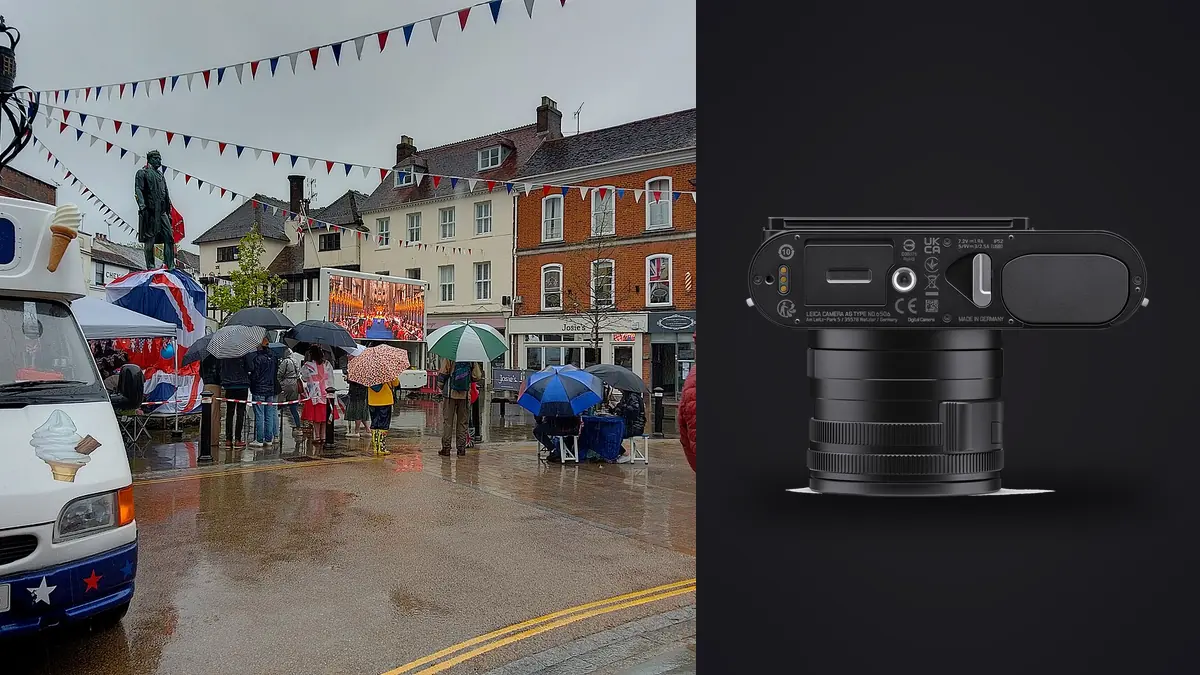
I spent four days following a boatyard crew in Marsaxlokk with a Leica Q3 hanging off one shoulder instead of the usual two-body kit, and by the second afternoon I'd stopped thinking about the camera. That's the real test for anything you carry on a documentary job: does it disappear, or does it keep asking for your attention. The Q3 mostly disappears, though it took some deliberate menu setup and a few wrong assumptions before it got there. This is what I learned about using it for street and documentary work specifically, not as a general review.
One lens, and why that's less of a constraint than it sounds
The Q3 ships with a fixed 28mm Summilux at f/1.7. No mount, no lens swap, no decision to make in the moment about whether you brought the right glass. For documentary work that's less a limitation than it looks on paper. Henri Cartier-Bresson shot most of his career on a 50mm, but plenty of the photographers whose street and reportage work I actually study, people like Bruce Gilden or the newer wave shooting for outlets like Magnum's online archive, live at 28mm or wider because it forces proximity. You can't stand across the street and get the shot. You have to be in the room, on the sidewalk, close enough that the subject knows you're there.
That proximity requirement changes how you work a scene. With a zoom you tend to hang back and reframe from a distance, which reads as surveillance to anyone paying attention. A fixed 28mm puts you inside the moment, which is uncomfortable at first and then becomes the whole appeal. On the boatyard job, the guys stopped noticing the camera faster than they'd have stopped noticing a 70-200mm pointed at them from across the yard, because a long lens signals "I'm watching you" in a way a small camera held close to the chest doesn't.
The tradeoff is real, though. There's no reaching for a wider environmental shot or a tighter portrait crop without walking. Some days that's fine. On a couple of assignments involving distant subjects (a demonstration where I couldn't get past a police line, a ceremony where I wasn't allowed near the altar) I missed having a second body with something longer. The Q3 isn't a do-everything documentary camera. It's a specific tool for a specific working distance, and you either build your coverage plan around that or you fight it all day.
What the 60-megapixel sensor buys you beyond resolution
The full-frame 60MP sensor sounds like overkill for a fixed-28mm street camera until you start using the in-camera crop modes. The Q3 lets you preview and record at simulated 35mm, 50mm, 75mm, and 90mm framings, and because the underlying file still carries the full sensor data with crop coordinates embedded in the DNG, you get real optical-grade resolution at each of those crops instead of a soft digital zoom. Below is what that actually looks like in file terms, based on how the sensor's resolution scales with each crop ratio.
| Framing | Approx. resolution | Where I actually use it |
|---|---|---|
| 28mm (native) | ~60 MP | Establishing shots, environmental context, anything where the surroundings carry the story |
| 35mm crop | ~38 MP | A slightly tighter version of the same frame when 28mm feels too wide for a two-person interaction |
| 50mm crop | ~19 MP | Portraits and hands-on-work detail shots where I can't physically close the distance |
| 75mm crop | ~8 MP | Reaching across a room or over a barrier; still printable at moderate sizes |
| 90mm crop | ~6 MP | Emergency reach, mostly for web use only, image quality softens noticeably here |
In practice I shoot native 28mm the overwhelming majority of the time and treat the crop modes as an escape hatch rather than a real second lens. The 50mm crop earns its keep for close portrait work when the subject is mid-task and I don't want to interrupt them by walking in, but past 75mm the files start looking like what they are: a crop, not a lens. Still, having that option baked into a single body, with real resolution rather than interpolated pixels, is genuinely useful on days when a second lens isn't practical to carry.
Autofocus that finally keeps up with a moving subject
This is the biggest functional change from the Q2, and it matters more for documentary work than almost any other spec on the sheet. The Q2's contrast-detect system was fine for static street shooting but would hunt visibly when someone walked toward the lens or turned quickly, which meant missed frames at exactly the moments that make a documentary sequence work. The Q3 adds phase-detect autofocus across the frame, and the difference shows up specifically in fast, unscripted situations: a kid running through a market stall, a welder turning to shout something to a coworker, a hand reaching into frame. The Q3 catches those far more reliably than the Q2 did.
It's not flawless. In low, mixed light (the kind you get inside a workshop lit by one bare bulb and a doorway) the AF still occasionally settles on the wrong plane, and I've learned to keep a thumb near the focus ring for manual override on the darkest interiors. But for outdoor and moderately lit indoor documentary work, this is the first Q body I'd trust to nail focus on a subject walking directly at me without a second attempt.
Shooting quietly enough that people forget you're there
The electronic shutter is silent, full stop, and that changes what kind of documentary access you get. On a job in a small chapel where a family was preparing for a funeral, a mechanical shutter clack every frame would have been a genuine intrusion. Switching to the electronic shutter meant I could work through the sequence without anyone in the room registering each individual frame being taken. That's not a minor convenience, it's the difference between being allowed to stay in the room or being asked to leave.
The tilting rear screen, new to this generation of the Q line, adds a second layer of discretion. Shooting from waist height with the screen angled up lets you frame a candid moment without raising the camera to your eye, which on a crowded street reads very differently to the people around you than a viewfinder pressed to your face. I use this constantly for market and transit scenes where eye-level framing would announce the shot before I've taken it.
Weight and size matter here too. At roughly 743 grams the Q3 is heavier than a Fuji X100VI or a Ricoh GR III, and you feel that difference after eight hours on your feet. It's still far more carryable than a full-frame body with a fast zoom attached, and the rangefinder-style body doesn't scream "professional camera" the way a gripped mirrorless with a 24-70mm does. On the street that visual quietness buys you a few extra seconds of a subject's unguarded attention before they clock what you're doing.
What a day of shooting does to your evening
Here's the part nobody puts in the marketing copy: 60MP DNGs from a full documentary day add up fast. A single afternoon of loose, exploratory street shooting with the Q3's 15fps burst mode can leave you with 800 to 1,200 frames, and at 60-90MB per uncompressed DNG that's a genuinely large folder to sort through before dinner. On the boatyard job I came home most nights with somewhere north of 60GB from a single day, most of it near-duplicate frames from bursts fired on the same three seconds of action.
This is where I stopped trying to cull manually in a catalog app and started running the folder through imagic first. It scores sharpness and focus locally on the actual pixel data rather than relying on the camera's own focus confirmation, which matters because a frame can show green focus confirmation in the Q3's viewfinder and still be a hair soft once you're looking at it at 100% on a monitor. It also groups burst sequences and visual duplicates automatically, so instead of clicking through nine near-identical frames of someone reaching for a wrench, I get one flagged as the sharpest of the group and can move on. If you haven't used a tool like this before, our piece on how AI photo culling actually works covers the mechanics in more depth than I'll get into here.
The offline part of that matters more on documentary work than it does on a personal project. A lot of what I shoot involves people who didn't sign a model release and didn't expect to end up on someone's hard drive, let alone a cloud server. Because imagic runs entirely on the machine and never uploads anything, culling a set from a sensitive shoot (a labor dispute, a family in a difficult moment, anyone in a situation they'd rather not have floating around online) doesn't add a second point of exposure on top of the first. That's not a small thing when you're working documentary rather than commercial.
Once the culling pass is done, the apply_my_style feature is the other piece that's changed how fast I turn work around. I built the style from a batch of edits I did the old way, adjusting each frame by hand, and now new sets get a first pass that already looks like my normal grading before I touch a single slider. It's not a substitute for finishing an edit by eye, contrast and mood still need adjusting per scene, but starting from something already close to my usual look instead of a flat RAW cuts real time out of a long shoot's turnaround. For anyone running a similarly high-volume workflow, our roundup of tips for a faster photo editing workflow has more on where else that time actually goes.
Where the Q3 struggles on assignment
Battery life is the honest weak point. CIPA rates it around 350 shots, and a documentary day with the screen active for framing and a lot of chimping to check focus will burn through that faster than the number suggests. I carry three batteries for a full shooting day and still watch the indicator more than I'd like. USB-C charging means I can top up from a power bank between setups, which helps, but it's not a camera you can run all day on one battery the way you can with some mirrorless bodies built around endurance.
The price is the other real constraint. At roughly $5,995 the Q3 sits well above the Fuji X100VI or Ricoh GR III, both of which will get you into a similar shooting style for a fraction of the cost, and it's close to what a Sony RX1R III runs with its own full-frame fixed-lens approach. For someone deciding whether to invest in this specific body for documentary work, that price has to be weighed against what the single fixed lens, phase-detect AF, and file quality actually add over a cheaper alternative.
The single lens is also a genuine rigidity, not just a stylistic choice you can talk yourself into liking every day. On assignments where the story needs a longer lens (distant subjects, restricted access, anything shot through a barrier) the Q3 simply can't do the job the way a camera with interchangeable glass can, and no crop mode fully substitutes for real working distance flexibility.
| Camera | Lens | Sensor | Approx. price | Where it wins for street/documentary |
|---|---|---|---|---|
| Leica Q3 | 28mm f/1.7 (fixed) | Full-frame, 60MP | ~$5,995 | File quality and crop flexibility for later reframing |
| Fuji X100VI | 23mm f/2 (fixed) | APS-C, 40MP | ~$1,599 | Leaf shutter is nearly silent; much lighter to carry all day |
| Ricoh GR III | 18.3mm f/2.8 (fixed) | APS-C, 24MP | ~$999 | Pocketable enough to carry when you're not "shooting," just living |
| Sony RX1R III | 35mm f/2 (fixed) | Full-frame, 61MP | ~$5,100 | Slightly longer native framing for closer working distances |
Who this camera actually suits
If your documentary work leans toward close, immersive scenes where you're physically part of the room (workshops, markets, family gatherings, small community events) the Q3's 28mm discipline and quiet shutter earn their keep. If your work depends on working from a distance, whether by choice or because access is restricted, you'll fight the fixed lens more than you'll enjoy it. It's also worth being honest that this isn't a budget entry point into the genre. The Ricoh GR III or Fuji X100VI will teach you the same 28-to-35mm discipline for a fraction of the outlay, and the Q3's advantages (the AF speed, the crop headroom, the file quality) only really pay off once you're already shooting enough volume that those things start to matter.
Frequently Asked Questions
Is the Leica Q3 quiet enough for candid documentary work?
Yes, when set to the electronic shutter. It's genuinely silent, which matters in settings like small interiors, ceremonies, or close-range candid moments where a mechanical shutter sound would draw attention. The mechanical shutter option is still there and worth using in very bright conditions to avoid any electronic shutter rolling artifacts on fast motion, but for discretion, electronic is the mode to leave it in by default.
Can you realistically cover a documentary assignment with only a 28mm lens?
You can, but it changes how you work rather than limiting what you can shoot. You end up closer to subjects than you might with a zoom, which suits intimate, participatory documentary work well and suits distant or restricted-access assignments poorly. The in-camera crop modes give you some flexibility toward 35mm and 50mm framings without losing meaningful resolution, but they don't replace a genuinely longer lens for subjects you can't physically approach.
How many RAW files does a full documentary shooting day produce, and how do you get through them?
On an active day with the 15fps burst mode in regular use, expect somewhere between 800 and 1,200 DNG files, often 50-70GB or more. Sorting that manually in a catalog app frame by frame is slow going after a long shoot day. Running the folder through imagic first, using its local sharpness scoring and burst clustering, cuts that down to a manageable shortlist before any real editing starts, and because it processes entirely on-device there's no upload step involved.
Is the Q3 durable enough for outdoor documentary assignments?
It carries an IP52 rating, which covers light rain and dust but isn't the same as a fully weather-sealed body built for sustained exposure. I've shot it through drizzle and dusty work sites without issue, but I wouldn't take it into sustained heavy rain or a genuinely dusty industrial environment without extra protection the way I might with a more ruggedly sealed body.