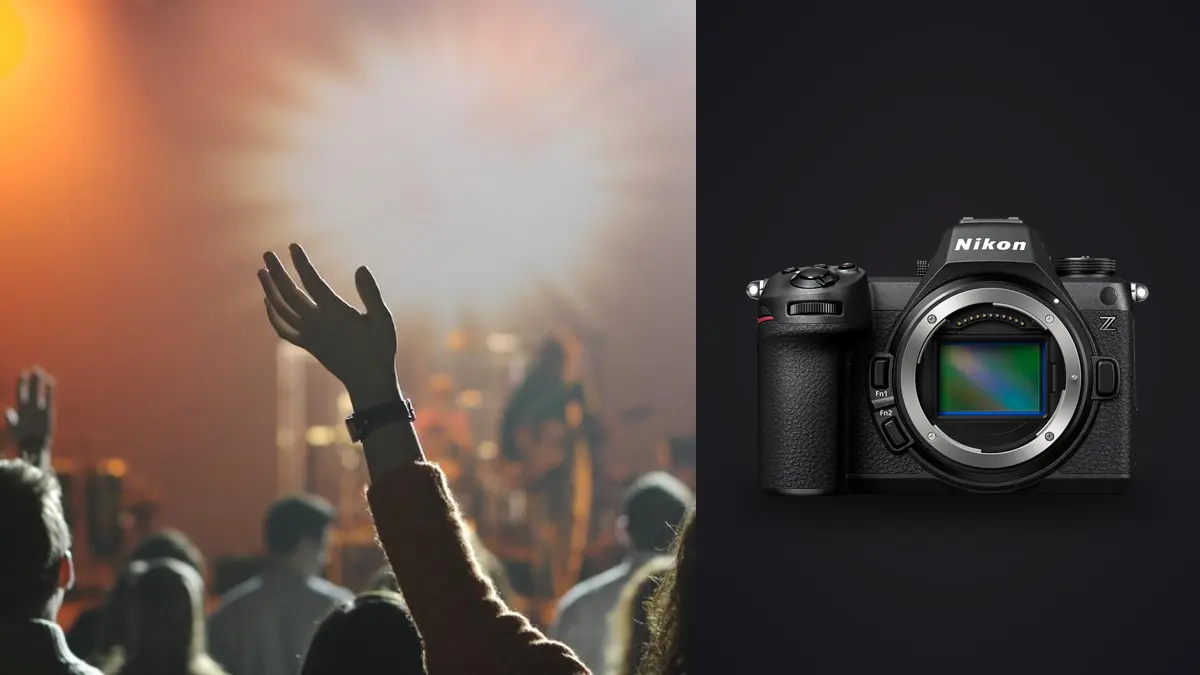
I picked up the Z6 III about four months after it launched, mostly because my Z6 II was starting to choke on buffer clearing during longer sets and I was tired of missing the guitarist's one good jump because the camera was still writing the last burst to card. The Z6 III isn't a specialist concert camera the way something like an A9 III is built around sports, but it lands in an odd sweet spot for live music work: fast enough to keep up with a drummer's stick twirl, clean enough at high ISO to survive a venue lit entirely in amber and magenta, and light enough that your neck isn't done by the third band on a four-band bill.
What actually matters when the lights are working against you
Concert photography punishes gear in ways landscape or portrait work never does. You're dealing with light that changes color, direction, and intensity every two or three seconds, a subject that won't hold still, and, in most contracts, a three-song window before you're escorted out of the pit. So spec sheets only matter insofar as they solve those three problems.
The partially stacked 24.5MP sensor in the Z6 III is the headline change from the Z6 II, and it's the one that shows up most in the field. Rolling shutter is reduced enough that I can use the electronic shutter for genuinely silent shooting during quiet acoustic sets without worrying about skewed guitar necks in every frame. Native ISO tops out at 51200 with an extended ceiling well beyond that, but I rarely push past 12800 on purpose. Above that, especially under tungsten-heavy stage washes, you start losing enough shadow detail in the crowd and rigging that it's not worth the extra stop.
Buffer depth is the other number I actually watch mid-set. Shooting 14-bit raw at the mechanical shutter's 14fps, I can hold a burst for a genuinely useful stretch before the camera slows down, long enough to cover a full chorus of someone throwing themselves around a small stage. Switch to the electronic shutter's higher frame rates and you'll fill the buffer faster, so I save that mode for moments where I specifically want to pick the exact millisecond a cymbal crashes, not for general coverage.
Autofocus when the subject won't stay lit
This is where I've been pleasantly surprised. Subject detection tracks a singer's eye even when a follow spot swings across their face and drops them into near silhouette for half a second. It's not perfect. Strobing effects and hard backlighting from a single kicker light behind the drummer will still cause the AF to hunt, and I've had it lock briefly onto a bassist's tuner pedal LED instead of a face when the stage was otherwise dark. But compared to the Z6 II, which I'd sometimes just switch to manual focus and a fixed distance during the darkest songs of a set, the Z6 III stays useful through more of the night.
Settings by venue, not by rule of thumb
Generic advice like "shoot wide open at ISO 3200" falls apart the moment you're in a 200-cap basement club with a single par can for lighting versus a theater with a proper lighting designer running a full rig. Here's roughly what I dial in depending on where I am, based on a season of shows across different room sizes.
| Venue type | Typical ISO range | Shutter speed | Aperture | Notes |
|---|---|---|---|---|
| Small club / basement (single-source lighting) | 6400-12800 | 1/200 - 1/320 | f/1.4 - f/2 | Prime lens territory. Wide aperture matters more than perfect focus at every frame. |
| Mid-size venue (500-1500 cap, moving heads) | 3200-6400 | 1/320 - 1/500 | f/2.8 | Watch for color casts swinging fast; auto white balance drifts, I shoot raw and fix later. |
| Theater with house lighting design | 1600-4000 | 1/400 - 1/640 | f/2.8 - f/4 | Enough light to stop down slightly for depth across a full band lineup. |
| Arena / festival main stage | 800-3200 | 1/500 - 1/1000 | f/2.8 - f/5.6 | Pyro and confetti moments need the faster shutter regardless of available light. |
The one constant across all four rows is that I leave the camera in manual exposure with auto ISO. Aperture and shutter speed are decisions I want to make deliberately going into a song; letting ISO float within a capped range (usually up to 12800, sometimes 25600 for a single dark ballad) means I'm not chasing the exposure meter while someone's mid-jump.
Lenses that earn their weight in the pit
The 24-70mm f/2.8 S lives on the camera for probably 70% of a set, mostly because photo pits rarely give you room to back up and the barrier-to-stage distance changes song to song depending on where the singer wanders. The 70-200mm f/2.8 S comes out for anything on a bigger stage where you need to isolate a drummer or catch a guitar solo from the far side of the pit. Both are heavier than I'd like after three hours on my feet, but the image stabilization pairs with the Z6 III's in-body system well enough that I can shoot handheld at shutter speeds I wouldn't have trusted on older bodies.
For genuinely dark rooms, a 35mm f/1.4 or 50mm f/1.2 earns its place in the bag even though primes mean physically moving instead of zooming. When a venue is lit by two fixtures total, that extra stop or two of light is worth the inconvenience of not being able to reframe instantly.
The part nobody mentions until you're home at 2am
A three-song set at 14fps produces an absurd number of files. On a busy festival day covering four or five acts, I've come home with north of 4,000 raw frames, most of them near-duplicates from a single burst where a singer's head moved two degrees between shots. Sorting that manually used to eat my entire next morning, which is exactly the kind of grind that pushed me toward using AI-assisted culling instead of clicking through every frame by eye.
This is where imagic actually earns its keep for me on tour. It runs entirely on my laptop with no upload step, which matters when you're editing in a green room with venue wifi that can't handle a large batch transfer, let alone a cloud sync. It scores sharpness and focus locally across a burst and groups near-identical frames from the same moment, so instead of scrubbing through fourteen frames of a drum fill I'm looking at the two or three that are actually sharp on the snare hit. For anyone drowning in concert bursts, that single step probably saves more time than any other change I've made to my workflow; there's a broader rundown of the general approach in this faster-workflow piece if the culling problem sounds familiar.
Keeping a consistent look across a whole tour
The other thing that used to slow me down was color consistency. Every venue lights differently, but a band (or an editor) expects a gallery that looks like one cohesive set, not four different color treatments depending on which room I shot in. I built out an edit once on a batch of Z6 III files I was happy with, mixed lighting and all, and used imagic's apply_my_style feature to carry that same treatment across the rest of the tour's photos. It's trained on my own prior edits rather than some generic preset pack, so it doesn't flatten the differences between a red-lit chorus and a blue-lit verse into the same look, it just applies my grading logic consistently instead of me re-deciding it every night.
Where it falls short
I'll be honest about the parts that annoy me. The single CFexpress Type B slot alongside a UHS-II SD slot means your backup card is meaningfully slower than your primary, so if you're shooting raw to both for redundancy, the SD card becomes your buffer bottleneck, not the CFexpress one. I've had the camera slow down mid-burst specifically because I had dual-slot backup turned on during a long crowd-surfing sequence. I now shoot raw to CFexpress only and back up between sets instead.
Battery life is fine for a normal night but tight on a full festival day with the EVF running most of the time; I carry two spares and still occasionally cut it close. And at the price point, it's a genuine step up from a used Z6 II, enough that if you're shooting the occasional local show rather than touring, the older body plus a fast prime lens might get you 80% of the results for less than half the cost.
Frequently Asked Questions
Is three songs enough time to actually test the Z6 III's autofocus in a real pit?
Barely, but it's usually enough to know whether the AF is going to fight you all night. If subject detection is locking onto the singer's eye within the first song even through moving lights, it'll generally hold up for the rest of the set once you're back at a normal shooting distance for the remaining acts.
Does the electronic shutter cause banding under LED stage lighting?
Sometimes, yes. LED wash lights and moving heads often flicker at rates the sensor can catch mid-readout, showing up as horizontal banding in electronic-shutter frames. The camera's anti-flicker shooting mode helps in a lot of rooms, but I still default to the mechanical shutter for general coverage and save silent electronic shooting for songs where I specifically need the quiet, like a stripped-down acoustic moment.
Do I need the optional battery grip for a full night of shows?
Not strictly, but if you're covering multiple bands back to back without a break to swap batteries, the added capacity and second shutter button for vertical shooting make a real difference. For a single headline set, the standard body and a spare battery is plenty.
How does the Z6 III compare to shooting concerts with a Z8 or Z9?
Both of Nikon's flagship bodies will out-buffer and out-track the Z6 III in a genuinely chaotic pit, but they're also heavier and considerably more expensive. For most working music photographers covering club and mid-size venue shows, the Z6 III's lighter body and lower price get you close enough to the same result that the difference shows up more in your arms at 1am than in the actual photos.