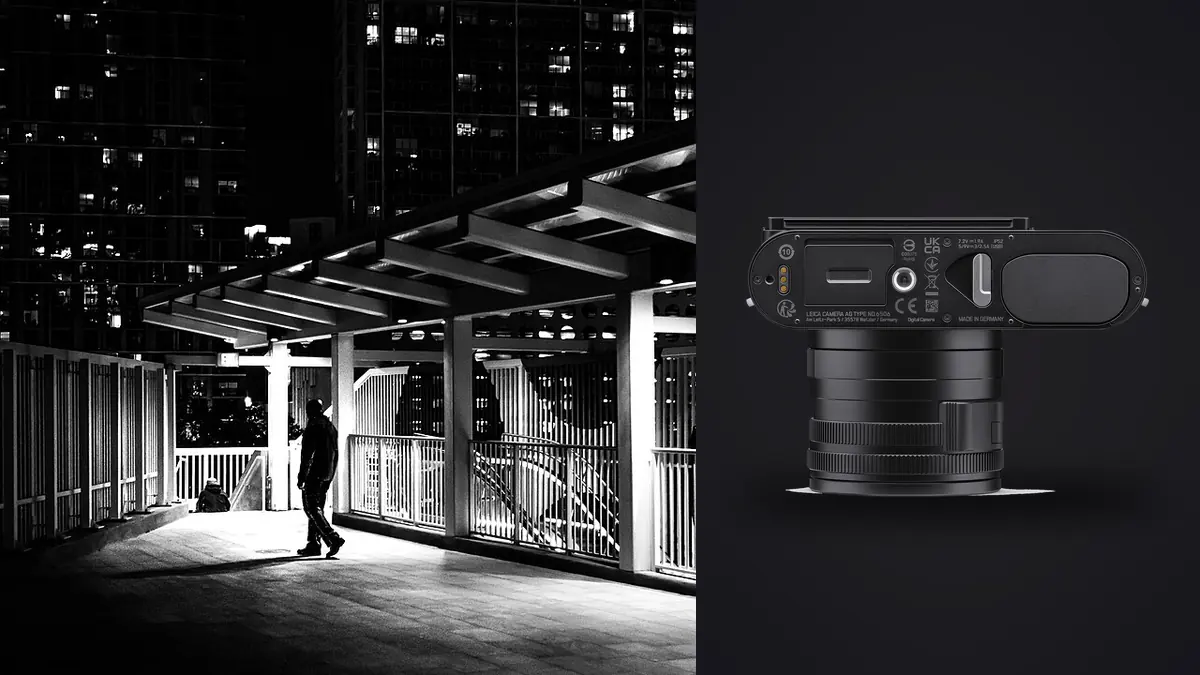
I spent about four months shooting a Q3 as my only camera on two separate documentary trips, one covering a fishing co-op on the Basque coast and one following a mobile clinic through three towns in rural Romania. Neither project needed a review camera. They needed something I could carry for twelve hours without my shoulder hating me, that wouldn't draw attention pointed at strangers, and that would give me files clean enough to print two meters wide if an editor asked. The Q3 did all three, with some real caveats I want to walk through rather than gloss over (imagic's Leica Q3 page has the full spec rundown if you want that first).
Why a fixed 28mm actually works for this genre
The Q3's 28mm Summilux is not a compromise lens bolted onto a camera that would otherwise take interchangeable glass. It's the reason the camera exists in this form factor. A fixed 28mm forces a specific kind of discipline: you stop thinking about which lens to reach for and start thinking about where your feet need to be. For documentary work, where the story is often happening three meters away and closing, that discipline pays off more than people expect.
The crop modes (35mm, 50mm, 75mm, and now 90mm on the Q3 thanks to the 60-megapixel sensor's resolution headroom) are digital crops, not optical zooms, and I want to be honest about what that means in practice. At 35mm the crop is barely noticeable in the finder and the resulting files still hold up at 24+ megapixels, plenty for editorial use. At 75mm and 90mm you're down to roughly 10-11 and 8-9 megapixels respectively, which is fine for a web gallery or a half-page magazine spread but not for a cover. I used the 35mm crop constantly, the 50mm occasionally for portrait-adjacent moments, and almost never touched 75mm or 90mm in actual documentary use because the framing feel through the finder starts to disconnect from what a 28mm lens is actually seeing. If you need a genuine 90mm angle of view, bring a second body or accept the softer, lower-resolution compromise.
Autofocus in real, unscripted situations
Leica made a genuine leap with the Q3's AF system compared to the Q2. Subject tracking with people in the frame is dependable enough that I stopped chasing focus manually on the street, which was not true of the Q2 I owned before it. Eye detection catches faces at a reasonable clip even in the low, warm light you get inside a fishing shed at 6am with two bare bulbs for illumination.
Where it still stumbles: fast lateral motion at close range, and any scene with strong backlight where a subject is silhouetted against a bright doorway or window. In the clinic project I lost a handful of otherwise good frames to focus hunting when a nurse walked briskly across a sunlit doorway carrying a child. Manual pre-focusing with the lens's clutch-style focus ring (pull it back to disengage AF, twist to a marked distance) rescued a few of those situations once I recognized the pattern and started anticipating it.
The macro switch is a genuine creative tool, not a gimmick
Twist the ring on the lens barrel into macro mode and the closest focus distance drops to about 17cm from the sensor. I used this constantly for documentary detail work: a torn fishing net, a stack of prescription bottles on a folding table, hands doing repetitive manual labor. It's slower to engage mid-sequence than I'd like (you have to physically rotate the ring, there's no button-press shortcut), so I'd recommend deciding before a scene starts whether you're likely to want a macro detail, and pre-setting it rather than fumbling with the ring while a moment happens.
Handling, discretion, and the sound it makes
This is the part that actually matters most for documentary and street work and gets the least attention in spec-sheet reviews. The Q3 in a body that's roughly the size of a slightly chunky rangefinder, with a leaf shutter that's genuinely quiet in electronic-first shutter mode. In the fully mechanical shutter setting there's an audible click, not loud, but present. I ran electronic shutter almost the entire clinic trip specifically because I did not want a mechanical click punctuating a quiet exam room.
The tilting rear screen (new to the Q3, absent on the Q2) changed how I shot low-angle and hip-level frames. I could compose from waist height without raising a camera to my eye, which in a lot of documentary situations reads as far less confrontational to the people in front of you. That single hinge probably did more for my candid hit rate than any autofocus improvement.
| Situation | What worked | What didn't |
|---|---|---|
| Fishing co-op, pre-dawn low light | Electronic shutter, ISO 3200-6400, 28mm native framing | 75mm crop mode, noise became visible past ISO 4000 at that crop |
| Clinic, backlit doorways | Manual pre-focus at marked distances | Continuous AF tracking through silhouette |
| Market crowd scenes | 35mm crop, zone focus at f/5.6-f/8 | Wide-open aperture, too shallow for group depth |
| Close detail work (hands, tools, documents) | Macro mode at 17cm | Standard focus range, minimum distance too far |
| Fast-moving kids/animals | 28mm native, burst at 15fps electronic | Any crop above 50mm, framing lag was noticeable |
Battery life and the realities of a full travel day
Leica rates the Q3 around 350 shots per charge under CIPA testing, and my actual field experience lands close to that when I'm not chimping the screen constantly or reviewing bursts. On the Romania trip I carried three batteries and used all three on the longest single day, which involved roughly eight hours of intermittent shooting plus video for b-roll. That's manageable but not generous. If you're planning a full documentary day with no charging opportunity, bring at least two spares and keep the screen brightness down.
What comes home with you: file volume and the culling problem
A 60-megapixel sensor shooting DNG raw produces files in the 70-90MB range depending on scene complexity. A single decent documentary day for me runs 800 to 1,400 frames once you count bursts on fast-moving moments, which is somewhere between 60 and 120GB of raw data before you've even started editing. That volume is where the Q3's image quality becomes a logistics problem rather than a purely creative one.
I run everything through imagic before I open Lightroom now, specifically because it processes entirely on my laptop with no upload step, which matters when you're working through a clinic day and can't guarantee a hotel wifi connection that night. The sharpness scoring catches the frames where AF genuinely missed (the backlit doorway situations I mentioned above) faster than my eye does at 1am after a long shoot day, and the duplicate and burst clustering collapses those 15fps bursts of a kid running across a market square into the two or three frames actually worth reviewing instead of forty near-identical ones. For a Q3 shooter specifically, that burst clustering matters more than it would on a slower camera, because the temptation to hold the shutter down on documentary subjects is real and the files pile up fast.
Building a consistent look across two very different locations
The Basque coast trip and the Romania clinic trip could not have looked more different in available light, one all cool pre-dawn blues and fluorescent shed lighting, the other warm incandescent bulbs against grey concrete walls. I wanted the final edit to read as one coherent body of work rather than two disconnected projects. I'd trained a personal edit profile in imagic on a set of about 40 images I'd already graded by hand from an earlier project, using the apply_my_style feature, and running both trips' selects through it got me to a consistent starting point in minutes rather than redoing white balance and contrast decisions frame by frame across nearly a thousand images. I still hand-finished the ones that were going to print large, but the baseline pass saved a genuinely large chunk of an already tight turnaround.
Where the Q3 falls short for this kind of work
No fixed 28mm camera is the right tool for everything, and I don't want to oversell it. If your documentary work regularly needs a genuine telephoto compression, tight portraits from a distance, or you're shooting sports-adjacent movement where 28mm just can't get you close enough without physically closing distance that isn't always safe or appropriate, you need a second body or a different system entirely. The digital crop modes are a real convenience for framing flexibility but they are not a substitute for optical reach, and treating them as one will show up in your file quality the moment you need to print big.
Weather sealing is rated IP52, which held up fine through light Basque coastal drizzle but I wouldn't push it through a genuine downpour without a rain cover. If street work rather than documentary travel is your main use for a camera like this, imagic's street photography workflow page is worth a look for genre-specific culling advice. And at close to €6,000, it's a serious financial commitment for a fixed-lens camera, one that only makes sense if the 28mm focal length actually matches how you work rather than being an aspirational choice.
Frequently Asked Questions
Is the 28mm focal length too wide for documentary portraiture?
It's wide, and it does change how a portrait reads compared to a 50mm or 85mm. You end up including environment and context whether you want to or not, which for documentary work is often an asset rather than a limitation, since the surroundings are usually part of the story. For a tighter, more isolated portrait look, the 50mm crop mode gets you closer without leaving the body, though you're trading some resolution for that reach.
How does the Q3 compare to carrying a Leica M with a 28mm lens for street work?
An M body with a 28mm Summicron is smaller and quieter still, and manual rangefinder focusing has its own rhythm that some street shooters prefer for zone-focus work. But the Q3's autofocus, the tilting screen, and the crop-mode flexibility give you options an M plus a single prime simply doesn't have. If you already shoot M and love the manual-only workflow, the Q3 won't convert you. If you want autofocus reliability with a similar handling philosophy, it's the more practical choice.
Can the Q3 realistically replace a full camera bag for a multi-day documentary assignment?
For projects where 28mm (and its digital crops out to 90mm) covers the story, yes, and the weight savings over a multi-lens kit are significant on long shoot days. For projects that need genuine telephoto reach, macro beyond the built-in 17cm close-focus, or a second focal length shot simultaneously to catch a moment two ways, you'll want a second body or lens alongside it.
What's the realistic storage and workflow load from a week of Q3 shooting?
Expect somewhere around 400-700GB of raw DNG files for a full week of active documentary shooting, depending on how aggressively you burst. That's a real number to plan around if you're traveling without reliable backup infrastructure. Culling aggressively and early, ideally each night rather than waiting until you're home, keeps that volume from becoming its own project once the shoot wraps.