Why I Keep Reaching for the OM-1 Mark II on Boudoir Days
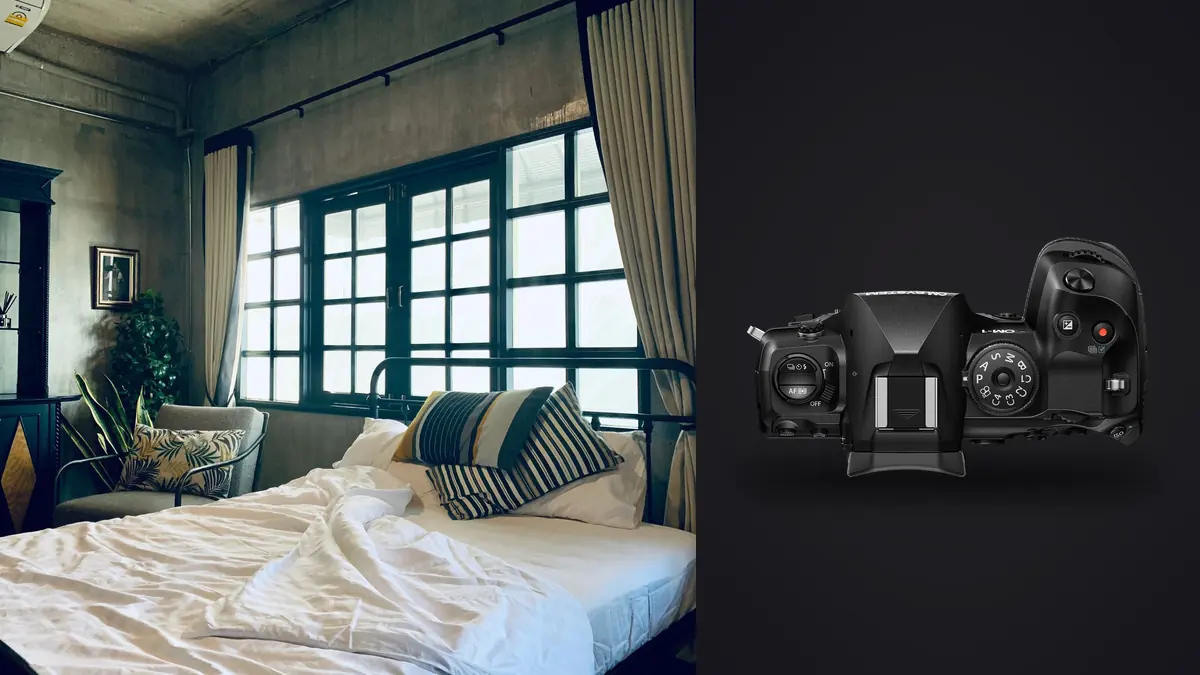
Picture a boudoir session where the photographer has a full-frame body slung over a shoulder like a small anvil, and the subject visibly relaxes the moment it is set down on the dresser and an OM System OM-1 Mark II is picked up instead. That's not a spec-sheet observation, but it's the honest starting point for this guide. Boudoir and intimate portrait work happens in bedrooms, hotel suites, and home offices turned into pop-up studios for an afternoon. The size and sound of your camera changes how a client behaves in front of it long before you ever touch a settings dial.
I've now run somewhere north of sixty intimate sessions with the Mark II as my primary body, after switching over from a Fujifilm APS-C setup and, before that, a full-frame DSLR that felt like bringing a tripod-mounted spotlight into someone's guest room. This isn't a spec regurgitation. It's what actually changes about kit weight, client comfort, and your editing pile when this specific camera is the one doing the work in this specific genre.
The Sensor Conversation Nobody Wants to Skip
Let's deal with the obvious objection first. The OM-1 Mark II carries a 20.4-megapixel stacked BSI Four Thirds sensor, roughly a quarter the surface area of a full-frame chip. If you've built your boudoir style around razor-thin depth of field and a background that dissolves into cream, that sensor size is a real constraint, not a myth to be argued away by stabilization numbers. At a given f-stop, Four Thirds renders about two stops more depth of field than full frame does at the same aperture. Shoot your favorite portrait lens wide open on this body and the background falls off less aggressively than it would on a 35mm sensor at an equivalent field of view.
What surprised me is how little that mattered in practice for this particular genre. Boudoir is shot close, often within two meters of the subject, in rooms that don't give you much working distance to begin with. At those distances, even a moderately stopped-down Micro Four Thirds lens throws enough separation that people scrolling through a gallery are unlikely to ask why the wallpaper behind them isn't a wash of bokeh. Where the sensor size genuinely bites is in low, moody window-light sessions where you're leaning on ISO 3200 and above just to keep shutter speed usable handheld. That's the real tradeoff, and I'd rather flag it here than let you find out on a shoot you cannot repeat.
| Consideration | OM-1 Mark II + 45mm f1.2 | Full-frame body + 85mm f1.4 |
|---|---|---|
| Field of view / rendered depth of field | 90mm equivalent field of view, roughly an f2.4 depth-of-field look | 85mm field of view, true f1.4 depth-of-field look |
| Body + lens weight | around 1.25 kg | around 1.7 to 2.1 kg depending on brand |
| Skin tones stay clean up to | ISO 3200 without much fuss, ISO 6400 with light noise reduction | ISO 6400 to 12800 without much fuss |
| In-body stabilization | rated up to 8.5 stops | typically 5 to 8 stops depending on model |
| Fully silent shutter | yes, up to 20fps with continuous autofocus | available on most current bodies, often capped lower with AF tracking engaged |
| Rough kit price, body plus one fast portrait prime | $3,700 to $4,000 | $4,500 to $5,500 |
Building a Lens Kit Around the Genre, Not the Spec Sheet
Three lenses cover almost everything I shoot in a boudoir-style session with this body. I used to carry six lenses to full-frame sessions out of habit. With the OM-1 Mark II I carry three, and the bag is light enough to hold in one hand while I'm rearranging a chair or moving a lamp.
| Lens | Effective focal length | Where it earns its keep |
|---|---|---|
| M.Zuiko 25mm f1.2 Pro | 50mm equivalent | environmental frames that include the room, window light, entryway shots that set the scene |
| M.Zuiko 45mm f1.2 Pro | 90mm equivalent | flattering compression for beauty crops and close detail work, my most-used lens by a wide margin |
| M.Zuiko 12-40mm f2.8 Pro II | 24-80mm equivalent | hotel rooms where you can't physically back up far enough for a prime, and the walk from bed to window |
Autofocus for a Genre Where Nobody Holds Still
Boudoir poses shift constantly in tiny increments. A shoulder drops, a chin tilts, fabric moves, and the difference between a keeper and a reject is often a few millimeters of focus plane on the near eye. The Mark II's subject detection AF, tuned for human faces and eyes, tracks that kind of small continuous movement better than the original OM-1 did at launch. I shoot in continuous autofocus with eye priority almost the entire session and only drop back to single-point AF for very deliberate, posed detail shots like hands or jewelry.
ProCapture is the feature I didn't expect to use in this genre and now can't shoot without. Setting it to buffer twenty or so frames before the shutter fully fires means the exact moment a subject relaxes into a natural expression, usually a second or two after I say "okay, hold there," gets caught even though I pressed the button slightly late. That buffer has saved more genuinely good frames in my boudoir frames than any single lens choice has.
Low Light, Realistically
Most boudoir setups I shoot lean on one or two continuous LED panels with softboxes, sometimes supplemented by window light, rarely by flash, since flash pops tend to startle subjects who are already a little nervous. That means working ISO is usually in the 800 to 3200 range depending on how moody the final images should feel. The Mark II handles that band cleanly. Past ISO 6400, which does happen on darker, candle-lit setups, noise becomes visible in shadow areas of skin and needs attention in post, and I plan for that rather than treating it as a surprise. If your booking calendar is mostly window-light boudoir shot in the middle of the day, this is a non-issue. If you're chasing a dark, cinematic look with a single practical light source, budget extra editing time for noise cleanup.
The Camera in the Room
This is where the OM-1 Mark II earns its keep in ways a spec sheet undersells. The body is small enough that subjects stop noticing it within the first ten minutes of a session, in a way that never happened for me with a full-frame DSLR. The fully silent electronic shutter mode means there's no mechanical clack punctuating an already vulnerable moment, which matters more in this genre than almost any other kind of portrait work I do. I shoot the entire session in silent mode unless I specifically need the mechanical shutter to avoid rolling shutter artifacts on fast movement, which is rare here.
Weather sealing, which gets a lot of marketing attention on this camera, is mostly irrelevant indoors, but the IP53 rating has come in handy exactly twice, both times when the shoot called for shots near a bathtub or a steamy shower door and I didn't have to think twice about condensation on the body.
Culling a Session That Produces Thousands of Near-Identical Frames
Here's the part nobody warns you about before you shoot your first boudoir job on a camera capable of 20fps silent bursts with continuous AF: you will come home with an absurd number of frames that all look almost the same. A single ten-second pose held with small adjustments can generate eighty to a hundred images, and picking the sharpest one with the best expression by eye, frame by frame, is how photographers burn entire evenings they don't have.
I run every card through imagic before I open a single image in my editor. The local sharpness and focus scoring catches the handful of frames where focus drifted off the near eye during a pose shift, which happens more than you'd think even with good subject tracking, and the burst and duplicate clustering groups those eighty near-identical frames from one pose into a single stack so I'm comparing five real candidates instead of scrolling through eighty. It cut my culling time on a typical two-hour session from most of an evening down to about forty minutes. If you want the mechanics of how that kind of local scoring actually works rather than just taking my word for it, this breakdown of how AI photo culling works covers the underlying approach.
Keeping a Consistent Edit Across an Entire Gallery
Boudoir subjects are unusually sensitive to inconsistency in a finished gallery, more so than wedding or family portrait subjects, because they're looking at their own body across forty or fifty images and any shift in warmth or contrast between shots reads as unevenness rather than intentional variation. Once I land on a grade I like for a particular light setup (usually warmer skin tones, lifted shadows, a slight desaturation on the background), I use imagic's apply_my_style feature, which is trained on my own past edits rather than a generic filter, to carry that look across the rest of the selects automatically. I still go through and fine-tune individual frames, but I'm adjusting a starting point that already matches my style instead of building the grade from a flat RAW file fifty times over.
Why Local-Only Processing Matters More in This Genre Than Almost Any Other
I'll say this plainly because it's specific to boudoir and intimate work in a way that doesn't apply to, say, landscape photography: these are among the most sensitive images a person will ever hand a photographer, and the last thing anyone wants is those files touching a cloud server anywhere in the pipeline. Everything in imagic runs locally on my machine, culling, scoring, and the style application included, with nothing uploaded anywhere during processing. That's not a minor convenience feature for this genre, it's close to a baseline requirement I now check for before adopting any tool that touches intimate galleries. If someone asks how their images are handled during editing, "processed entirely on my own computer, nothing goes to a server" is an answer that visibly changes how comfortable they are being photographed. It's a one-time purchase too, which matters if you're running this as a side business and don't want another monthly line item eating into a boudoir session's margin; the current tiers are on the imagic pricing page.
Battery, Cards, and the Practical Stuff Nobody Puts in a Review
A typical two-hour session with several outfit and location changes runs me through about a third of a battery when I'm shooting mostly stills with the EVF off between setups, which means one spare battery comfortably covers a full day of back-to-back sessions. The dual card slots matter more here than in most genres I shoot: I set the second slot to backup rather than overflow, because losing a boudoir subject's images to a corrupted card isn't a mistake you get to apologize your way out of gracefully. The vari-angle screen earns its keep constantly, since a lot of boudoir composition happens from low angles near the floor or from above a bed, and being able to flip the screen out rather than lying on the ground with an eye to the viewfinder keeps the whole session moving faster.
Frequently Asked Questions
Is the smaller Four Thirds sensor really a dealbreaker for boudoir work?
Not in my experience, though it depends on the look you're chasing. If your signature style leans on extremely shallow depth of field with backgrounds fully melted away, a full-frame body with a fast prime will get you there more easily. If you're shooting close, in tight rooms, with attention on skin, expression, and light rather than background blur, the Mark II's rendering holds up fine and the smaller, quieter body brings a real benefit to how clients behave in front of the camera.
Do I need the Mark II specifically, or is the original OM-1 enough for this genre?
The original OM-1 will get you through a boudoir session without complaint. The Mark II's improvements, better predictive autofocus tracking and a slightly deeper buffer for ProCapture bursts, matter most when you're shooting continuous sequences of a client mid-movement, which is a lot of what this genre involves. If you're upgrading from an older body anyway, get the Mark II. If you already own an OM-1 and it's working, I wouldn't rush the swap purely for boudoir work.
What ISO ceiling should I actually plan around for moody, low-light sessions?
Plan around ISO 3200 as your comfortable working ceiling for genuinely clean skin tones straight out of camera. You can push to 6400 and still get usable files with a bit of noise reduction in post, but past that, on this sensor, you're doing real recovery work rather than light cleanup. If your client bookings lean heavily toward dark, single-source-light setups, factor that extra editing time into your pricing.
Is the silent shutter actually silent, or is that marketing language?
It's genuinely silent in the sense that matters here, there's no audible mechanical click, only the faint sound of the lens's own focus motor in a quiet room. Clients who've been photographed before with a DSLR notice the difference immediately, usually within the first few frames, and several have mentioned unprompted that it made the session feel less clinical.