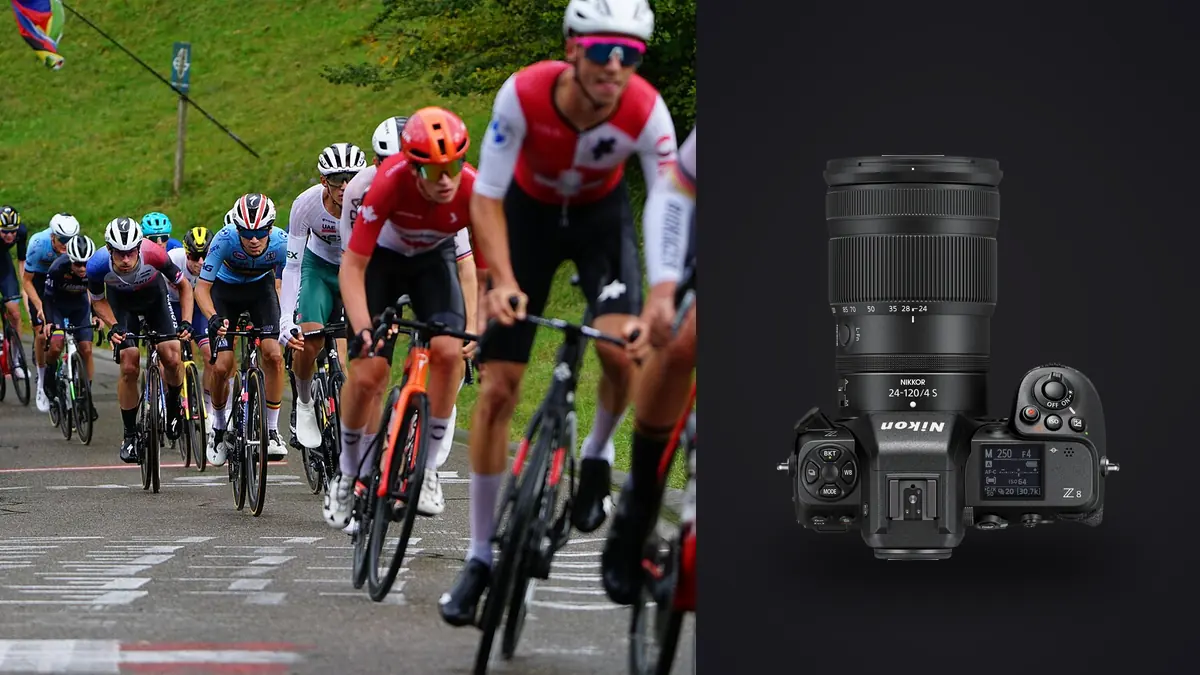
I shot my first track meet with a Nikon Z8 on a whim, mostly because I didn't want to lug the Z9 up four flights of bleacher stairs at a regional qualifier. Two hours later I'd filled a 160GB card with 4,200 frames of the 4x100 relay heats alone, and I remember thinking that the camera had solved a problem I didn't know I still had: keeping focus locked on a runner's torso through a full baton exchange without hunting. That's the story of this article. Not a spec dump, but what actually changes when you point this body at people running in a straight line at 20+ mph.
Why the Z8 Works for This Sport in Particular
Track and field is a strange discipline to shoot because it's really six or seven different sports happening on the same afternoon. Sprints need raw tracking speed. Distance events need patience and a long lens held steady for minutes at a time. Field events like the long jump or pole vault need you to predict a single decisive instant and nail focus on a target that's moving toward the camera, not across it. The Z8's 45.7-megapixel stacked sensor and dual Expeed processors mean the same body handles all of that without swapping cards or changing your mental model between events, which matters more than people give it credit for when you're working a meet solo and the next heat is already walking to the blocks.
The part that actually changed how I shoot is the blackout-free viewfinder combined with 20 fps raw capture. On my old DSLR, mirror slap meant I was guessing at where the runner's foot would land between frames. With the Z8 you watch the actual moving subject the entire time you're firing, which lets you time strikes and starts by eye instead of by habit.
Autofocus Settings That Hold Up Through a Full Heat
3D-tracking is the mode I default to for anything involving a single athlete crossing the frame, sprints especially. You place the focus point on the runner once, usually on the torso rather than the head since the head bobs more than people expect at full stride, and the camera carries that lock through the frame even as the runner passes behind a hurdle shadow or another lane's competitor briefly crosses the foreground.
For groups (the start of an 800m, a cross-country pack, relay exchanges with two runners in frame) I switch to Wide-Area AF (L) with subject detection set to People. The Z8's detection is genuinely good at picking a human out of a crowd of other humans in similar kit, but it will occasionally jump to the wrong runner if two are moving at similar speed and distance from you. I've made peace with a low single-digit percentage of "focused on the wrong athlete" frames as the cost of not having to babysit the point manually during a pack start.
A few settings I don't leave at default:
- Back-button AF-ON only, shutter button never focuses. This stops accidental refocus hunts when you're panning and your thumb comes off the button for half a second.
- Focus tracking with lock-on set to 2 (short) rather than the default. Fences, lane markers, and other runners cross your subject constantly on a track and you don't want the camera clinging to whatever it last saw for too long.
- AF area brightness/subject-detection sensitivity nudged up slightly for evening meets under stadium lighting, since detection confidence drops as light drops before shutter speed becomes the real limiting factor.
Frame Rate, Buffer, and the Card That Actually Matters
The Z8 will do 20 fps in 14-bit raw and keeps going well past a thousand frames before it chokes, but only if you're running a genuinely fast CFexpress Type B card. I learned this the annoying way, shooting a 400m final on a card I'd been using fine for portrait work, and watching the buffer counter drop into single digits mid-race. Swap to a card rated for sustained write speeds in the 1,700+ MB/s range and the difference in a meet setting is night and day. Pre-release capture is the other feature I didn't expect to lean on this hard: it buffers up to a second of frames before you fully press the shutter, which has saved more clean start-gun frames than I want to admit, since human reaction time alone means you're always a fraction late on the actual gun.
For field events I usually drop to a slower continuous rate, C15 or even C5, because a long jump approach doesn't need 20 fps until the last three strides before takeoff, and shooting everything at max rate just means more culling later for no real gain in the frames that matter.
Shutter Speed, Event by Event
This is the table I wish someone had handed me before my first meet. These are the speeds I actually use, not textbook numbers, adjusted for how each event's motion reads at typical lens focal lengths (roughly 200-400mm from a standard photographer position outside the track).
| Event | Shutter speed I use | Why |
|---|---|---|
| 100m / 200m sprints | 1/2000 to 1/2500 | Peak lateral limb speed near the finish, especially the trailing leg, needs it frozen or the shot reads soft even at f/4 |
| 400m / 800m | 1/1250 to 1/1600 | Stride rate is lower than a full sprint; you can afford to drop speed and gain ISO headroom under lights |
| 4x100 relay exchange | 1/2000 | Two athletes and a baton in frame at once, exchange zone is chaotic, you want every hand position sharp for the sequence |
| Long jump / triple jump | 1/2000 for takeoff, 1/1000 for the landing pit | Takeoff has real limb speed, but sand-spray shots in the pit look more natural with slight motion |
| High jump / pole vault | 1/1600 | Bar clearance is more about peak position than freezing motion; a touch of blur in the follow-through reads fine |
| Javelin / discus / shot put | 1/2500 at release, 1/800 for the wind-up | The implement itself moves faster than the athlete and will streak if you're not aggressive at the release moment |
| Distance / cross-country | 1/1000 | Pack shots benefit from a touch of natural motion in trailing limbs, and you're usually panning anyway |
None of these are gospel. On an overcast afternoon I'll happily drop a stop and lean on the sensor's clean high-ISO performance rather than force a shutter speed that starves the exposure.
A note on panning for the field events
Long jump and triple jump runways are the one place on a track where I actually pan rather than lock a static frame, following the athlete's approach and letting focus tracking do the work while I control composition. It takes a few missed attempts to get the rhythm right, especially timing the moment you stop panning and let takeoff happen in a still frame rather than blurring it.
Lens Choices That Actually Make Sense for This
You don't need the 400mm f/2.8 to shoot a track meet well, and I'd argue most amateur and even semi-pro shooters are better served without it given the weight and the price. My real-world rotation:
The 70-200mm f/2.8 S covers relay exchanges, most field events if you can get close to the runway, and any meet where you're allowed infield access. It's the lens I reach for first because it's light enough to hand-hold through a four-hour meet without your arm giving out by the 1500m.
The 100-400mm S is what I use for sprints from the stands or from behind a fence line, where you don't control your distance to the track. The extra reach matters more than the extra stop of light you'd get from faster glass, because at a typical outdoor meet you have plenty of light until the sun actually sets.
For evening meets under stadium lights, the math changes. Light drops fast once the sun's down and floodlights alone rarely give you the shutter speed table above without pushing ISO into territory that costs you detail. That's the one situation where I'd genuinely consider the faster (and heavier, and pricier) primes, or accept that evening 100m finals are going to be your grainiest frames of the season regardless of glass.
Stadium Lighting Is the Real Variable, Not the Camera
Daylight meets are straightforward. Evening meets under mixed sodium-vapor and LED stadium lighting are where the Z8's high-ISO ceiling actually gets tested. I set auto ISO with a minimum shutter speed floor matched to whichever event is running (pulled straight from the table above) and let ISO float up to around 12800 before I start second-guessing the shot. Past that, noise reduction in post starts costing you real detail in fabric texture and facial features, which matters a lot when a parent wants a print of their kid crossing the line.
White balance under stadium lighting is inconsistent rig to rig and even lamp to lamp within the same stadium, since older sodium fixtures and newer LED replacements often coexist in the same rig. I shoot raw specifically because of this and correct white balance in batches during editing rather than trying to nail it in-camera under lighting that's shifting color temperature every time a cloud passes or a different bank of lights cycles on.
Getting Through the Card After the Meet
Here's the part nobody warns you about before your first meet: the volume. A single afternoon covering four sprint finals, a relay, and two field events left me with just under 6,000 frames one Saturday, and a huge share of those are five or six near-identical shots from the same stride sequence at 20 fps. Manually clicking through that at the end of a long day is how you burn an entire evening and still miss the sharpest frame in a burst because your eyes glazed over on shot 400.
This is where I actually changed my workflow. I run the card through imagic before I open anything in my main editor, since its local sharpness and focus scoring flags which frame in each burst is actually the crisp one, rather than me eyeballing six shots of a runner's leg that all look roughly the same at thumbnail size. Because it clusters bursts and near-duplicates automatically, a 20 fps sprint sequence that would've been forty individual thumbnails to compare gets grouped down to the two or three frames worth a second look. It runs entirely on the laptop with no upload step, which matters at a track meet where the venue wifi is either nonexistent or locked to school staff accounts, and it's a one-time purchase rather than something I'm paying a subscription for four Saturdays a year.
Once the obvious rejects are gone, I lean on the apply_my_style preset trained on my own past edits to get a consistent base look across the whole set before I do event-specific tweaks, which keeps a gallery from a single meet looking like one photographer's work instead of six different editing moods depending on how tired I was by the pole vault. If you're building out a culling routine from scratch, the breakdown in how AI photo culling actually works is a decent starting point for understanding what's happening under the hood before you trust it with a full memory card.
For anyone still doing this stride-by-stride in a folder view, it's worth reading through some general workflow habits, and a few tips for a faster photo workflow apply just as well to a track meet's firehose of frames as they do to a wedding.
Frequently Asked Questions
Is the Z8's buffer actually enough to shoot through prelims into finals without stopping to clear it?
With a properly fast CFexpress Type B card, yes, for a single event. Where I've hit the wall is stacking events back to back with no gap, like a 100m final immediately followed by a relay exchange, where the buffer from the first event hasn't fully cleared before the second starts. I've started leaving a slower SD card as a backup slot specifically so I have somewhere to offload if I'm caught mid-clear.
Do I need the optional battery grip for a full day at the track?
Not for battery life alone, the Z8's stamina is solid for a typical four-hour meet. I added the MB-N12 grip mainly for the vertical shutter release, since a lot of field event compositions (pole vault clearance, high jump arch) work better in portrait orientation and reaching over the top of the camera all afternoon gets old fast.
What's a reasonable first lens if I'm not ready to invest in an f/2.8 telephoto?
A 100-400mm covers more of a track meet than people expect, since most spectator positions put you far enough from the action that the extra stop of a 70-200mm f/2.8 matters less than the extra reach. I'd only prioritize the faster glass if you're shooting evening meets regularly.
Does the Z8 struggle with overheating during long outdoor meets in summer?
I haven't hit a thermal shutdown shooting stills, even on hot days, though I'm not running extended 4K video between events. If you're mixing in a lot of video work at a summer meet, that's a separate consideration worth testing on your own body before you rely on it for a paid gig.