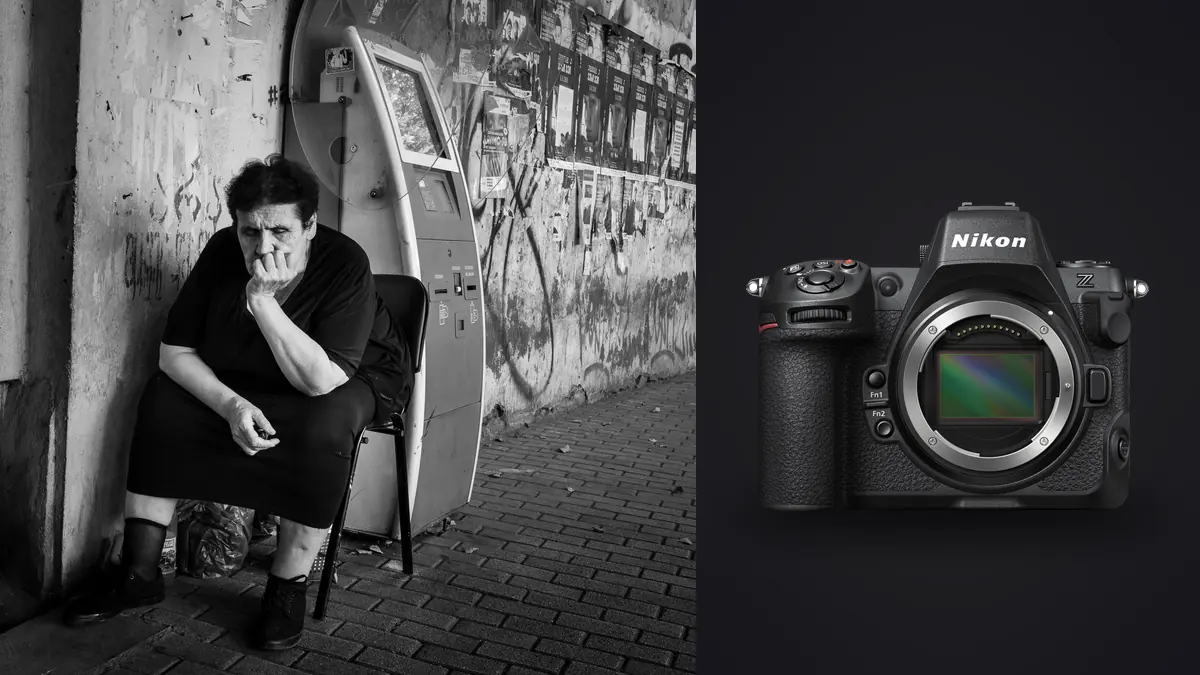
A Nikon Z8 street kit can range from one small prime to several professional zooms, but the location rarely rewards carrying every option. Narrow lanes, open squares, transit platforms, markets, and nighttime entertainment districts each create a different relationship between subject distance, background, light, and the photographer's presence.
This Lens and Location Guide assigns Z-mount focal-length roles to routes and recurring positions. It treats working distance, public and private boundaries, weather, social context, and later NEF review as parts of one documentary decision. A technically capable camera does not make every visible moment appropriate to photograph or publish.
Walk the route before assigning lenses
Note where people pause, cross, queue, enter light, or interact with architecture. Record broad time and direction rather than unnecessary personal details. A route should have a few repeatable positions plus room to leave when the atmosphere, access, or subject response changes.
Mark public and private boundaries, transit rules, commercial-property policies, security-sensitive areas, schools, clinics, shelters, and places involving vulnerable people. Legal permission varies by jurisdiction and use, so seek qualified guidance when the stakes are high. Ethical judgment should exceed a bare assumption of public access.
Identify alternate paths for crowds, rain, closures, construction, or police activity. Do not force a planned picture after the place has changed. Documentary value comes from responding accurately to conditions, not from making every route deliver the same motif.
Use 24mm and 28mm views for close spatial context
A wide lens can hold several people, architecture, signs, and foreground in one frame. It requires close attention to edge relationships and often a physically close position. Use it when the environment explains the action, not as a way to make proximity feel more dramatic.
Watch limbs, faces, vehicles, and street furniture near the corners. Tilting the camera changes verticals, and stepping closer enlarges nearer objects relative to farther ones. A profile can address lens distortion but cannot undo perspective set by distance.
Wide views work well at crossings, inside permitted public transport spaces, under arcades, and near strong foreground layers. They can be poor choices where moving close would intimidate a subject or block passage. Choose a longer view or leave the frame unmade.
Use 35mm as an environmental default only when it fits
A 35mm lens can balance one person or small group with recognizable surroundings. It often suits a walking route because the frame remains broad enough for context without the edge pressure of a more extreme wide. That familiarity does not make it universal.
Learn the working distance for full figure, half figure, and a two-person relationship. Mark those distances using ordinary architectural features, not by repeatedly testing on strangers. Predictable framing lets attention remain on gesture and background.
Check flare, close focus, hood size, weather behavior, and focus response on the actual lens. A compact prime may reduce physical and social presence; a large fast prime may offer another rendering while drawing more attention. The location determines which tradeoff matters.
Use 50mm for layers and selective distance
A 50mm view can isolate gestures across a pavement, compress signs and reflections into layers, and preserve a little more distance. It may feel too narrow in a market aisle or small room, and it can remove context that explains a documentary moment.
Look for aligned planes: a subject entering light, a reflection behind glass, an opening between parked vehicles, or a repeated facade. Precompose and wait rather than following a person indefinitely. The location provides the structure; the lens selects within it.
At close distance and wide aperture, depth may not cover two people on different planes. Choose aperture and focus from the relationship that matters. An isolated sharp face can misrepresent an interaction if the other participant becomes unreadable.
Reserve short telephotos for genuine sightlines
An 85mm or similar short telephoto can isolate across a street, compress urban layers, and avoid stepping into a scene. It also narrows awareness, magnifies camera movement, and can create a surveillance-like distance if used without sensitivity. Keep both eyes and broader context engaged.
Use a telephoto where a stable public position and clear sightline already exist, such as a square edge, approved event area, or architectural overlook. Do not photograph through private windows or across boundaries simply because the lens can reach.
Check whether foreground pedestrians, traffic, poles, and heat shimmer repeatedly block the view. A shorter lens from a lawful closer position may produce a clearer, more contextual frame.
Choose a prime or zoom from route variability
One prime can make framing predictable and keep the kit smaller. It works well on a route whose spaces and working distances are understood. A standard zoom can adapt between broad street and tighter interior transitions without changing lenses in dust or rain.
A zoom should still have assigned zones. Note which range provides environment, core relationship, and detail. Constantly twisting to the longest setting can turn a flexible lens into a heavy substitute for moving and observing.
Carry a second lens only when it creates a distinct picture. Store changes for a clean, sheltered pause. The Z8's file and body capabilities do not make an overloaded shoulder less distracting or tiring over a long walk.
Map light transitions rather than chasing exposure
Observe where direct sun meets shade, where glass reflects colored buildings, and where shop or transit light begins to dominate. Return to those boundaries at different hours. A repeated position reveals how body separation and background change with light.
At night, LED signs and fixtures can create bands or color shifts with electronic capture. Make controlled shutter-time tests on a neutral surface where possible and use current Nikon guidance for relevant flicker settings. Do not promise that every artifact can be repaired later.
Rain changes pavement reflection, contrast, umbrellas, and social behavior. Protect the camera with compatible covers, keep the lens clear, and maintain safe footing. A weather opportunity does not justify blocking a doorway or photographing a person in distress.
Use architecture as a location framework
Doorways, columns, windows, stairs, railings, and painted lines can organize human movement. Choose the camera position so these elements support rather than trap the subject. Watch signs and edges that appear to grow from heads or divide bodies.
Decide whether verticals should remain parallel or whether a deliberate tilt conveys energy. Correcting perspective later crops the frame, so leave margin. A highly corrected street image can also lose the immediacy that made the viewpoint meaningful.
Do not treat the location as an empty stage. Businesses, residents, workers, and visitors use it for their own purposes. Move when the camera position interferes, and respect requests even if the composition was nearly complete.
Plan focus from the place where subjects enter
Preselect an AF area where a person is likely to enter the composition. Subject recognition can assist, but posters, reflections, crowds, and faces on screens can compete. Keep a smaller area or manual distance option available for layered scenes.
For a repeatable crossing, focus on the expected plane and choose enough depth for normal variation. For a person moving toward the camera, acquire earlier and leave space. A focus box indicates the camera's target, not the ethical or narrative importance of the person.
When a frame is soft, locate the sharpest plane. A crisp background suggests acquisition elsewhere; directional smear suggests movement; one sharp person and one soft may simply reflect depth. Diagnose before changing the route or lens.
Protect context and people during selection
Keep chronological contact sheets and surrounding frames. A single dramatic image can imply a relationship or cause that the sequence does not support. Preserve notes needed for captions without collecting unnecessary identifying data.
Review for dignity, minors, medical or legal vulnerability, screens, house numbers, plates, and exact sensitive locations. Publication and commercial use may create consequences different from capture. Seek appropriate editorial or legal advice when needed.
Do not let technical rank remove the only frame that explains an event. Gesture, spatial relationship, context, and truthfulness may outweigh perfect focus. Keep uncertain frames until the set's meaning is clear.
Use a route-to-lens matrix
| Location pattern | Lens role | Primary caution |
|---|---|---|
| Narrow lane or market aisle | Wide to normal prime | Proximity, edge distortion, and blocked passage |
| Open square | Normal to short telephoto | Context loss and public boundaries |
| Transit platform | Compact fixed role or zoom | Rules, safety line, and crowd flow |
| Glass and reflections | Normal lens with precise position | Private interiors and misleading layers |
| Night entertainment street | Lens tested for flare and focus | Flicker, intoxication, and privacy |
Replace broad roles with actual lenses after walking the route. Remove a location from the plan when safe or respectful working distance cannot be maintained.
Plan the Z8 kit for human-scale movement
The Z8 and a large fast zoom can be effective, but the combination changes fatigue, handling, and how people perceive the photographer. Walk the complete route with the actual strap, bag, hood, and weather cover. If the kit repeatedly pulls attention away from observation or encourages stopping in crowded paths, reduce it.
Keep one hand free for balance, doors, or safe movement. Do not walk backward while looking through the viewfinder, and never step into a cycle lane, road, platform edge, or stair flow for framing. Preselected positions are safer than following action without spatial awareness.
Choose a bag that allows a clean lens change only during a sheltered pause. Keep exposed media separate and secure. A smaller role-based kit also makes it easier to leave a situation promptly when a person objects or the context becomes sensitive.
Carry location context into NEF review
After verified copies, imagic can scan Nikon NEF files and analyze them locally. It scores technical qualities and groups similar frames, while culling changes status rather than deleting originals. Preserve chronology and route notes around those groups.
If a stored verdict seems inconsistent, check score freshness and reanalyze stale files. Reselecting only ranks existing values. Human review remains responsible for context, dignity, sequence, captioning, and publication impact.
The desktop overview explains local, non-destructive review, while the workflow and editing section covers related documentary file systems. Keep lens and position notes with the contact sheet.
Frequently Asked Questions
What Nikon Z8 lens is best for street photography?
Choose from route width, working distance, desired context, and personal presence. Wide lenses suit close environment, 35mm balances context, and longer views need clear ethical sightlines.
Is a zoom too conspicuous for street work?
Size and behavior both affect presence. A zoom may reduce lens changes and improve framing from fixed positions, while a small prime can simplify the route. Work openly and respectfully either way.
Can local culling decide whether a street image is ethical?
No. It can assist technical review, but people must judge dignity, context, vulnerability, caption truth, and the consequences of publication.