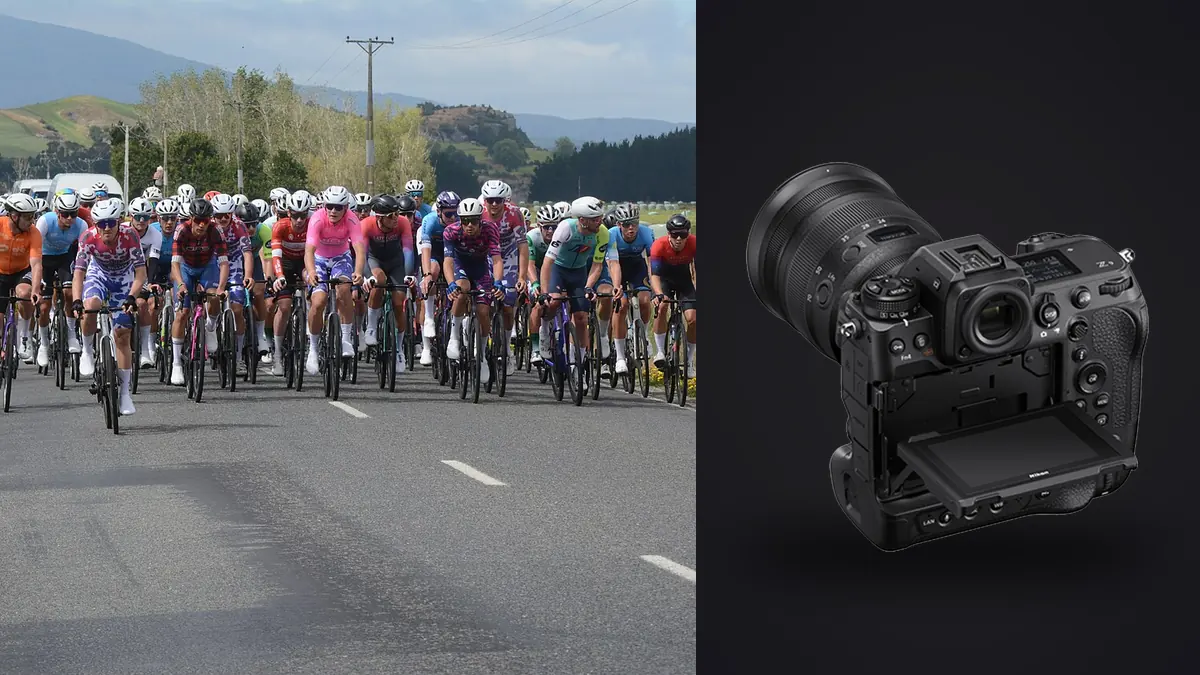
I shot my first full outdoor track season on a Nikon Z9 two years ago after a decade on Nikon DSLRs, and the honest truth is that the transition changed how I approach a meet more than any lens purchase ever did. Track and field is a strange discipline to photograph because it is really eight or nine different sports happening in the same stadium at once: a sprint is over in ten seconds, a pole vault attempt can take three minutes of pacing before the actual jump, and a discus series has you guessing distance on every throw. A camera built for one of those disciplines usually fails the others. The Z9 is the first body I have used where I do not feel like I am compromising between events.
The autofocus system is the whole story
Everyone talks about the 20fps blackout-free burst on the Z9, and it matters, but for track work the autofocus system is what actually separates a keeper from a near miss. Nikon's 3D-tracking on this body behaves differently from the DSLR-era version. Instead of relying on color and contrast blobs handed off between AF points, it uses the same subject-detection engine that drives eye and face recognition, so when you lock onto a sprinter's torso in the blocks it tends to stay locked through the arm drive and head movement of the first 30 meters. I run 3D-tracking almost exclusively for sprints and switch to wide-area AF-C with people detection for anything where the athlete's silhouette changes shape quickly, like a hurdler mid-clearance or a long jumper in flight.
Where I still get caught out is high jump. The bar, the pad, and the athlete's body are all close together in the frame at the moment of peak interest, and subject detection occasionally decides the padded landing area is more interesting than the athlete's back. I have had better luck switching to single-point AF-C and manually placing the point on the torso just before the jumper starts their approach, then letting the tracking take over from there rather than trusting wide-area detection from the start of the run-up.
Buffer depth and card choice actually matter here
A track meet will expose the limits of your memory cards faster than almost any other genre because you are not shooting isolated bursts, you are shooting repeated 2 to 4 second bursts across an entire session with very little downtime between events. On paper the Z9 can sustain 20fps RAW for well over a thousand frames with a fast CFexpress Type B card, and in practice I have never hit a hard buffer wall with a Sony Tough or ProGrade Cobalt card in the primary slot. What I have hit is card write speed becoming the bottleneck during the review process back at the car or hotel, not during shooting. If you're running dual CFexpress cards for redundancy rather than one CFexpress and one SD, do it. The SD slot on the Z9 is UHS-II and it will visibly slow your effective burst depth if you're writing RAW to both cards simultaneously during a long meet.
One habit I picked up after a bad experience at a regional championship: I now format both cards before every session, not every day. A half-filled card from the morning's field events will not warn you it's getting close during a chaotic 4x400 relay final, and that is exactly the moment you do not want a "buffer full" indicator in the viewfinder.
Electronic shutter and rolling shutter, honestly assessed
The Z9 has no mechanical shutter at all, which after some early skepticism I have come to appreciate rather than tolerate. Rolling shutter distortion is the theoretical concern with any stacked sensor at high frame rates, but for track and field the pan speeds you're actually working with (following a sprinter, panning a discus release, tracking a relay handoff) are well within what the sensor readout speed handles cleanly. I have seen skewing on this body exactly once, panning a cyclist during a mixed athletics/cycling meet at a speed well beyond anything a runner produces. For straightforward track events I stopped thinking about it as a limitation.
What settings I actually run, event by event
New shooters ask me for "the settings" as if there's one correct configuration, but track and field genuinely needs different setups depending on what's in front of you. This is the cheat sheet I built for myself after a full season, adjusted slightly for daylight versus floodlit night meets.
| Event | Typical Position & Lens | AF Setting | Shutter / Drive | Most Common Miss |
|---|---|---|---|---|
| 100m / 200m sprints | Finish line, elevated stand, 300-400mm | 3D-tracking, subject detection off (crowded lanes confuse it) | 1/2500s, full 20fps burst from gun to line | Panning too low, cropping feet on the lean |
| Long / triple jump | Runway side, low angle, 70-200mm | Wide-area AF-C, people detection on | 1/2000s, short 6-8 frame bursts at takeoff | Triggering after takeoff instead of at it |
| High jump | Opposite the bar, bar height, 200-300mm | Single-point AF-C placed on torso | 1/2000s, burst through the clearance and landing | Focus jumping to the crash pad |
| Pole vault | Side-on, slightly elevated, 300-500mm | 3D-tracking once the pole plant begins | 1/2500s to freeze pole flex, continuous burst | Missing the plant, catching only the flight |
| Discus / shot put | Behind the sector, safe distance, 400-600mm | Wide-area AF-C, refocus every attempt | 1/2000s, burst from wind-up through release | AF still set for the previous athlete's distance |
| 4x100 / 4x400 relay handoff | Zone box, ground level or slight elevation, 200-400mm | Group-area AF or wide-area with detection | 1/2000s, burst through the exchange | Camera locks onto the outgoing runner too early |
The relay handoff is genuinely the hardest thing I photograph at any meet. Two athletes at different distances from the camera, one accelerating and one decelerating, and the exchange itself lasts a fraction of a second. Group-area AF helps because it lets the camera choose between a cluster of points rather than commit to a single subject too early, but I still miss more handoffs than I'd like to admit.
Light changes the plan more than the event does
Most of my season is daylight meets, and the Z9's dynamic range at base ISO gives me a lot of room to expose for highlights and pull shadow detail back afterward, which matters when half the stadium is in hard midday sun and the other half is in shade from the grandstand roof. Floodlit night meets are a different animal entirely. Stadium lighting rigs, especially older metal-halide setups still common at a lot of regional tracks, flicker at a rate that can produce visible banding at very high shutter speeds. I've had clean sequences at 1/2000s turn into a mix of properly exposed and noticeably darker frames within the same burst because the shutter speed and the light's flicker frequency landed out of phase. Dropping to 1/1600s or enabling the Z9's flicker reduction feature (it does cost you a bit of burst consistency) has solved this for me at every venue where it came up. LED floodlights, which more tracks are switching to, tend to flicker at frequencies high enough that this stops being an issue, but you won't know which kind of lighting a given stadium runs until you're there shooting test frames before the first gun.
The part nobody warns you about: what happens after the meet
A single day of track and field, shot properly with bursts on every event, routinely leaves me with 4,000 to 6,000 RAW files by the end of the session. That number sounds manageable until you actually sit down to go through it. A 100m final alone can produce 150 frames from one burst, and maybe four of those have the lean at the line with clean form and no motion blur on the trailing leg. Multiply that across every heat, every field event attempt, and every relay leg in a full meet program, and the culling job becomes bigger than the shooting job.
This is the point where I stopped trying to eyeball everything in a folder view and started running my exports through imagic before they ever touch my main catalog. It scores sharpness and focus locally, frame by frame, which matters a lot for burst-heavy sports work because "close enough" sharpness on a runner's face reads as soft the moment you print or crop tight. It also clusters the burst sequences themselves, so instead of scrolling through 150 near-identical frames from one sprint I'm looking at the sequence grouped together with the sharpest frame flagged. For a discus series with six near-identical throw attempts, that clustering alone probably saves me twenty minutes per event.
The other piece I've leaned on more this season is imagic's apply_my_style feature. I shoot a fairly consistent look for track work (cooler shadows, punchy but not blown highlights, skin tones kept warm even under mixed stadium lighting) and once I had trained it on a season's worth of my own finished edits, it started applying a first pass that gets maybe 80% of my typical grading work done before I open a single frame manually. Since everything runs locally on my own machine with no upload step, I'm not sitting around waiting on a cloud queue between events when I want to check a take on my laptop trackside. For anyone still doing this by hand, I'd also point to our broader piece on building a faster photo editing workflow, a lot of which applies directly to high-volume sports days.
Lens pairing that actually gets used
I carry three lenses to a track meet and genuinely use all three, which is rare for me. A 400mm f/2.8 or a 300mm f/2.8 with a 1.4x teleconverter covers sprints, the far side of the infield, and most throwing events from a legal distance. A 70-200mm f/2.8 covers jumps and anything happening close to the stands, plus general reaction shots of coaches and teammates. And I keep a 24-70mm on a second body for wide environmental shots of the whole stadium, warm-up areas, and the medal ceremony at the end. The Z9's in-body stabilization means I can hand-hold the 70-200 for extended stretches without a monopod, which matters when you're moving positions six or seven times over a three-hour meet.
A few field notes I wish someone had told me earlier
- Pre-focus on the blocks before the gun for sprints. 3D-tracking picks up motion faster if it already has a subject locked rather than searching cold when the gun fires.
- For throwing events, refocus between every single attempt. Athletes stand at different spots in the circle each time and a stale focus point from the previous thrower will cost you the shot.
- Battery life on the Z9 is genuinely good, but cold morning sessions at outdoor meets in early spring will eat through it faster than the spec sheet suggests. I carry two spares minimum for a full day program.
- Shoot verticals more than feels natural. Track and field photos get used in vertical formats (posters, social stories, program covers) far more often than the horizontal framing most of us default to out of habit.
Frequently Asked Questions
Is the Nikon Z9 overkill for a high school or club-level track meet?
Not really, though it depends what you're chasing. The autofocus system is what earns its keep even at smaller meets, since a hurdler mid-clearance or a relay handoff doesn't get easier to track just because the meet is lower stakes. Where you can scale down is the lens kit. A single 100-400mm covers most club-level positioning without needing the full three-lens setup described above.
How do I stop losing frames to buffer clearing during back-to-back events?
Use dual CFexpress Type B cards rather than pairing CFexpress with SD, and format both cards at the start of each session rather than trying to squeeze a full day onto cards you didn't clear. The SD slot's UHS-II ceiling becomes the limiting factor for sustained bursts if you're writing to both slots simultaneously.
Does imagic help with track and field specifically, or is it built for general photography?
It's not sport-specific software, but the two features that matter most for burst-heavy sports work, local sharpness scoring and burst clustering, are exactly what a high-volume track meet needs. Everything processes on your own machine, so there's no upload wait between events if you want to check frames while you're still trackside.
What shutter speed should I use for floodlit night meets to avoid banding?
Start around 1/1600s to 1/2000s and check your first burst for uneven exposure across frames, which is the tell-tale sign of shutter speed and light flicker frequency landing out of phase. Older metal-halide stadium lighting is the usual culprit; the Z9's flicker reduction setting helps but does trade off some burst consistency. Newer LED rigs are generally less prone to this.