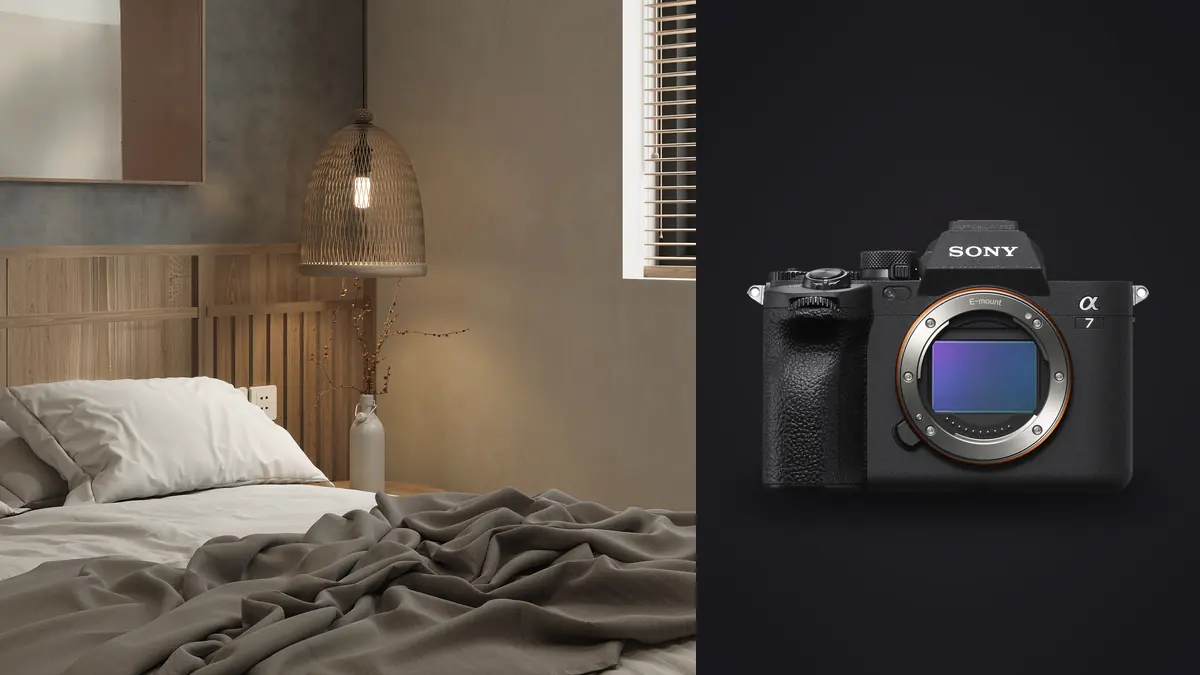
Boudoir is an odd genre to shop gear for. Most camera reviews are written around landscapes, sports, or studio product work, and none of that tells you much about what happens in a client's bedroom with one window, a nervous first-timer, and forty minutes before the light goes flat. I picked up a Sony A7 IV specifically for this kind of work after years on an older A7R body, and the reasons it earns its keep in a boudoir session are pretty different from the reasons camera marketing usually leads with.
The Sensor Choice Actually Matters Here
The A7 IV's 33-megapixel BSI sensor sits in an odd spot on paper. It's not the resolution monster the A7R series is, and it's not the low-light specialist the A7S line was built to be. For boudoir work, that middle ground is exactly right. You rarely need the crop headroom of 60+ megapixels for a genre built around soft, close, intimate framing, and you need more resolving power than the A7S bodies offer if a client ever wants a large print.
What matters more is how the sensor behaves between ISO 800 and 6400, because that's where most boudoir sessions actually live. Bedrooms, hotel suites, and home studios are rarely lit to a magazine standard. A single north-facing window plus a reflector, maybe a small LED panel bounced off a wall, gets you into that ISO range fast once you're shooting at f/1.8 or wider to keep skin rendering soft rather than clinical. The A7 IV holds detail in shadow areas without the blotchy chroma noise that shows up on skin tones from older sensors at the same ISO. I've pushed frames to ISO 5000 and still had usable skin texture after a light noise reduction pass, which is not something I could say about the A7 III with any confidence past ISO 3200.
Dynamic range is the other piece. Boudoir lighting frequently has a hot window on one side of the frame and a client's face falling into shadow on the other. The A7 IV's 14-stop-class range at base ISO gives enough room to pull shadow detail back on a face without dragging up the noise floor, which matters because boudoir edits tend to be gentle. Nobody wants to see grain in an intimate portrait that's supposed to feel soft and private.
Autofocus in a Genre Where Nothing Holds Still
Real-time Eye AF gets talked about constantly in gear reviews, usually in the context of weddings or events where subjects are moving across a room. Boudoir autofocus is a different problem entirely. The subject isn't moving fast, but she is moving constantly in small ways: chin tilts, shoulder drops, a hand sliding through hair, weight shifting from one hip to the other between breaths. At f/1.4 or f/1.8, your plane of focus might be two centimeters deep, and a chin dropping half an inch is the difference between a keeper and a miss. The A7 IV's eye detection is sticky enough to track through these micro-movements, including through hair falling across the face or a hand partially covering an eye, situations that used to force a refocus on older systems. It's not flawless. When a subject turns close to profile and one eye disappears entirely, the camera will occasionally hunt for a half-second before locking onto the visible eye or falling back to a general face box. I've learned to just keep shooting through that hunt rather than lifting off the shutter, because the AF usually recovers within the same burst.
Where It Still Trips Up
Fabric is the recurring problem. Sheer robes, lace, and silk sheets all give the AF system high-contrast texture to grab onto, and it will sometimes lock onto a fold of fabric in the foreground instead of the face behind it, especially at very wide apertures where depth of field is razor thin. My workaround is boring but reliable: switch to a single, small focus point placed directly on the eye rather than letting the camera pick a subject automatically, particularly for close-crop shots where fabric is draped near the face.
In-Body Stabilization Changes How You Light
The 5-axis IBIS rated around 5.5 stops isn't just a nice-to-have spec here, it changes the actual lighting decisions I make on a boudoir set. A huge amount of this genre is shot without flash, on purpose, because continuous or ambient light lets both photographer and client see exactly what the final image will look like as it's being made. That's reassuring for someone who's nervous about the whole process. But ambient-only lighting means slower shutter speeds, and slower shutter speeds mean handheld blur unless you compensate. With the A7 IV's stabilization, I can hand-hold down to around 1/15s at 50mm and still get a sharp frame more often than not, as long as the subject herself is holding relatively still (stabilization does nothing for subject motion, only camera shake). That flexibility lets me keep ISO lower than I otherwise would in a dim room, which circles back to the skin tone benefit from the sensor discussion above. Cleaner file at a lower ISO beats a marginally sharper file with more noise to deal with in post.
Lens Pairings That Actually Get Used
I own more lenses than I need for this genre, and in practice I reach for the same three or four repeatedly. Here's how they actually get used on set, not how the marketing copy describes them.
| Lens | Max Aperture | Min. Focus Distance | Where I actually use it |
|---|---|---|---|
| Sony FE 85mm f/1.4 GM | f/1.4 | 0.80m | Tight facial portraits, single-subject close-ups where background needs to fully disappear |
| Sony FE 50mm f/1.2 GM | f/1.2 | 0.40m | Full-body poses in smaller rooms where 85mm forces you against a wall |
| Sony FE 35mm f/1.4 GM | f/1.4 | 0.27m | Environmental frames showing the room, morning light through curtains, context shots |
| Sony FE 24-70mm f/2.8 GM II | f/2.8 | 0.21m (wide) | Any shoot where the room is genuinely cramped and I can't swap primes fast enough |
The 50mm f/1.2 gets more use than people expect for this genre. Boudoir is often shot in bedrooms and small home studios, not sprawling suites, and 85mm simply doesn't have room to breathe when you're backed against a closet door. The 50mm's minimum focus distance also lets you get close on detail shots (hands, jewelry, fabric texture) without switching lenses mid-session, which matters when a client's comfort level is a fragile thing you don't want to interrupt with gear changes.
The Quiet Camera Question
Shutter sound matters more in boudoir than in almost any other genre I've shot. A loud mechanical shutter in an intimate, quiet room draws attention to the camera in a way that works against the whole point of the session, which is to help someone forget they're being photographed for a few minutes. The A7 IV's electronic shutter mode drops the sound to essentially nothing, and I run it in fully silent mode for the majority of a session, only switching back to mechanical when I need flash sync or I'm worried about rolling shutter distortion during faster movement (rare in this genre, but it happens with flowing fabric or hair flips). The tradeoff is banding under certain artificial light sources, mostly cheap LED panels running at odd frequencies. I test this at the start of every shoot by taking one silent-mode frame under whatever practical lighting is in the room before committing to it for the full session.
What Actually Happens After the Shutter Closes
Nobody talks about this part enough. A single boudoir session, shot properly with a client moving through five or six poses per setup, easily produces 800 to 1,500 raw files in an afternoon. That volume creates two separate problems that have nothing to do with the camera body itself: sorting through near-duplicate frames to find the sharpest one from each pose, and doing it with images that are, by nature, extremely sensitive and not something you want sitting in a cloud queue waiting to be processed by a service you don't control. This is the part of my workflow where imagic actually earns its place. It runs its sharpness and focus scoring entirely on my own machine, so a client's raw files never have to be uploaded anywhere to get them culled, which matters enormously for a genre where the images themselves are the most private thing a client will ever hand a photographer. The burst and duplicate clustering groups those five-pose sequences automatically, so instead of clicking through 40 nearly identical frames of a single expression change, I'm looking at maybe six clustered groups and picking the sharpest eye in each. For a 1,200-frame session that used to take me most of an evening, that's a real difference, not a marginal one. I've also leaned on the apply_my_style feature once I built out a consistent boudoir edit (the warm, slightly lifted-shadow look boudoir clients often expect) by training it on a batch of my own finished edits, so new sessions get a first pass that's already close to my established look before I go in and fine-tune skin tones by hand. If you're trying to tighten up the gap between shoot day and gallery delivery, it's worth reading through how AI photo culling actually works before assuming any culling tool understands focus the way a human eye does, because they don't all work the same way under the hood.
Settings I Actually Dial In
For anyone shopping the A7 IV specifically for this genre, here's roughly where my settings sit on a typical ambient-light boudoir shoot: aperture priority, f/1.4 to f/2.2 depending on the lens and how much of the pose needs to stay in focus, Auto ISO capped at 6400, shutter speed floor set to 1/125s to freeze small movement even though IBIS would technically let me go slower, and continuous Eye AF with the smaller focus area rather than wide tracking whenever fabric or hair is near the face. Face registration is worth setting up if you're shooting a returning client, since it removes any ambiguity when two people are briefly in frame during a styling adjustment. For anyone rebuilding their whole capture-to-delivery process around a genre that produces this many raw files per session, it's also worth a look at general workflow tips for cutting down editing time, since a lot of the time savings in this kind of shoot happen well before you ever open an editing program.
Frequently Asked Questions
Is the Sony A7 IV overkill for boudoir photography compared to something like the A7 III?
Not overkill, but not strictly necessary either. The upgrade that matters most for this genre is the improved Eye AF tracking through hair and fabric, plus the cleaner high-ISO files for underlit bedrooms. If you're already shooting an A7 III and it's working, the jump isn't urgent. If you're buying new, the A7 IV's autofocus behavior alone justifies the price difference for this kind of close, low-light, constantly-shifting subject work.
What ISO ceiling would you actually recommend for indoor boudoir sessions?
I set Auto ISO to cap at 6400 and rarely regret it. Past that point, even with good noise reduction in post, skin starts losing the texture that makes boudoir images feel intimate rather than airbrushed. If a room is dark enough that I'm consistently hitting that ceiling, I'd rather add a small continuous light source than keep pushing ISO higher.
Does the silent shutter mode cause any real image quality issues?
The main risk is banding under certain LED lighting and rolling shutter smear during fast movement, like a robe being pulled off quickly or hair being flipped. For the slow, deliberate movement typical of boudoir posing, I've had almost no issues running silent shutter for entire sessions. Just test it against whatever light source is actually in the room before you commit to it.
How do you handle the sheer volume of near-identical frames from a session like this?
Culling software built for burst and duplicate detection is the honest answer, not manual review. Trying to eyeball focus differences across dozens of nearly identical frames per pose is where photographers lose entire evenings. Running that sharpness comparison locally, rather than through a cloud service, also matters specifically for this genre given how sensitive the source images are.