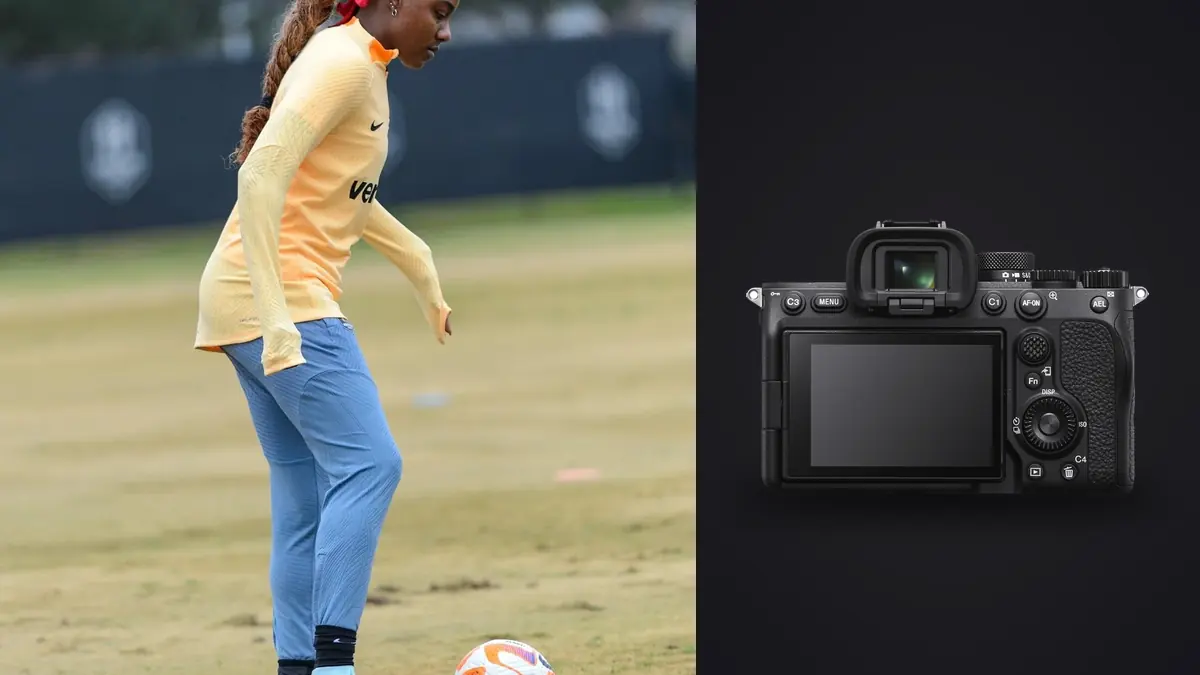
I picked up a Sony A7 IV two seasons ago mostly because it was the body I already owned for portrait and event work, and I kept telling myself I'd upgrade to something more "sports appropriate" once track season got serious. I never did. What follows is what I've actually learned shooting three regional meets, a handful of high school invitationals, and one very long, very hot state qualifier with this camera, not a spec sheet rewrite.
Why the A7 IV Isn't the Obvious Choice (and Why I Still Use It)
Let's get the honest part out of the way. The A7 IV was never built as Sony's sports flagship. That's the A9 III, or the A1 if budget isn't an issue. The A7 IV uses a 33-megapixel sensor that isn't stacked, which means its electronic shutter reads out slower than the A9 line's, and its viewfinder still blacks out momentarily during high-speed bursts instead of giving you the blackout-free feed the A9 III offers. For a discipline like track and field, where a sprinter's stride cycle and a pole vaulter's bar clearance both happen in fractions of a second, those two limitations matter.
What kept me on the A7 IV anyway is that most of what I shoot isn't the 100m final at a professional meet. It's youth and high school track, where I'm often the only photographer on the infield and I need one body that also handles portraits of the team before and after. The A7 IV's autofocus, specifically Sony's Real-time Tracking, is genuinely good enough for that tier of shooting once you understand where it struggles.
Autofocus on the Track: Where Real-Time Tracking Earns Its Keep
Real-time Tracking on the A7 IV locks onto a subject when you half-press or press the AF-On button over them, then follows that specific runner through the frame using a mix of color, pattern, and subject recognition. It's not the dedicated human pose and skeletal tracking Sony added in later bodies like the A9 III, but for a single athlete against a relatively clean track surface, it holds on well.
Sprints and Hurdles
For the 100m and 200m, I set focus area to Tracking: Zone rather than Tracking: Wide, because Wide will happily jump to whichever runner is biggest or closest in frame, which is a problem when eight lanes fill with athletes at the gun. Zone lets me pick roughly where in the frame my subject will be and keeps the system from wandering to the lane next door. Hurdles are trickier. The barrier itself sometimes confuses the tracking box for a frame or two as the athlete's leg crosses it, so I've had better luck switching to Flexible Spot with a slightly larger box and just trusting my panning more than the algorithm.
Distance Events and Pack Running
Distance races are where the camera is at its most forgiving, and also where it's easiest to get lazy. Runners in a pack moving at 800m or 1500m pace aren't changing direction or acceleration nearly as violently as a sprinter out of the blocks, so Zone tracking rarely loses the subject. My actual problem here isn't autofocus, it's picking which runner to track in a pack of a dozen and staying locked on them for two or three laps without my thumb cramping on the AF-On button.
Burst Rate, Buffer, and the EVF Blackout Problem
Sony advertises 10fps on the A7 IV, and technically you can get there, but only through the customizable "AF/AE continuous shooting speed boost" function, and only if you're willing to shoot compressed files rather than full 14-bit uncompressed raw. For most of my track shooting I use in the standard Hi+ continuous mode, which settles closer to 6fps with full AF/AE tracking at full 14-bit raw quality. That's noticeably behind what a stacked-sensor body delivers, and it shows up specifically at the exact moment a hurdler's lead leg is fully extended over the barrier, because 6fps sometimes means you get the frame just before and just after, not the peak.
Buffer depth is the other constraint I plan around. With a CFexpress Type A card in the primary slot, I can shoot a long burst through most of a sprint without the buffer filling, but a slower UHS-II SD card in that same slot will choke noticeably faster, sometimes mid-race if I've been trigger-happy warming up on earlier heats. If you're buying cards specifically for this camera and this use case, spend the money on CFexpress Type A for slot one. It's not a minor convenience, it's the difference between catching the finish line lean or watching your frame rate stall right as the pack crosses.
The viewfinder blackout is the thing nobody mentions until they've missed a shot because of it. During a burst, the A7 IV's EVF flickers between the live feed and the last captured frame rather than staying continuously live. On a sprinter it's manageable because you're panning in a fairly predictable arc. On a pole vaulter or long jumper changing direction and altitude quickly, I've lost the subject mid-burst more than once simply because I couldn't see where they'd moved to during the blackout.
Lens Choices for Different Parts of the Infield and Track
Where you're standing dictates the lens far more than the camera body does. I carry two setups to most meets.
For the track itself, lanes and hurdles, a 70-200mm f/2.8 is the workhorse. Sony's GM II version is light enough to hand-hold for a full session without a monopod, and f/2.8 gives enough separation from the background to make a runner pop even on a cluttered infield. At smaller stadiums I can cover the whole home straight from the stands with this lens alone.
For field events, especially throws (shot put, discus, hammer) and anything happening on the far side of a full-size track, 200mm isn't enough. A 100-400mm GM or the 200-600mm G covers javelin and discus releases from a safe distance, which matters both for framing and for not standing in the landing sector. The 200-600mm is heavier and slower to swing between subjects, so I only bring it out when I know I'll be parked in one spot (the javelin runway, for example) for an extended stretch rather than moving around the infield.
Teleconverters are a compromise I use sparingly. A 1.4x on the 100-400mm gets me closer for distant throws, but it costs close to a stop of light and measurably slows autofocus acquisition, which is the last thing you want when a discus is already in the air.
Settings by Event: A Quick-Reference Table
These are the settings I actually dial in before each event group, adjusted for a typical outdoor afternoon meet with decent light. Overcast days push everything up a stop or two in ISO.
| Event | Shutter Speed | AF Area Mode | Typical Lens / Focal Range | What I'm Watching For |
|---|---|---|---|---|
| 100m / 200m sprints | 1/3200s | Tracking: Zone | 70-200mm | Blocks reaction, mid-race stride |
| Hurdles (100m/110m/400m) | 1/2500s | Flexible Spot (M) | 135-200mm | Lead leg fully extended over barrier |
| 400m / 800m | 1/2000s | Tracking: Zone | 70-200mm | Lane positioning at the break |
| 1500m / distance | 1/1250s | Tracking: Zone | 70-200mm | Pack separation, final kick |
| Long jump / triple jump | 1/2500s | Flexible Spot (S) | 100-400mm | Takeoff and peak extension |
| High jump | 1/2000s | Flexible Spot (S) | 200-400mm | Bar clearance, back arch |
| Pole vault | 1/3200s | Tracking: Zone | 100-400mm | Pole flex release, bar clearance |
| Shot put | 1/1600s | Flexible Spot (S) | 200-600mm | Release point, follow-through |
| Discus / hammer | 1/2000s | Flexible Spot (S) | 200-600mm | Full spin, release angle |
| Javelin | 1/2500s | Flexible Spot (S) | 200-600mm | Crow hop and release |
| Relay handoffs | 1/2500s | Tracking: Wide | 70-200mm | Baton exchange zone |
ISO floats to whatever gets me those shutter speeds at f/4 or f/5.6 depending on the lens. On a bright afternoon that's usually ISO 400-800. Once the sun drops behind the stadium roof in the evening rounds, I've had to push to ISO 3200 or higher on the field events, which the A7 IV handles reasonably cleanly, better than I expected from a 33-megapixel sensor, though noise reduction in post becomes part of the workflow at that point rather than an afterthought.
Shooting the Field Events: Where Position Matters More Than Gear
Track photography gets most of the attention because sprints are dramatic, but field events are where I've made the fewest keeper mistakes and also where positioning saves you more than any camera setting. For pole vault, I try to shoot from slightly to the side of the standards rather than dead-on, so a missed bar clearance still reads as a strong action shot rather than an ambiguous blur against the pit. For long jump, standing at the far end of the pit facing back toward the runway catches the landing spray and the athlete's face in the same frame, which head-on shots from the runway side never do.
Throws events are the ones where I most wish for the A7 IV's blackout-free cousins. A shot put release happens in well under half a second from the athlete's final push to the ball leaving their hand, and with the viewfinder cutting in and out during a burst, I've genuinely misjudged where in the sequence I was and clipped the release moment more than once. My workaround has been to start the burst noticeably earlier than feels necessary, accepting that I'll throw away more frames than I keep, rather than trying to time a shorter burst around the release itself.
Managing Card Fill and the Post-Meet Cull
A single day at a track meet with this camera produces numbers that would have seemed absurd a decade ago. Between warmups, heats, finals, and field events running simultaneously, I've come home from a full invitational with north of 4,000 frames on two cards. Most of those are near-duplicates from bursts, three or four frames apart, where only one actually has the peak moment and sharp focus on the athlete's face.
This is where I stopped trying to cull manually in Lightroom the night of the meet and started leaning on imagic instead. It runs entirely on my laptop with no upload step, which matters after a meet when I'm on hotel wifi or none at all, and its burst clustering groups those near-duplicate sequences together so I'm comparing four frames of the same vault attempt against each other instead of scrolling through a folder of 4,000 thumbnails in chronological order. The local sharpness scoring is what actually saves time though, since it flags which frame in a burst has the athlete's eyes and torso in focus rather than the background or the leading edge of the pit, which is the exact judgment call that takes the longest to make by eye at 1am after a long day on your feet.
I've also started running my throws and jumps through imagic's apply_my_style preset, since I trained it on how I typically process action shots (slightly warmer skin tones, a bit more contrast on the sky), and it gets me most of the way there before I do finish work on the handful of hero images from each event. It's not replacing my judgment on the actual keepers, but it cuts the flat first pass down from an evening to about twenty minutes. If your own workflow is still built around scrolling a folder of RAWs one by one, it's worth reading through how AI photo culling actually works before you sink another meet's worth of evenings into it.
Battery, Weather Sealing, and an All-Day Meet
The NP-FZ100 battery is rated around 580 shots by CIPA standards, but that number assumes a fairly normal shooting cadence. Burst-heavy sports shooting with the EVF active most of the day chews through it faster, and I've drained a battery by early afternoon on meets where I'm shooting continuous bursts through every heat rather than being selective. I carry three batteries now and charge in the car between sessions using the camera's USB-C port, which has saved me more than once when a meet ran long.
Weather sealing has held up fine through light rain and the usual dust of a track infield, but I wouldn't push it through a genuine downpour the way I might trust an A9 II or A1 body. For spring meets where rain is a real possibility, I bring a rain sleeve rather than relying on the body alone.
Frequently Asked Questions
Is the Sony A7 IV fast enough to shoot 100m sprint starts?
It can, but with caveats. Standard continuous shooting with full AF/AE tracking and 14-bit raw sits closer to 6fps, not the 10fps on the spec sheet, which is only reachable through the speed boost function with reduced file quality. For catching the exact moment of a reaction off the blocks, I'd rather rely on good timing and a slightly earlier trigger pull than count on frame rate alone to bracket the moment.
What lens setup covers both track and field events without switching constantly?
A 70-200mm f/2.8 handles the track itself well from most stadium vantage points, but you'll come up short on javelin, discus, and hammer, which typically need 300mm or more depending on where you're allowed to stand. If I can only carry one lens for a full meet, I lean toward a 100-400mm as the compromise, even though it means giving up some reach on the throws and some speed on the sprints.
Does the A7 IV's rolling shutter cause problems shooting pole vault or fast pans?
Because the sensor isn't stacked, the electronic shutter reads line by line slowly enough to introduce skew on fast horizontal motion, which shows up as slightly slanted verticals during quick pans. I avoid this mostly by sticking to the mechanical shutter for anything with a fast lateral pan, like relay handoffs, and only using electronic shutter for quieter moments where I want silence, like during a competitor's approach before a jump.
How many photos should I realistically expect to sort through after a full meet?
For a full-day invitational shooting multiple events, 3,000 to 5,000 frames isn't unusual once you account for bursts through heats, finals, and field event attempts. Grouping those bursts by sequence rather than scrolling frame by frame is the difference between a two-hour edit session and one that eats your whole evening.