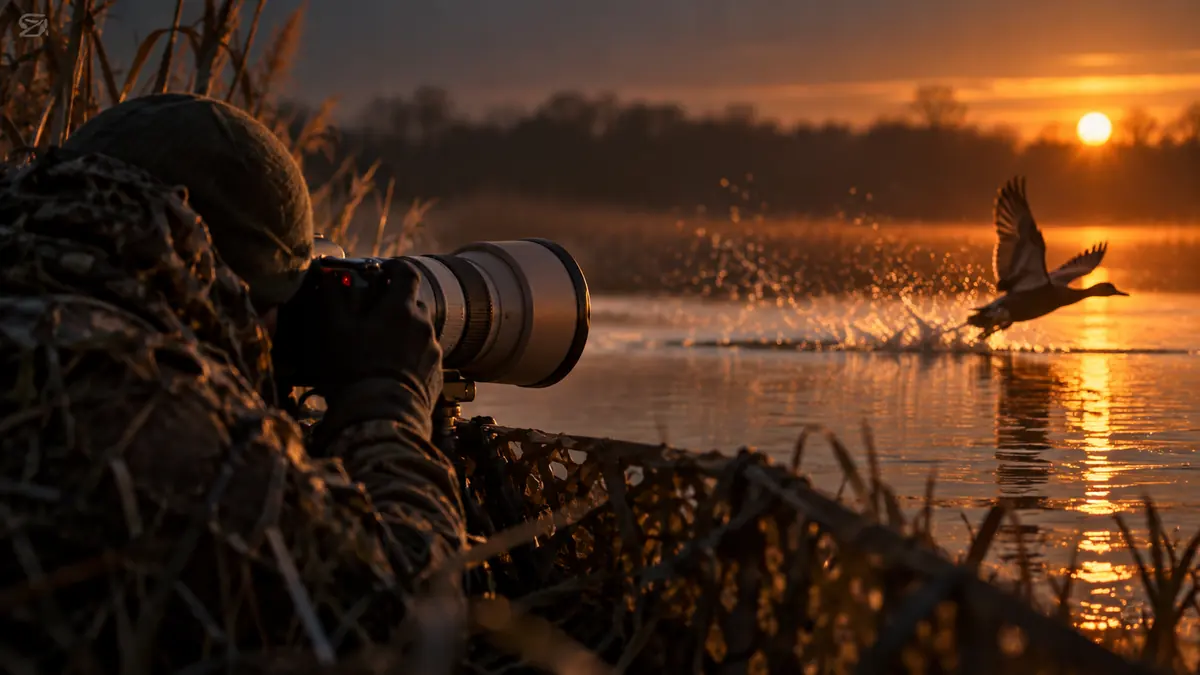
A wildlife photographer who comes back from a morning shoot with 3,000 frames and 60 keepers has not had a bad day. A 2% keeper rate is normal in this genre, and photographers newer to wildlife often assume something is wrong with their gear or technique when the real issue is that nobody told them what to expect.
Why Pre-Burst Modes Create Thousands of Frames
Modern cameras with pre-capture or "pro capture" style burst modes record frames continuously before the shutter is even fully pressed, specifically to catch the instant a bird takes flight or a predator strikes, moments too fast for human reaction time to trigger manually. This is enormously effective for catching the actual moment, and it also means a single 10-second encounter can produce hundreds of frames, the overwhelming majority of which are the subject sitting still or mid-transition, not the peak moment itself. The frame count explosion is a direct, intentional tradeoff for catching action that would otherwise be missed entirely.
Sharpness-Scoring the Wing-Beat
Within a wildlife burst, the usable frames are usually the ones where a fast-moving subject, a wing at the top or bottom of its beat, a paw at full extension, happens to align with sharp focus at that exact instant. Autofocus tracking a moving subject through a burst does not hit perfect focus on every frame, so most of a burst is technically soft even when the composition is fine. AI sharpness scoring is genuinely well matched to this problem: it can flag the handful of frames within a long burst that landed sharp focus, letting you concentrate review on those instead of scanning hundreds of near-identical, mostly-soft frames by eye. See how AI sharpness detection works for the mechanics behind this kind of scoring.
Honest Keeper Rate Expectations by Subject
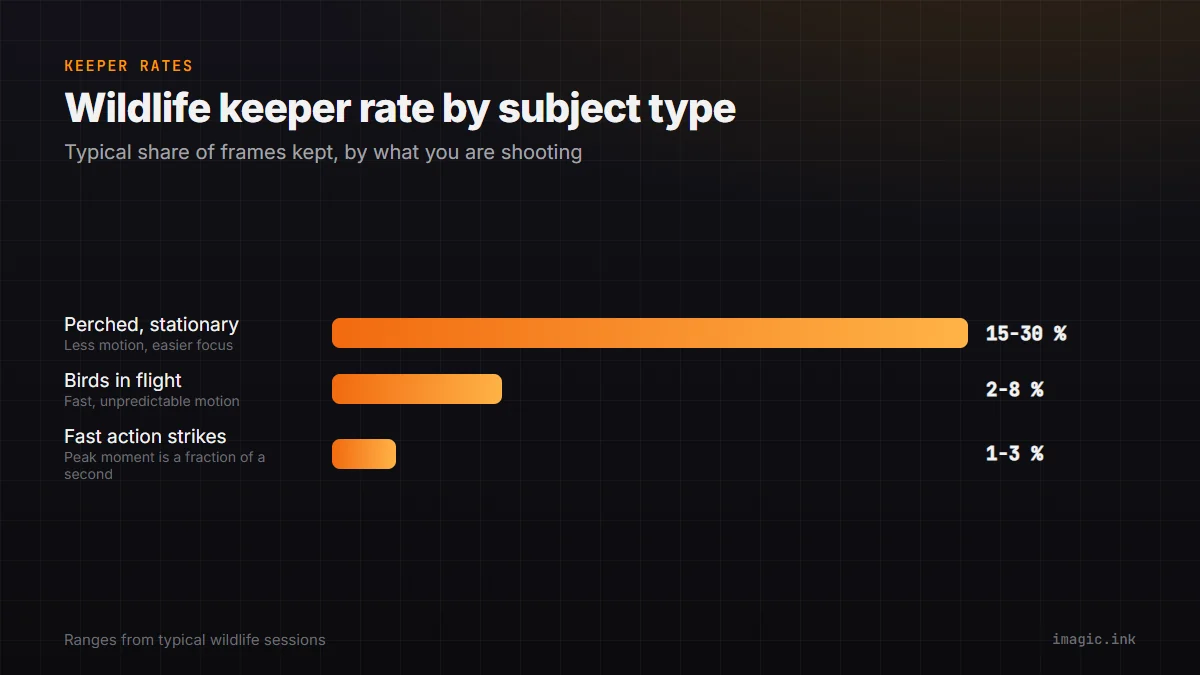
Keeper rates vary enormously by what you are shooting, and setting expectations by subject prevents a lot of unnecessary discouragement.
| Subject type | Typical keeper rate | Why |
|---|---|---|
| Perched or stationary animals | 15 to 30% | Less motion, easier consistent focus |
| Birds in flight | 2 to 8% | Fast, unpredictable motion against autofocus tracking limits |
| Fast action (strikes, takeoffs) | 1 to 3% | Peak moment is a fraction of a second within a long burst |
A 2% rate on a bird-in-flight or fast-action session is not a sign of poor technique, it reflects how narrow the sharp-and-well-timed window actually is within thousands of frames.
Finding the Keepers Without Losing a Day to Review
Given the volume involved, manually scrubbing every frame from a wildlife outing is impractical for most photographers' schedules. Running AI quality scoring first, then reviewing only the top-scored tier within each burst sequence, turns a multi-hour review into a focused pass through the frames actually worth a decision. imagic's culling runs this scoring locally, which matters for wildlife photographers who often shoot in remote locations without reliable connectivity to rely on a cloud tool. This approach applies directly to wildlife photography workflows, and managing burst photography covers more of the general technique in the tips and workflow archive.
Frequently asked questions
Is a 2% keeper rate a sign I need better gear?
Not necessarily. Fast action and birds in flight produce inherently low keeper rates even with excellent gear, since the sharp-and-well-timed window within a burst is genuinely narrow.
Can AI scoring find the peak wing-beat moment for me?
It can flag which frames in a burst are sharpest, which narrows the candidates considerably, but choosing the most visually striking wing or body position among sharp frames is still a judgment call.
Should I shoot fewer frames per burst to reduce review time?
Not usually. Cutting burst length risks missing the peak moment entirely; it is generally better to shoot the full burst and rely on AI-assisted scoring to narrow review afterward.