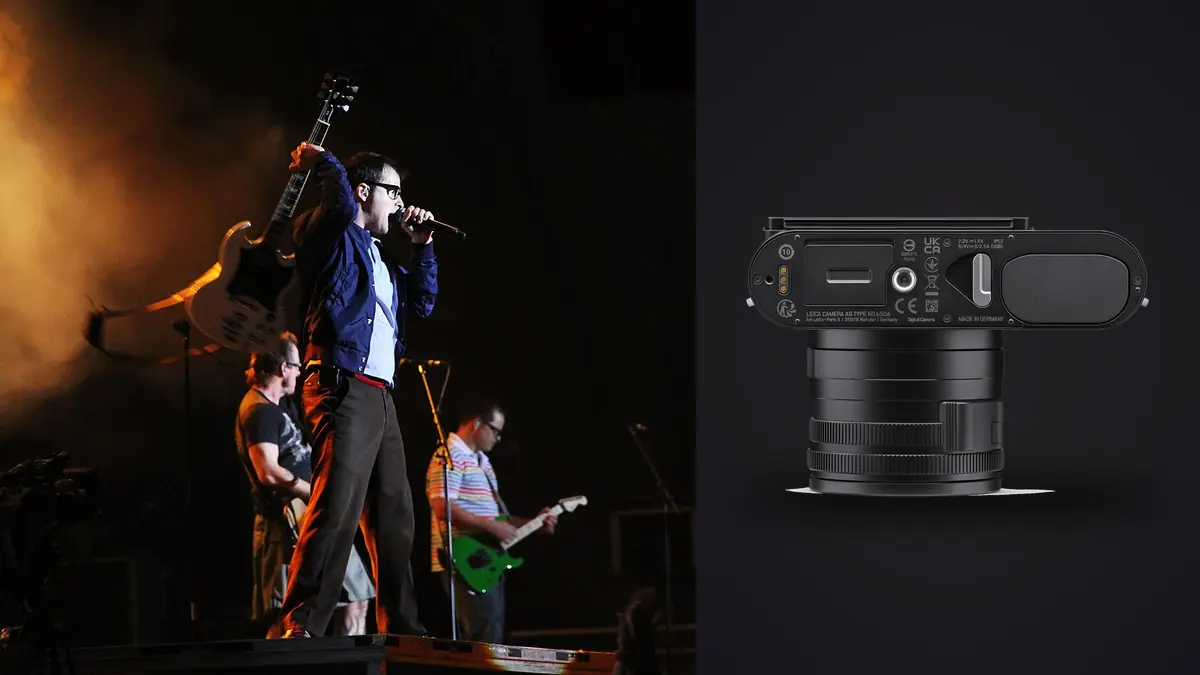
The Leica Q3 can make distinctive concert photographs, but only when its fixed-lens design matches the access and visual style of the assignment. It combines a 60.3-megapixel full-frame sensor with a permanently attached 28mm f/1.7 lens, optical stabilization, and selectable 60, 36, or 18-megapixel DNG capture. Those are capable ingredients. They do not turn a wide fixed-lens camera into a substitute for a long telephoto kit.
A sensible buying decision starts with distance. If the photographer can work at the lip of a small stage, inside a rehearsal room, or among the audience with permission, the Q3 can place the performer inside the atmosphere of the venue. From a distant sound desk, the same 28mm view may reduce the artist to a small figure surrounded by empty stage. The camera fits access-led storytelling; it is a poor answer to restricted positioning.
Troubleshoot the failure before blaming the fixed lens
Troubleshooting a Q3 concert frame starts by separating access, timing, focus, exposure, and light modulation. A distant performer occupying a tiny part of the frame is an access and focal-length problem, not missed autofocus. A doubled hand with sharp stage hardware indicates subject movement. Repeating horizontal bands suggest an LED and shutter interaction. A sharp performer hidden by phones or microphone stands requires a position change. Check those categories in that order, because cropping, sharpening, or raising ISO cannot repair the wrong viewpoint. The fixed 28mm lens makes diagnosis unusually honest: move, wait for a nearer gesture, or accept that the permitted position does not support the intended picture.
The case for a fixed 28mm concert camera
A 28mm lens shows relationships. It can hold the singer, microphone, front row, lighting truss, and low ceiling in one frame. In a cramped club, that context often says more than a tight headshot. The f/1.7 maximum aperture also gives useful exposure flexibility when the room is dark, although working fully open narrows depth of field and can make a performer moving toward the camera difficult to hold in focus.
The fixed lens simplifies decisions. There is no lens change in a dusty pit, no second body hanging against the barrier, and no uncertainty about which focal length is ready. The camera is relatively compact, and its leaf-shutter lens can operate quietly. That discretion is valuable during acoustic sets, rehearsals, backstage preparation, and audience reactions where a large rig alters behavior.
Resolution supports moderate reframing. Leica's lower DNG resolution modes still use the full sensor area, while the camera also offers digital framing options that preview tighter fields of view. Cropping can turn a strong environmental frame into a useful medium view. It cannot recreate the compression, subject isolation, or working distance of a real 85mm or 135mm lens.
Where the Q3 reaches a hard limit
The attached lens is the central limitation because it cannot be solved later. A festival photographer held behind the front-of-house position may need several times the focal length. Cropping a tiny performer from a 60-megapixel file spends resolution quickly and leaves the broad perspective of the original capture unchanged. If most assignments impose that distance, an interchangeable-lens body is the better fit.
Fast movement exposes a second limit. Stabilization reduces camera shake, not a drummer's sticks or a singer crossing the stage. A bright aperture helps reach a faster shutter, but focus and timing still have to track motion. The Q3 is capable of continuous autofocus; it is not designed around the deep controls and sustained high-speed shooting of a dedicated sports or press body.
Long bursts also run against the camera's strongest use. Sixty-megapixel DNG files are substantial, and a broad sequence of nearly identical wide frames creates more review work without creating more viewpoints. Short, timed bursts can help at a jump or hair movement, but anticipation is more important than continuous coverage.
Electronic shutter, LEDs, and exposure risk
Concert lighting often pulses. Some LED fixtures vary output rapidly as they dim or change color, and an electronic shutter can record that cycle as horizontal bands or uneven color. The exact safe shutter speed depends on the fixture and local power frequency. No camera setting is universally immune.
Use the mechanical lens shutter when possible, and inspect test frames at the actual stage-light levels. If bands appear, move the shutter speed slightly rather than assuming a standard value will work. A shutter speed that clears one fixture may reveal another when the lighting cue changes. Keep electronic shutter for situations where silence or its speed range is essential and the lights have proved stable.
Expose for important highlights, especially faces under a white spotlight. Deep backgrounds can remain dark without harming the photograph, while a clipped forehead or costume may be impossible to restore. The viewfinder preview is useful, but the histogram and highlight warning are better evidence when the screen brightness competes with a dark room.
Access determines whether 28mm looks immersive or merely distant
At a small venue, useful positions include the edge of the stage, a side aisle, the space behind the drummer, or a balcony close enough to show the geometry of the room. Each position gives the 28mm lens a foreground and a reason to be wide. A frame made from directly below the singer can exaggerate limbs and microphone stands, so move laterally and watch the distance between face, hands, and lens.
In a larger venue, seek moments that are naturally wide: the opening reveal, full-band lighting, audience hands, confetti, or the relationship between performer and architecture. If the brief also requires tight portraits of every artist, the Q3 should be a second viewpoint rather than the only body.
Photo-pit rules matter. A three-song limit rewards a camera that is already configured, but it also removes time to walk close and build varied perspectives. Check where movement is permitted, whether the pit is elevated, and whether photographers must remain in one marked position. Buying fit should be judged against those recurring restrictions, not an idealized unrestricted show.
File size choices change the practical experience
Full-resolution DNG is appropriate when the frame may need a meaningful crop or large output. The 36-megapixel mode is a balanced choice when storage and transfer time matter but RAW flexibility remains important. The 18-megapixel mode can suit fast editorial delivery where framing is already final. Because all three use the full sensor area, the choice is about output detail and file handling rather than sensor crop.
Set that resolution before the set begins. Switching opportunistically creates inconsistent headroom across a gallery and makes it harder to know which files tolerate a crop. JPEG alongside DNG can support quick handoff, but it doubles the items to organize. If only finished JPEGs are required later, a clean DNG-only ingest may be simpler.
Use a fast, reliable SD card and start with enough free capacity. The Q3's internal memory can provide useful fallback, but it should not become an excuse for an unclear card plan. Confirm where each file set is recording, label the media, and copy both sources if internal storage was used.
Who should consider it, and who should not
| Working situation | Q3 fit | Reason |
|---|---|---|
| Small club with close access | Strong | The 28mm view can include performer, crowd, and venue character. |
| Rehearsal or backstage story | Strong | Compact handling and quiet operation support observational work. |
| Festival from a distant pit | Limited | Cropping cannot replace a long lens or a closer position. |
| Mixed wide and tight press brief | Secondary body | It supplies the environmental view while another body covers reach. |
| Fast, sustained action coverage | Limited | A specialized action body offers deeper burst and control options. |
The Q3 makes most sense for a photographer who already sees in wide environmental frames and can regularly get close. It is less convincing as a prestige purchase meant to solve every concert. The fixed lens is creatively liberating only when it aligns with the brief.
A realistic local workflow after the show
Copy the card and any internal-memory files into a dated job folder, verify that the copies open, and make a second copy before changing the source media. Keep the first selection focused on moments and visual variety. A technically perfect frame can still be redundant if it repeats the same lighting cue and gesture.
imagic can group duplicate or burst-like frames and assess sharpness, exposure, closed eyes, and composition locally on Windows or macOS. That is useful for a sensitive backstage set because the photos remain on the computer. Its decisions are non-destructive statuses, so the photographer can restore a frame when expression or narrative outweighs a technical score.
After manual refinement, apply restrained corrections and export JPEG or TIFF as required. The desktop app overview explains that local workflow, while the camera hardware section provides broader buying context.
A pre-purchase decision exercise
- Review the last several concert assignments and note the actual camera-to-subject distance.
- Count how many delivered frames were wider than a conventional 35mm view.
- Identify whether tight performer portraits were mandatory or optional.
- Check whether silent operation, small size, or carrying one body would have changed access.
- Estimate the effect of 60-megapixel DNG files on current cards, storage, and review habits.
- Rent or borrow a 28mm setup for the same type of venue before making a permanent decision.
If those answers point toward close access and contextual work, the Q3 is coherent. If they point toward long distance and compulsory tight coverage, its strongest qualities do not solve the assignment.
Account for one-lens redundancy before buying
The fixed lens simplifies the working kit, but it also joins the body and primary optic into one failure point. A damaged filter thread, focusing fault, shutter problem, or impact cannot be solved by moving the lens to another body. Anyone covering a non-repeatable show should include a second working camera in the plan, even when the Q3 is the preferred viewpoint.
That backup does not need to imitate the Q3. An interchangeable-lens body with a longer lens can cover the exact situations the 28mm view cannot. The pair then has complementary roles instead of duplicating the same limitation. Confirm that batteries, chargers, cards, straps, and ingest connections remain manageable in a dark venue; two elegant systems with unrelated accessories can still create operational friction.
Also consider service downtime and replacement logistics. Because the lens is permanent, a body repair removes the complete camera from use. A photographer with frequent assignments needs either reliable access to a substitute or another kit that can carry the brief alone. This practical redundancy question is more important than comparing isolated image-quality differences.
Frequently asked questions
Can the Leica Q3 replace a 70-200mm lens at a concert?
No. Its resolution permits cropping, but cropping does not reproduce a telephoto lens's perspective, subject scale, or working distance. It is best used close or alongside a longer-lens body.
Is f/1.7 always the right aperture in a dark venue?
No. The widest aperture gathers light but reduces depth of field and may leave a moving face partly soft. Use it when needed, then stop down when light and shutter speed allow.
Does optical stabilization freeze performers?
No. It reduces blur from camera movement. A suitable shutter speed and good timing are still required for hands, hair, instruments, and performers crossing the stage.
Which DNG resolution is best for concerts?
Use 60 megapixels when crop flexibility or large output matters, and consider 36 or 18 megapixels when framing is settled and fast handling matters more. Keep the choice consistent within a job.