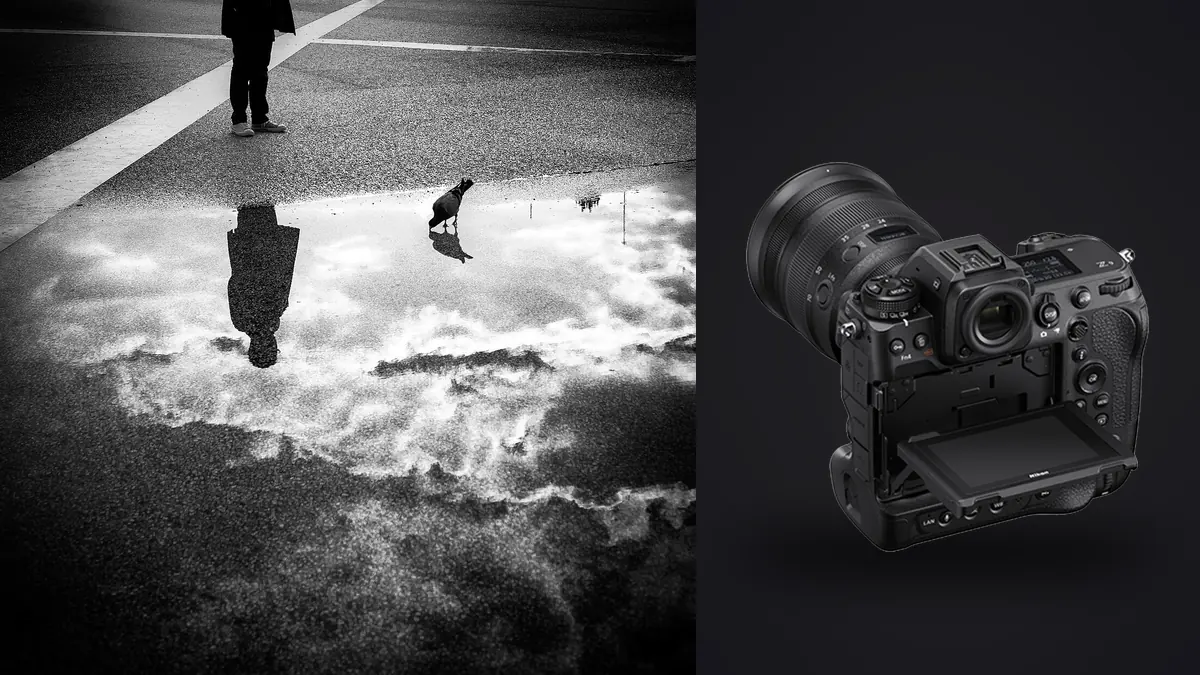
The Nikon Z9 is a large, integrated-grip camera with a 45.7 megapixel stacked sensor and an all-electronic shutter. It can work for street and documentary photography, but it will not disappear in a hand or pocket. Lens size, route, public density, and the way the photographer occupies space matter more here than maximum burst speed.
This Lens and Location Guide plans the Z9 around places where its endurance, weather protection, responsive autofocus, and detailed files are useful without pretending it is a compact rangefinder. It favors deliberate routes, fixed visual positions, and compact Z lenses when discretion and walking comfort matter.
Decide whether the Z9 suits the social space
A large professional body can signal seriousness, attract attention, or make people cautious. In a public event, parade, protest, or commissioned documentary, that visibility may be acceptable and the vertical grip may improve long coverage. In a quiet cafe, small shop, or intimate neighborhood, it can alter behavior more than a compact camera would.
Do not solve this by acting covertly. Choose locations where the camera's presence is compatible with the work, explain the project when appropriate, and seek permission on private property. For close portraits, ask. For vulnerable people, minors, medical situations, or distress, apply a higher ethical threshold than mere technical legality.
Carry the complete kit on the planned route before committing to a full day. Include two CFexpress Type B cards, spare battery, weather layer, and any second lens. Weight that feels manageable for ten minutes can change posture, attention, and willingness to wait after several hours.
Choose compact Z lenses by route density
| Lens class | Location fit | Visual role |
|---|---|---|
| Compact wide prime | Markets, interiors with permission, dense streets | Subject within immediate environment |
| Compact normal prime | General walking and public squares | Natural perspective and clear relationships |
| Fast 35mm or 50mm class | Low light and evening routes | Subject emphasis without extreme distance |
| Short telephoto | Events and portraits with working space | Details and quieter backgrounds |
| Standard zoom | Commissioned coverage with varied access | Rapid framing changes at the cost of size |
Use one primary lens for the visual language of the route. Add a second only when it has a defined task, such as an authorized portrait station or a wider establishing frame. Constant changes create dust risk, distract from observation, and encourage random perspective.
Check how the lens and hood balance on the tall body. A small prime can reduce the visual footprint even though the Z9 remains obvious. A large fast zoom may be justified at a formal event but can be unnecessarily imposing on an ordinary street walk.
Build a route around light transitions
Walk the route at the same hour and direction planned for photography. Note where open sun becomes deep urban shade, where reflective glass illuminates faces, and where signs or shop lights dominate after dusk. Tall buildings can create narrow light windows that move quickly across a crossing or wall.
Assign one visual task to each zone. A broad square may support layered compositions with a normal lens. A covered market may need a wider lens and higher shutter speed for close flow. A station entrance can provide repeated movement against a fixed background, subject to its photography and security rules.
Plan a reversal or shortened route if the light or crowd changes. Documentary work does not require completing a map for its own sake. Staying with one productive corner can yield deeper observation than racing through six unrelated neighborhoods.
Use camera positions that do not obstruct public movement
Edges are often more useful than centers: a recessed doorway with permission, a wide pavement margin, steps outside the main flow, or a barrier designed for waiting. Avoid standing at curb ramps, platform doors, narrow exits, cycle lanes, or the apex of a crowded crossing. A long lens swinging from the integrated grip needs extra clearance.
Check the background from the intended camera height. Bright signs, bins, parked vehicles, and isolated faces can dominate a frame. Move laterally before changing lenses. A few steps can align a subject with shade, open sky, or a repeated architectural pattern while preserving the same working distance.
When photographing a recurring action, choose a stable mark and let people enter the composition. This is less disruptive than following one individual through a crowd. Keep enough space for direction of movement and do not block the path to manufacture proximity.
Use the electronic shutter with a lighting plan
The Z9 has no mechanical shutter, so artificial lighting behavior must be considered at the location. LEDs, signs, transit displays, and indoor fixtures can band or vary at particular shutter speeds. Test a plain surface and moving display, use Nikon's flicker-related controls where suitable, and adjust speed based on the actual source.
Silent capture does not make the camera unnoticed. The body, lens, photographer's movement, and repeated framing remain visible. Turn off beeps and unnecessary illuminators, lower screen brightness where appropriate, and avoid reviewing images in a way that exposes subjects to nearby strangers.
For moving people, select shutter speed for the intended rendering. Stabilization can keep architecture crisp but cannot freeze a cyclist or stride. Intentional blur works best from a stable position with a clear static reference.
Plan autofocus around layers and crowds
Human detection can help at events, but it may select the nearest or most prominent face rather than the narrative subject. Keep a defined small area or single point available. In layered street work, place focus on the relationship that matters and let foreground or background people remain secondary.
Zone focusing with a suitable prime is another option. Choose a repeatable distance and aperture, then verify the real depth at the final output size. The Z9's resolution can reveal small errors that looked acceptable on the rear display. Do not assume a printed depth scale guarantees critical focus at close distance.
Use high frame rates sparingly. A short sequence can help with a gesture or crossing, but the 45.7 megapixel files and dual CFexpress cards can generate a large edit quickly. Timing and observation should determine the sequence length.
Account for private property and changing rules
Shopping centers, transit systems, museums, cafes, markets, and event grounds may look public while operating under private rules. Check published policies and ask staff when equipment or intent could cause concern. A tripod, light, or commercial brief often changes what permission is required.
At demonstrations or sensitive events, maintain distance from police operations, medical treatment, and people seeking privacy. Record context accurately and do not stage behavior. Protect source identities and location metadata when publication could create harm. Work with an editor on decisions that exceed a simple street-photography judgment.
Keep an exit route and meeting point, especially in crowds or unfamiliar neighborhoods. Share the route with a colleague, monitor weather and transport, and avoid staring through the viewfinder while walking backward.
Prepare the Z9 for weather and transit
Use a compact bag that secures the camera during buses, trains, or dense foot traffic. Keep cards and batteries in consistent pockets, and separate full media immediately. A rain cover should allow controls and lens operation without turning the camera into a dripping object inside a shop or vehicle.
Cold and heat affect battery, condensation, and the photographer's endurance. Allow the camera to acclimate when moving between air conditioning and humid streets. Wipe the front element frequently in rain, since one drop can repeat across an entire sequence.
Set the camera clock and file naming before the walk. Documentary sequences gain meaning from time order, and synchronized bodies make later sorting reliable. Record brief notes about location, permission, and context without publishing precise information that should remain private.
Give the route a documentary sequence
A collection of isolated strong frames does not automatically explain a place. Plan opportunities for an opening view, environmental relationships, human scale, recurring details, transitions, and a closing image. The route should leave room for discovery, but this simple sequence prevents the edit from becoming twenty variations of the same crossing. Use the wide or normal lens for context before reaching for a short telephoto detail.
Record signs, weather, transport, architecture, and ordinary pauses as well as peak gestures. These frames can establish time and location without forcing a caption to do all the work. Avoid collecting identifying addresses, documents, vehicle plates, or access details when they create unnecessary privacy or security risk. A note made after the frame can preserve context without placing sensitive information in the published sequence.
Return to productive positions only when the conditions have changed meaningfully. A station entrance at rush hour, after rain, and near closing can support distinct chapters, while repeated passes minutes apart may only increase file volume. Keep a short route log with time, lens, access status, and unanswered questions. It makes the later edit more accurate and exposes gaps while there is still a safe chance to fill them. Mark any scene that requires a caption check before publication and final sequencing.
Review locally without stripping away context
Copy both CFexpress cards and verify a second copy before formatting. The Z9 records NEF choices including lossless and high-efficiency options; confirm current software support before selecting a format for a project. Keep original filenames and route notes connected.
imagic desktop can scan supported NEF folders, analyze locally, group related frames, and set reversible culling statuses without deleting originals. Automated composition or closed-eye scores cannot decide whether an ambiguous gesture or imperfect frame carries documentary value. Review sequences yourself.
Reselecting re-ranks stored scores and does not reanalyze the pixels. Check freshness and reanalyze stale photos when old verdicts look wrong. Export applies stored edits to new files. Keep weather and local light recognizable rather than forcing every neighborhood into one grade. More methods appear in Workflow and Editing.
The Z9 can support serious street documentary work when its size is acknowledged rather than denied. Compact lenses, deliberate public positions, a route built around light, and clear ethical boundaries make the body purposeful instead of merely conspicuous.
Frequently Asked Questions
Is the Nikon Z9 too large for street photography?
It is large and visible, which may affect behavior and carrying comfort. It can still suit commissioned documentary, events, severe weather, and deliberate routes where its presence is compatible with the work.
Which Z lens makes the Z9 less conspicuous?
A compact wide or normal prime reduces the overall footprint and supports a consistent working distance. Choose by route density and visual intent, not size alone.
Can the Z9's electronic shutter band under street lights?
Yes, some artificial sources and displays can produce artifacts at certain shutter speeds. Test the actual location and use the camera's flicker controls or another speed where appropriate.