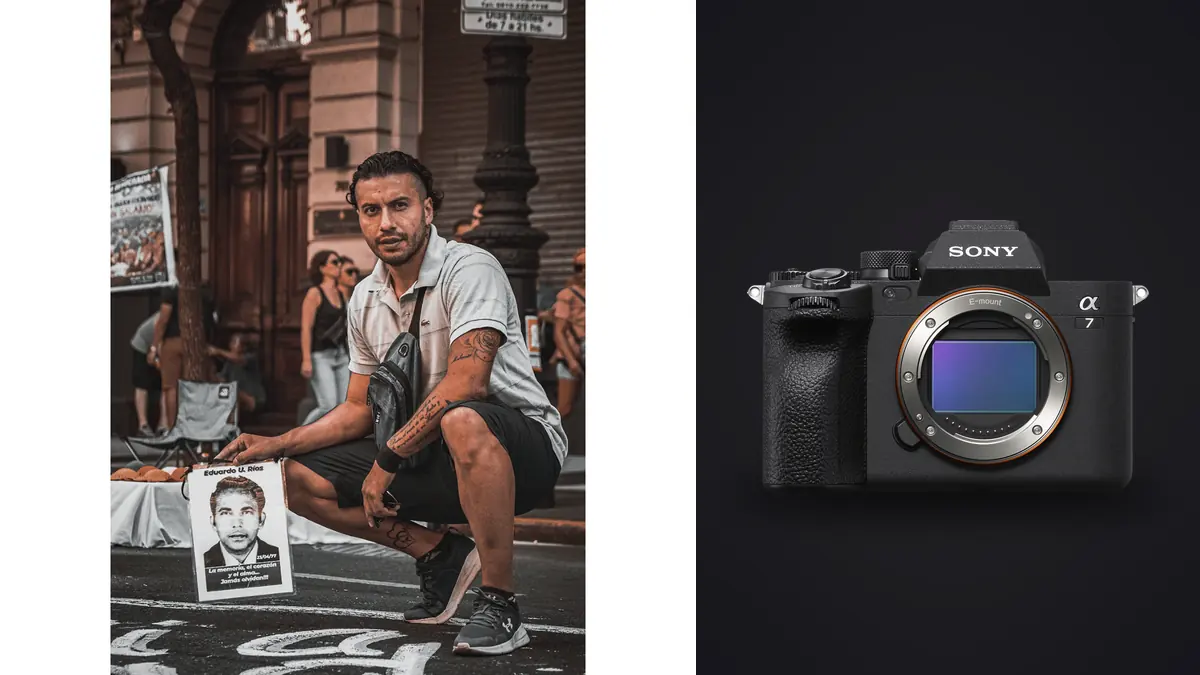
The Sony A7 IV was never marketed as a street camera. Sony pitched it as a hybrid workhorse for weddings and run-and-gun video, and most of the early reviews compared it to the A7R IV's resolution or the A1's speed. But a fair number of documentary and street shooters picked it up anyway, mostly because it landed at a price and size that made sense next to a Leica Q2 or a Fujifilm X-T5, and because the autofocus system turned out to be good enough to trust on a moving subject in a crowd. After spending real time with one on personal walking projects, I think it earns its place in that kit bag, but not without some caveats that the spec sheet doesn't tell you.
Why it works for documentary work in the first place
Street and documentary photography ask for two things a camera rarely delivers together: fast, trustworthy autofocus and a body that doesn't announce itself. The A7 IV splits the difference better than most full-frame cameras in its price range. The 33-megapixel sensor isn't the headline here, the autofocus is. Sony's real-time tracking locks onto a person's eye or torso from across a street and holds it through jackets, umbrellas, and other pedestrians walking between you and the subject. I've had it keep a lock on someone's face through a partial obstruction by a lamppost, which sounds like a minor thing until you've missed the same shot on an older camera because focus hunted for half a second too long.
The other half of the equation is the electronic shutter. Set the drive mode to silent, kill the beeps in the menu, and the A7 IV makes no sound at all when you press the shutter button. That matters more in documentary work than most gear reviews admit. A DSLR mirror slap or even a loud mechanical shutter changes how people react around you, sometimes just enough to break the moment you were trying to capture. With the A7 IV in silent mode, most of my subjects never clocked that a photo had been taken at all.
The settings I actually run on the street
Out of the box the A7 IV is set up for a studio shooter, not someone weaving through a market. Here's what I change before a session:
- Drive mode: Hi+ continuous at 10fps with the electronic shutter, silent mode on. I rarely hold the button down for more than 3-4 frames on the street, but having the speed available matters when someone's expression changes fast.
- Focus area: Wide, with Human/Face priority in the subject recognition menu. I used to run a smaller zone box and manually place it, but for street work I don't have time to reposition a focus point before the moment passes.
- Custom button C1: Set to AF-ON with eye AF toggle, so I can flick between tracking a person's eye and just letting the camera pick whatever's in the wide zone.
- Shutter speed floor: I shoot Aperture Priority with a minimum shutter speed of 1/250 in the auto-ISO menu. Documentary subjects move unpredictably and a blurred hand or foot kills more frames than grain does.
- Anti-flicker: On, always, for anyone shooting under shop awnings or transit stations with fluorescent or LED lighting. Without it you'll get banding across a fraction of your frames and not know why until you're looking at them on a bigger screen later.
One setting I'd flag as a genuine annoyance: the menu still buries some of these behind two or three taps even after Sony's redesign from the A7S III generation. It's better than the A7 III's menu, which was genuinely bad, but it's not instant. I'd rather have three or four more assignable buttons than a prettier menu.
Compressed RAW, lossless compressed, or full RAW
This is the choice that actually shapes a documentary shooter's day more than almost any other setting. The A7 IV gives you three RAW options and they trade file size for buffer depth in a way that matters when you're shooting for hours without a laptop nearby.
| RAW format | Approx. file size (33MP) | Burst buffer at 10fps | Best use on the street |
|---|---|---|---|
| Compressed RAW | 35-45 MB | Deepest, well over 800 frames before slowing | All-day walking, markets, transit, anywhere you'll shoot thousands of frames |
| Lossless compressed RAW | 55-65 MB | Moderate, buffer clears noticeably faster than compressed | Planned documentary sessions where you'll push shadows hard in edit |
| Uncompressed RAW | 65-80 MB | Shallow, fills in under 2 seconds of sustained 10fps | Rarely worth it for street work, better suited to studio or landscape |
I shoot compressed RAW for almost everything on the street. The image quality difference against lossless compressed is not something you'll see in a print, and the extra buffer headroom means I'm not staring at a "processing" indicator while a scene keeps unfolding in front of me. Save uncompressed RAW for the rare shoot where you know you'll be doing heavy exposure recovery, like a backlit doorway scene where you need every bit of dynamic range in the shadows.
Lens pairings that make sense for this kind of work
The body is only half the story. A 33-megapixel full-frame sensor on a big zoom defeats the purpose of trying to move quietly through a crowd. The pairings that have worked for me:
Sony FE 40mm F2.5 G. This is the lens I reach for most. It's small enough that the whole rig disappears into a jacket pocket if you swap the strap for a wrist strap, focuses fast and silently, and the 40mm field of view sits close enough to natural vision that framing becomes intuitive after a few days. The f2.5 maximum aperture is not fast, but on the street you're rarely shooting wide open anyway, you want enough depth of field that a slight focus miss doesn't ruin the frame.
Sony FE 35mm F1.8. A little more traditional for documentary work and noticeably better in low light. It's heavier and larger than the 40mm G, but the extra stop and a half matters once the sun goes down and you're still working. I'd pick this one over the 40mm for evening markets or indoor documentary assignments.
Sony FE 24mm F2.8 G. For tighter environments, subway platforms, narrow alleys, crowded festival scenes where you need more of the surroundings in frame. It distorts faces if you get too close, so it's not a portrait lens, but for environmental documentary shots where the setting matters as much as the person, it earns a spot in the bag.
I'd steer clear of the kit 28-70mm zoom for this genre specifically. It's a perfectly fine lens for events, but the extra bulk and the slower variable aperture work against the whole point of a small, quiet rig.
Where the camera works against you
No camera is free of tradeoffs, and a few things about the A7 IV genuinely fight against street and documentary use.
Weight. At roughly 658g body only, and closer to 900g with the 40mm G attached, it's not heavy compared to an A1 or an R5, but it's not light next to a Fujifilm X100V or a Ricoh GR IIIx either. After six or seven hours of walking with the strap on your neck you'll feel it, and that fatigue changes how many frames you're willing to lift the camera for late in the day.
The vari-angle screen. Sony moved from the A7 III's tilt-only screen to a fully articulating side-hinge screen on the A7 IV, and video shooters love it. Street photographers mostly don't. Flipping the screen out to shoot from the hip or at a low angle is slower and more visible than a simple tilt, and it draws eyes in a way a compact tilt screen never did. I keep it closed against the body most of the time and shoot through the viewfinder, which somewhat defeats the point of having a flip screen at all.
Rolling shutter in silent mode. The sensor readout isn't fast enough to fully avoid skew on quick horizontal motion, like a cyclist crossing the frame or someone swinging an arm close to the lens. It's not dramatic, but if you're photographing anything with real lateral speed, mechanical shutter (with the sound that comes with it) or a slightly higher shutter speed will save you from warped bicycle wheels.
Battery habits. The NP-FZ100 is rated for roughly 520 shots through the viewfinder under CIPA testing, but real street shooting with the screen active for quick chimping and continuous AF tracking running most of the day will pull that down meaningfully. I carry two spares on anything longer than a half-day shoot.
Handling the volume once you're home
A single afternoon of street shooting with the A7 IV in Hi+ burst mode can easily produce two or three thousand frames, most of them near-duplicates of the same three or four seconds of a scene as an expression shifts slightly or a subject turns their head. Sorting through that manually is where most people's documentary projects stall out, not the shooting itself.
This is the part of the workflow where I've come to rely on imagic instead of scrolling through a folder frame by frame. It scores sharpness and focus locally on the machine, so when I've got fifteen near-identical frames from a burst where someone's eye contact and expression only differ slightly, it surfaces which ones are actually sharp instead of me squinting at a thumbnail. It also groups bursts and near-duplicates automatically, which on a day with thousands of frames saves real hours. Because everything runs on the machine itself with no upload step, I've used it in places with no signal at all, which for documentary work in transit hubs or rural markets is not a small thing.
If you're new to culling large volumes of street photography, how AI photo culling works is worth reading before you build a habit around it, and the broader workflow advice in 10 tips for a faster photo workflow applies directly to anyone shooting bursts at 10fps for hours.
The other thing that's changed how I edit documentary work specifically: once I've graded a set of images the way I want (usually pulling blacks down and desaturating skin tones slightly for a more reportage feel), imagic's apply_my_style feature learns from those edits and applies the same look across the rest of a shoot automatically. For a genre where consistency across a photo essay matters more than any single hero image, that's saved a lot of repetitive slider work.
Who this camera actually suits
If you're coming from a smaller mirrorless system and want full-frame low-light performance with autofocus that won't lose a subject in a crowd, the A7 IV is a reasonable landing spot. If discretion is your single highest priority and you don't need interchangeable lenses, a Fujifilm X100V or a Leica Q2 will draw less attention and weigh less on your neck. And if you're mostly working indoors or in genuinely dim environments, the extra stop and a half of a 35mm F1.8 or a body with better native high-ISO performance might matter more than anything discussed here.
Frequently Asked Questions
Is the A7 IV too heavy for a full day of street shooting?
It's manageable but noticeable. Pair it with the 40mm F2.5 G rather than a heavier zoom, use a wrist strap instead of a neck strap for shorter stretches, and you'll feel less fatigue than carrying a body plus 24-70mm f2.8 combination. Past six hours of continuous walking, most people feel the weight regardless of lens choice.
Should I shoot compressed RAW or lossless compressed for documentary work?
Compressed RAW for anything shot across a full day or in a fast-moving environment, since the buffer depth lets you keep shooting without the camera pausing to write. Reserve lossless compressed for planned sessions where you know you'll be pushing shadow recovery hard in post.
Does the silent shutter mode actually go unnoticed on the street?
In most conditions, yes. There's no audible shutter sound and no visible mirror movement since it's fully electronic. The main giveaway is if you're chimping the rear screen constantly, which draws more attention than the shutter itself ever would.
What's the single best lens if I can only bring one?
For daylight and mixed outdoor work, the 40mm F2.5 G. It's the smallest, focuses quickly, and the field of view works for both environmental context and closer portraits without feeling like a specialized choice either way. If most of your work happens after dark, swap it for the 35mm F1.8 instead.