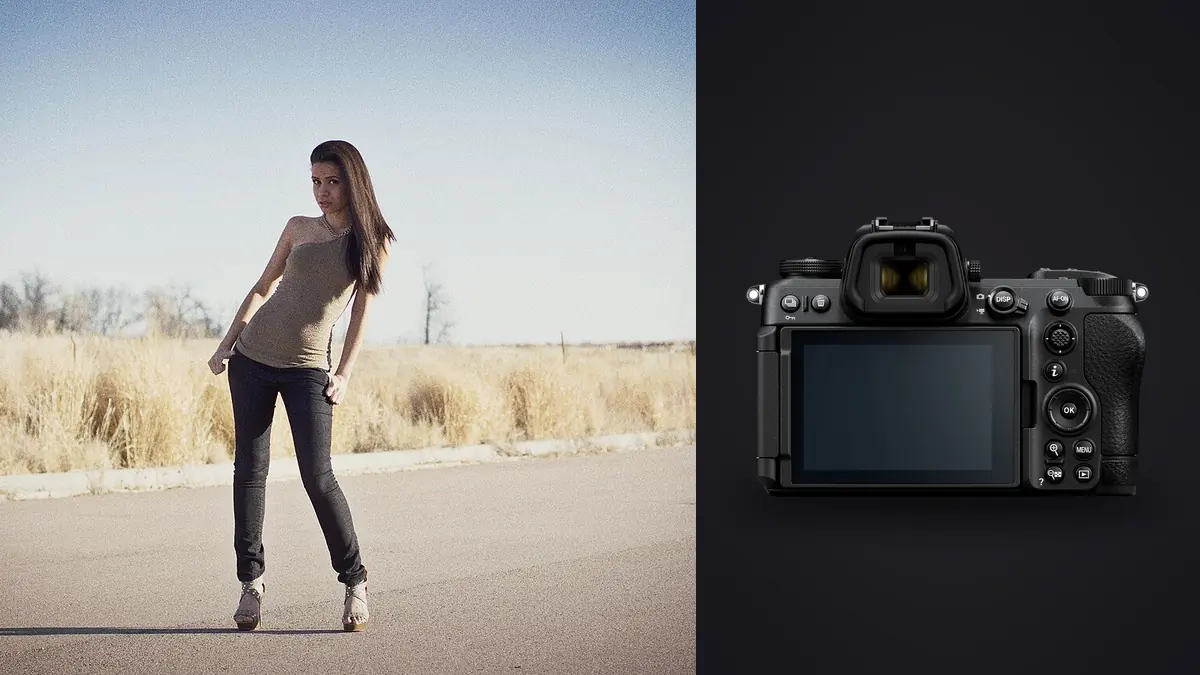
Lookbook days don't behave like normal commercial shoots. You're rarely given the luxury of a single hero shot per setup. A brand hands you fifteen to twenty-five looks, a stylist who's steaming garments between every three frames, a model who has to hit the same three poses on repeat under a tight clock, and a same-week (sometimes same-day) delivery deadline. I've shot two full seasons of lookbooks on a Nikon Z6 III after years bouncing between a D850 and a couple of Sony bodies, and the camera's real strengths on this kind of job aren't the ones that get top billing in the marketing copy.
Why This Camera Ends Up Being the Right Tool for the Job
The partial-stacked 24.5MP sensor in the Z6 III is the headline feature, but on set what it actually buys you is fewer missed frames during the two or three seconds a model naturally moves through a pose: weight shift, hand placement, a slight tilt of the chin. Rolling shutter on the older Z6 II was noticeable enough that I avoided the electronic shutter around fast fabric movement (skirts, scarves, anything with intentional swing). The Z6 III's readout is fast enough that I now default to the electronic shutter for most of the day and only drop to mechanical when I need guaranteed flash sync, which I'll get to below.
The other underrated part is buffer depth. On a lookbook day you're not shooting single frames, you're shooting in short bursts because the client wants options: eyes open, hem settled, hand not blocking the belt. Being able to hold the shutter for a two-second burst at 20fps without the buffer choking, look after look, for six or seven hours, removes a stress point that used to make me second-guess whether to hold the trigger or lift early.
Autofocus Between Racks: What Actually Gets Tested
Fashion AF isn't really about tracking a sprinting subject. It's about the camera correctly deciding what to focus on when a stylist's hand, a rack of hangers, or a second model waiting off to the side crosses between you and the subject for a fraction of a second. The Z6 III's subject detection holds onto the model's eye through those interruptions more reliably than I expected going in, particularly with a longer lens like the 85mm f/1.2 S where depth of field leaves almost no room for error.
Where it still needs help is patterned or dark garments against a similarly toned backdrop, which happens constantly in lookbook work because brands love shooting a black collection on a grey seamless. In that situation I switch from auto-area AF to a smaller dynamic-area zone and place it manually on the model's near eye rather than trusting the camera to find the subject on its own. It's a five-second habit that saves a lot of soft frames later.
Group Shots and Multiple Models
Lookbooks increasingly ask for pairs or trios in a single frame, which used to be the weakest spot for older Nikon bodies. The Z6 III's people detection will track two or three faces simultaneously and lets you cycle which one is prioritized, but I've found it more dependable to just pick the model closest to camera as the anchor point and let depth of field carry the others, especially past f/4.
Dynamic Range, Skin, and Strobe Sync
Lookbook lighting is usually simple: one key, one fill, maybe a rim for separation from the backdrop. Where dynamic range matters more than people expect is white and cream garments shot near a bright window or under a softbox with the exposure pulled slightly hot to protect skin tone. The Z6 III's files hold recoverable highlight detail in those garments about a stop further than I was used to on the Z6 II, which matters because clients notice blown-out fabric texture on a $400 coat faster than they notice almost anything else in the frame.
The one thing to watch is flash sync if you're using the fully electronic shutter. Mechanical sync tops out at 1/200s, which is standard, but running the electronic shutter with strobes at higher shutter speeds will band the frame because the sensor read isn't instantaneous. For any setup with continuous strobe pops (not speedlights in HSS), I switch back to mechanical or the electronic front-curtain option and just accept the slightly lower burst ceiling. It's a small workflow tax for a day that otherwise stays on electronic shutter for silence and speed.
How It Stacks Up Against the Other Bodies People Actually Ask About
I get asked constantly whether it's worth stepping up to a Z8 for this kind of work, or whether a Sony body would serve just as well if a studio already owns Sony glass. Here's how the three compare on the criteria that actually matter for a lookbook day rather than a general spec sheet:
| Criterion | Nikon Z6 III | Nikon Z8 | Sony a7 IV |
|---|---|---|---|
| Body price (approx.) | $2,499 | $3,999 | $2,499 |
| Max burst (raw, electronic) | ~20 fps | ~20 fps (30 fps DX crop) | ~10 fps |
| Practical raw buffer at full burst | 1,000+ frames | 1,000+ frames | ~150-200 frames (compressed raw) |
| Mechanical flash sync | 1/200s | 1/200s | 1/250s |
| Body weight | 760g | 910g | 658g |
| Card slots | CFexpress B + SD UHS-II | Dual CFexpress B | CFexpress A + SD UHS-II |
The Z8 is the better body if you're regularly cropping for a DX-mode punch-in or shooting fast-moving editorial rather than lookbook, but for the specific job of standing in one spot, bursting through poses, and moving to the next rack, it's mostly extra weight and cost for headroom you won't use. The a7 IV's shallower buffer is the real limitation for lookbook shooters used to bursting freely; you'll hit it mid-look on a busy day and have to wait it out, which is its own kind of frustrating when a stylist is already calling the next change.
Lenses That Actually Stay on the Camera All Day
For a full lookbook day, bring three lenses and expect to use two of them: the 50mm f/1.2 S for full-length and three-quarter shots where you want separation from the backdrop without distortion, and the 85mm f/1.2 S for tighter detail crops a client would use for close-ups of stitching, jewelry, or texture. The 24-70mm f/2.8 S rides in the bag as insurance for locations where you can't back up far enough, but it tends to get used less than expected. Fashion clients want compression and a shallow, flattering rendering more than they want zoom convenience, and the primes deliver that with less second-guessing at the edit stage about which frames are "sharp enough" to deliver.
In-body stabilization matters more here than most people assume, not because you're shooting slow shutter speeds but because it steadies handheld framing during long bursts, which keeps compositions consistent enough that a client scrolling through forty frames from one look doesn't feel like the horizon is drifting.
Getting From Card to Delivered Gallery Without Losing the Afternoon
Here's the part nobody puts in a camera review: a single lookbook day with 18 looks, shot in bursts, easily produces 3,500 to 5,000 raw files. That's not a camera problem, it's a workflow problem, and it's the part of the job that actually determines whether you make your delivery deadline or you're still culling at midnight.
I run the card through imagic before I touch a single image in an editor. The local sharpness and focus scoring catches the soft frames from the AF misses mentioned earlier, and it clusters bursts and near-duplicates automatically, so the 30 frames from one 20fps burst of a model turning through a look land as one group with the sharpest two or three flagged instead of 30 separate thumbnails I'd otherwise have to click through one at a time. On a day with this many frames, that alone is the difference between a two-hour cull and a six-hour one.
Because it processes everything locally rather than uploading to the cloud, it's also a comfortable option for unreleased collections under NDA, which is most of what a lookbook shoot is by definition. Once the cull is down to the keepers, imagic's apply_my_style feature, trained on your own past edits rather than a generic filter pack, gets a consistent base grade across all 18 looks before you go in and hand-finesse anything that needs it. For a client who wants the whole gallery to feel like one cohesive shoot rather than a patchwork of individually graded images, that consistency matters as much as any single frame's sharpness. A different lookbook day on this same body, with its own take on pacing and settings, is covered in this other Z6 III lookbook shoot.
Frequently Asked Questions
Is the Z6 III actually fast enough for a lookbook set, or should I be saving for a Z8?
For standard lookbook pacing, where you're bursting through a pose sequence rather than following continuous motion across a wide frame, the Z6 III's 20fps electronic burst and deep buffer keep up without hesitation. The Z8 earns its price difference on jobs with more physical movement across the frame (runway, movement-based editorial) rather than the stand-and-pose rhythm of a typical lookbook.
What card setup actually holds up for a full day of this kind of shooting?
A fast CFexpress Type B card in the primary slot is not optional once you're bursting regularly; a slow one will bottleneck the buffer clearing and you'll feel it mid-burst. Run the SD UHS-II slot as an in-camera backup rather than overflow, since losing a card on an NDA shoot with no duplicate is a conversation you don't want to have with the brand.
Does shooting with the electronic shutter cause problems under studio strobes?
Yes, if you push the shutter speed high enough with continuous strobes rather than speedlights in HSS, you'll get banding because the electronic readout isn't instant across the frame. Stick to mechanical shutter or electronic front-curtain for strobe-lit setups and reserve the fully electronic mode for ambient light or continuous LED panels.
How do you realistically get through thousands of frames from one shoot day before the client wants to see a gallery?
You don't do it by eye, frame by frame, not on a deadline. Running the card through a local culling pass first, one that scores sharpness and groups near-duplicate bursts automatically, is what makes a same-day or next-morning turnaround possible. That's the step in imagic worth leaning on hardest on lookbook days specifically, since the volume of near-identical frames is higher than almost any other type of commercial shoot.