digiKam in 2026: Is a Free, Open-Source Cataloger Worth It?
digiKam 9.1 reviewed: what the free, open-source photo cataloger is genuinely good at, where it feels slow, and who it actually suits in 2026.
Photography workflow tips, AI culling guides, software comparisons, and editing tutorials for professional photographers.
digiKam 9.1 reviewed: what the free, open-source photo cataloger is genuinely good at, where it feels slow, and who it actually suits in 2026.
A wedding sneak peek workflow that fits in under 30 minutes: AI-pick from ceremony and portraits, one style pass, and social-sized export.
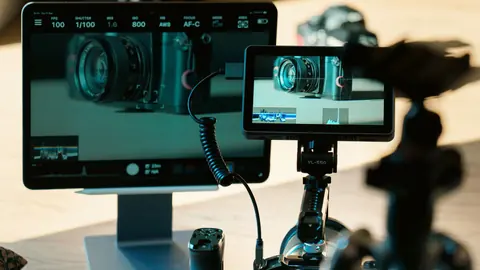
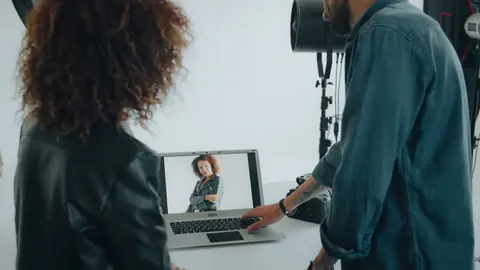
imagic has no live tethering. Here is what tethering actually does for a studio, and which real tethering tools to use instead if cost is the issue.
imagic 1.4.5 checks each eye of your main subject for a blink or a half-closed lid, marks the frame down and names the eye. How it works and how to use it.
A second shooter workflow for weddings: merging timelines from two bodies, matching exposure habits, and a QC pass for color continuity in one gallery.
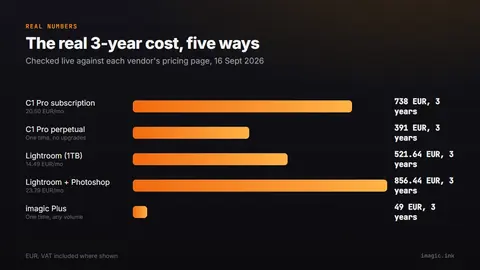
Capture One and Lightroom pricing compared with real, vendor-checked numbers: what each actually costs over three years, as of September 2026.
How long to cull wedding photos: real numbers for 3,000 to 5,000 frames, manual seconds-per-frame math, and a realistic 2-hour target with AI scoring.
Capture One vs Lightroom for beginners: the gentler learning curve, current pricing as of September 2026, and a free way to try RAW editing first.
Cull street photography efficiently with imagic AI scoring. Go from hundreds of frames to your best street shots without hours of manual review.
Is Photo Mechanic still worth buying in 2026 now that Plus is discontinued? Current pricing, who still needs it, and who is paying for habit.
Photo editing workflow tips that actually move the needle: why edit order beats per-photo perfectionism, and the compounding math behind seconds saved.
Weighing a FilterPixel alternative? A checklist for accuracy, turnaround, and where your photos go, plus how Aftershoot and imagic compare.
A repeatable method to measure ai photo culling accuracy on your own shoots: manual cull 500 frames, compare to AI, and tune what disagreement means.
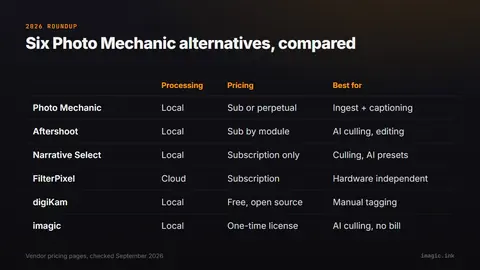
Best Photo Mechanic alternatives in 2026, compared honestly: Aftershoot, Narrative Select, FilterPixel, digiKam, and imagic, with real pricing.
Why local ai photo editor tools matter for client privacy: wedding, newborn, and school shoots, cloud terms of service, and local processing as a selling point.
Darkroom app vs imagic compared for 2026: Apple-only mobile photo editing against Windows and macOS AI culling and RAW processing, with verified pricing.
AI photo composition analysis explained: rule-of-thirds heuristics vs learned aesthetics, where composition scoring genuinely helps, and its limits.
Mylio vs imagic compared for 2026: cross-device library sync and backup against local AI culling for a fresh shoot, with verified pricing and platforms.
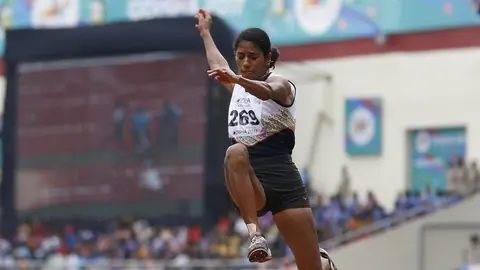
Sports photography culling in imagic: switch Subject to Action, let pose grouping split each burst into phases, and keep the peak frame of every moment.
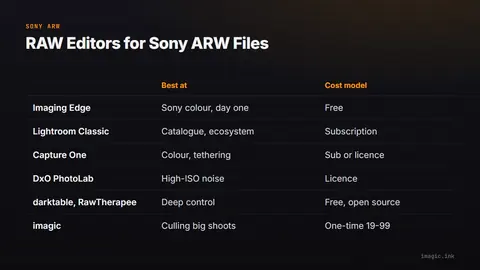
The best RAW editor for Sony ARW files, compared: Sony's free Imaging Edge, Lightroom, Capture One, DxO, darktable and imagic, by what Sony shooters need.
AI photo sharpness detection explained: motion blur vs missed focus vs soft lenses, and why subject-aware scoring beats naive frame-wide sharpness.
Evoto vs imagic compared for 2026: cloud AI retouching for portraits against local AI culling and RAW processing, with verified pricing and platforms.
How closed-eye detection scores across a burst to solve the group-photo blink problem, and how it picks the frame where everyone's eyes are open.
Imagen AI vs imagic compared for 2026: a cloud-trained editing profile against fully local AI culling, with verified pricing and processing details.
Try imagic free for 500 exports with no card required, then keep AI culling, duplicate removal, and batch editing with a one-time license from €19 — no subscription.
Download imagic Desktop